The Stuff of Dreams

I’ve just finished reading Ursula Le Guin’s 1971 novel “The Lathe of Heaven” for the first time. Way back then/when, I read “The Left Hand of Darkness” but can’t remember a thing about it—so I’ll definitely have to grab that one again.  In LofH, she blew me away with the prescience of her sci-fi details of over-population, climate change, and the quality of life which are now so much a part of modern life.  It’s unfortunate that some of them (like kicking the automobile addiction), haven’t yet come true.  But I’m glad that she wasn’t sadistic enough to envision the smart-phone!  At least the people in her future world(s) were still human…

The novel’s theme of dreaming was a genius twist on the subject: a guy has “effective” dreams that affect objective reality.  Not to spoil a great story, I won’t say any more about that, but it put me in mind of the concept of “conscious dreaming,” which some decades ago was a big new-age thing.  Maybe it still is?

One of the themes in the Don Juan novels of Carlos Castañeda, the notion fascinated me. In about 1985, a “dream analyst” friend explained that the best method for achieving consciousness in a dream was to look at one’s hands and actually see them.  That sounded simple enough.

In a vivid dream about walking down a path to a beach (I was an inveterate, if infrequent, beach bum), the friend’s instruction came into my dreaming mind. I stopped on the sand and looked at my hands.  They were in the minutest detail my real hands, all the wrinkles on my knuckles and nails exactly like they were that day, including the longer nails on my pinkies.  And there on the third finger of my right hand was my gold ring with its slab of lapis lazuli—with the exact tiny streak of gold in the stone.  Then I knew that I was conscious.  Not awake, but conscious.

The problem was that as I looked at my real hands, the gold and lapis of my ring began to spread like an incrustation across my fingers. Consciously, I thought, “Oh, no, you don’t!”  With an effort of will, I forced the precious stuff back into the ring.  Confident now in my control of the dream, I looked around the beach at the expanse of sand and the undulant waves.

Dream of a Beach

I bent down and picked up some sand, letting it run quite realistically through my very real fingers. Then I decided I wanted to find a beautiful shell, and I walked along the frothy wave-lines on the beach feeling the utter reality of the scene.  Quickly I found a perfect small conch-like shell, and holding it in my right hand, I admired its whorl, as beautiful as any I’d ever seen.

In my throes of admiration, suddenly the shell started spreading over my hand, covering it with gleaming mother-of-pearl. I tried to command the transformation to stop but couldn’t manage.  The vision was utterly enthralling and joyous, and like happens with the approach of sexual climax, I could do nothing but abandon myself to the ecstasy of the dream.

I can’t remember where the dream went from there. But those moments of consciousness seized in the midst of it have remained vivid all these years since.  I’m not sure why I haven’t tried that trick again.  Maybe because it’s never crossed my dreaming mind to look at my hands again?

#

Our Exploitative Healthcare System

My first inclination was to write a letter to my doctor (probably a capable, dedicated, and intelligent man), calling a spade a spade, but then I reconsidered. No matter his many sterling qualities, my doctor is by definition a part of, or at least an accomplice in, the situation.  My rant would surely fall on deaf ears.  Instead, I’ll broadcast my cynical remarks here on my virtually unread blog, where at least someone might hear my voice crying in the wilderness.

Late last week I got a second attack of gout in my right big toe, a stereotypical condition surrounded by a great deal of mythology, rumor, and medical lore. A close friend with the same problem in the same place advised that his VA doctor had prescribed him a generic drug called Allopurinol which costs only $5 a bottle.  He reported that one tablet generally relieves the condition immediately and recommended that I get a prescription for it too.  Or he’d be happy to give me a pill or two out of his stash.

Trying to play the medical game by its rules, yesterday I called to ask my doctor (with whom I’d already discussed the first attack) to issue a prescription for the miracle pill, but he was away for the week, and though this second attack was sure to fade within a few days, I left a message with full details of the VA doctor and the friend’s experience.

My call was returned by a registered nurse who advised that they wouldn’t write the prescription unless I came in for an examination. The sub-text of her response came in loud and clear:  “We won’t do anything unless we add our own bill to the cost of the prescription.”

When I advised that in that case, I would go ahead and borrow pills from my friend, the nurse got uptight, sternly admonishing me not to take anyone else’s medication. I asked why—since it had been prescribed by a “real” doctor and was very effective for the same problem.

The nurse dithered about how there “could be” horrible interactions with my blood pressure medication, citing “studies” of that specific combination of medications (which I find highly unlikely), but offering no specifics of such interactions or statistics. What I heard was “Be afraid!  Avoid the slightest, even infinitesimal danger!”  (Frankly, every time I get into my car, I’m conscious of putting myself in a position of extreme danger.  Every time I walk out my front door…  Every time I get out of bed in the morning…  By definition, life is unsafe.)

I advised that I’ve now (with my doctor’s agreement and under his supervision) almost completely weaned my system from that poisonous blood pressure pill, so the danger of any interaction is probably even less than negligible. (I’m now down to 1/8 of the low dosage originally prescribed years ago by a nurse-practitioner for only slightly elevated readings, which have never improved or gotten any worse.  Even at the time, I understood that it was her professional duty simply to enroll me as a regular contributor to the pharmaceutical industry.)

The nurse responded that nevertheless I was still on the medication and should be very afraid. Ratcheting up the pressure to an almost hysterical level, she gratuitously added that some interactions could even be fatal.  Again there were no specifics or statistics, just alarmist jargon.  Recognizing this tactic as standard practice in our current culture of fear, I noted that over-the-counter herbal supplements, while much less effective than Allopurinol, are widely available, but there are such studies or warnings about them.

Ignoring those unprofessional remedies (at higher cost than Allopurinol with sales income not accruing to the pharmaceutical industry), she again urged me to “make an appointment” (i.e., make an extra payment to them) to talk about treatment and a prescription. I advised that I wouldn’t waste either their or my limited time on the issue of taking a single pill of proven effectiveness for a common, otherwise pharmaceutically untreatable, condition.

She countered with an irritated threat “to tell on me” by writing up our conversation for my doctor. I told the nurse to feel free to do so, just as I felt free to call my friend for some of his pills.  When we ended the call, her frustration was palpable.  She’d missed a possible sale!

When I rang up my friend right afterwards, he wasn’t home, and so I figured I’d call him today. When I got up this morning, the gout was gone, so the entire charade was moot.

However, the charade was a dramatic illustration of the basic problem with our healthcare industry. Like other for-profit businesses, healthcare providers’ real purpose is to generate sales, not service.  Aided by the FDA, they collude with the pharmaceutical industry to “hook” people on their monopolistic products.  (Witness the current opioid epidemic.)  And both collude with the insurance industry (the stock in trade of which is fear), to kick back to each other on their sales and ultimately inflate costs to the consumer/patient.

This unholy trinity has our economy by the throat. In the name of public benefit, they exploit the population for private gain, just as other industries exploit our natural resources (the public’s treasures) for private gain.  The fatal flaw in our government and economic system is that private enterprise is inimical to public benefit.  But I’ve already ranted about that in an earlier blog  or two.

Would anyone care to try and disabuse me of these dire and hopeless notions?

#

Two Decades Ago

It’s always fun, or at least interesting, to look back over the decades of our lives and see where we were when and what we were experiencing in those bygone days. Not long ago I took a look back a mere decade to a thriving and exciting situation.

Now I want to step back yet another decade and talk about that fascinating time capsule. From September, 1996 to September, 1997, when I was in my mid-fifties, was a year of remarkable transition, though perhaps a stereotypical mid-life crisis. Two decades ago brought the end of my sixth personal era (the Mature Gay Gentleman) and heralded the birth of my seventh persona (the Grandfatherly Gay Character).

That mid-September morn, standing on the sidewalk on Montezuma Avenue outside the La Casa Building (note the poetic persistence of the Aztec and La Casa themes in my life), I watched a huge U-Haul truck drive away with its institutional load. It was hauling the whole of the Western States Arts Federation off to Denver, leaving me and twenty more professional administrators unemployed. Thank you, Newt Gingrich, and your Contract on America. You don’t want to know the gory budgetary details.

As Director of Administration, I’d dutifully organized this planned exodus but also looked around for a commensurate position. I even went to San Francisco to interview with the California Assembly of Local Arts Agencies. But shortly before that interview, after considering the whole San Francisco city/California thing, I decided I didn’t want to leave Santa Fe. Back home that summer, I applied and made the finals for the heads of the McCune Foundation and SITE Santa Fe but lost both bouts.

So that September I went on unemployment and ground out the requisite applications for a certain number of jobs each week, knowing all the while that nobody wanted an overly mature, upper-level, nonprofit arts administrator—with reasonable salary expectations—nor were there any such openings in the first place. As I said before, stereotypical. However, rather than agonize, I decided to go on vacation. After 15 years of hard work, I could take a sabbatical.

At the time, I was driving a silver 1985 Plymouth Horizon and headed west. First stop was the Grand Canyon. In the 70’s I’d hiked down from the North Rim, and in the 80’s from the South Rim. This time I camped on the South Rim and just stayed up there. Still I managed to waste as much film as almost anybody on the unimaginable spectacle. I love this shot from the rim (inner gorge in foreground). Look, 20 years ago you could still see through the pollution to the far North Rim.  Imagine  that.96 grand canyon
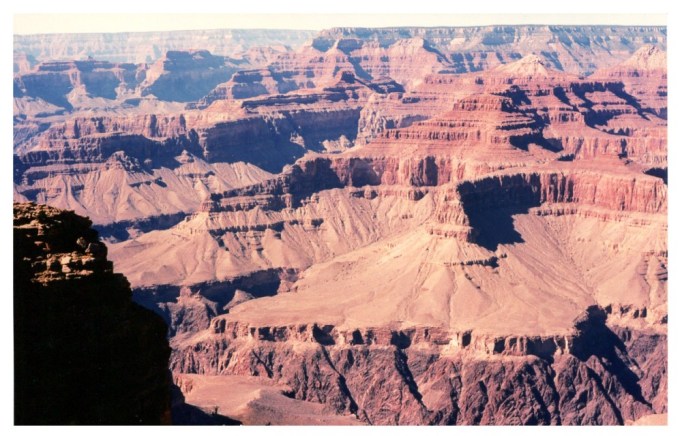
Grand Canyon, 1996

Westward-ho, this middle-aged man went on to see the boggling Hoover Dam and then went for a hike at Lake Mead at a spot reputed to be a nudist area. Feeling liberated from work and societal stuffiness, I tromped nude though the scrub willows along the lake. I saw only one odd naked fellow with a tent, whose kind invitation to tea I politely declined. From there I climbed to the top of a low hill to a giant tamarisk tree which served obviously and odorously as rookery for several unkindnesses of ravens. A malevolence of ravens?

Next stop was San Diego. I pitched my tent at the Campground on the Bay in view of Sea World across the water but didn’t go there till a couple days later. Instead, I spent my days at Black’s Beach near La Jolla and Torrey Pines State Park. An honest-to-John nude beach, you get down to it from the high bluff (at least back then) via a fragmented and dubious wooden staircase. Safely down, I shucked clothes and explored the lovely but sparsely populated (late-season) beach, my first time to the actual Pacific. (Puget Sound doesn’t count.) I noted the waves were understated, more like the Gulf than the Atlantic, eponymously pacific surf.

Spreading my towel back near the cliff out of the constant up-draft wind from the sea, I lay there in my splendid nakedness watching the hang-gliders take off from the bluff top and float around in the rising columns of wind like so many colorful seagulls. In skinny strolls along the beach I encountered only a few other bathers enjoying their own private leisure. I’d been advised that gay shenanigans went on back among the occasional dunes, but sandy sex wasn’t and still isn’t my bag. On one of my walks along the water I encountered a guy who was impressed by my cock-a-doodle, even though it wasn’t a Prince Albert.

While in San Diego, I did indeed visit the wonderful Sea World and go to the Zoo, which was almost more than I could handle. Most sentimental was my walk in Balboa Park where some years before my dear old friend Charles ended his troubled days on one of the park benches. Wandering around the city, I found a Kwan Yin to add to my collection, a beautifully brocaded figure riding on a fish-dragon, a good omen for my unemployed future. On the way home, I went by Joshua Tree National Park and took an illegal buff hike among rocks and Joshua trees. Isn’t it odd that only people care about clothes?

Well vacated, I returned to Santa Fe and got back into the swing of making futile job applications to get my meagre unemployment checks. That fall, with the luxury of not working, I started pulling together a draft of my book on ‘get’. (It would take another decade to reach its final form.) By December when public assistance ended, I really had to do something for an income. So I went to work part-time helping my daughter’s young man Rich in his woodworking shop. A totally new experience for me, the complicated job of making cabinets and doors was actually rather relaxing. The sanding and finish work was less fulfilling and far more tedious.

With the New Year and the unaccustomed leisure, I took a trip to Carlsbad Caverns—where I’d once gone with family in like 1953. I think it was an early Monday morning, January 7, when I got there and found the parking lot empty. As a matter of fact, beyond a couple workers at the food service, no one was there. I mean no one. I did a totally private tour through the caverns. It was almost mystical. You could even hear the distant drip of water from stalactites. Around noon, just as I was leaving, another car pulled into the parking lot. Afterwards I took long drives along the eastern and northern escarpments of the Guadalupe Mountains around to Dog Canyon on the west. How marvelous to think of that vast coral reef now thrust up as mountains.

After that special getaway, I returned to Santa Fe and my lot as a part-time carpenter’s helper. It was actually sort of fun work, the only pressure being to do it right, and I enjoyed long talks with the young fellow who had already been Aimée’s main squeeze for ten years. While warm and friendly, he was seriously amused by his girlfriend’s father being a gay man. Life rolled on smoothly for a few months with no other professional prospects, but I must admit that I found the physical labor tiring. So I got the idea of finding someone to share the work with me.

I mentioned my search for relief to an old friend, Peter Igo, a great silk-screen artist, and he suggested a young fellow who’d done some handyman chores for his place in Eldorado. (Peter’s remarkable “grow-hole,” a six-foot deep ditch covered with plastic, is what inspired my digging the “greenhole” several years later, and when he passed from cancer, I salvaged his many plants through Babylon Gardens.)

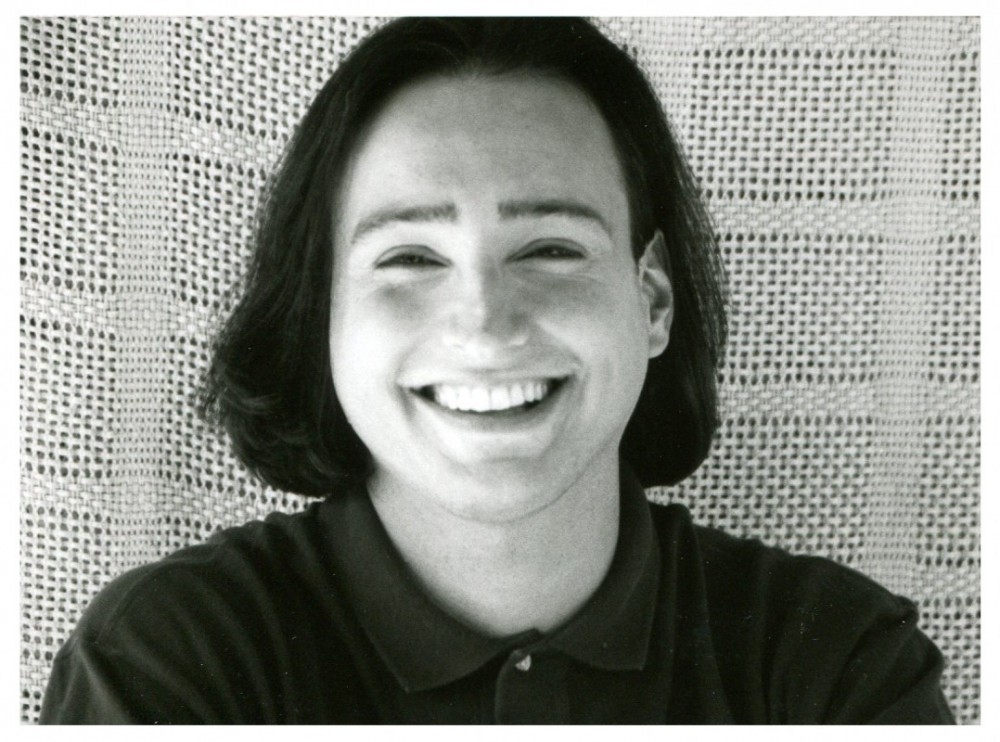
marc portrait

A posed portrait of Marcelo.  He spoke spectacular English.

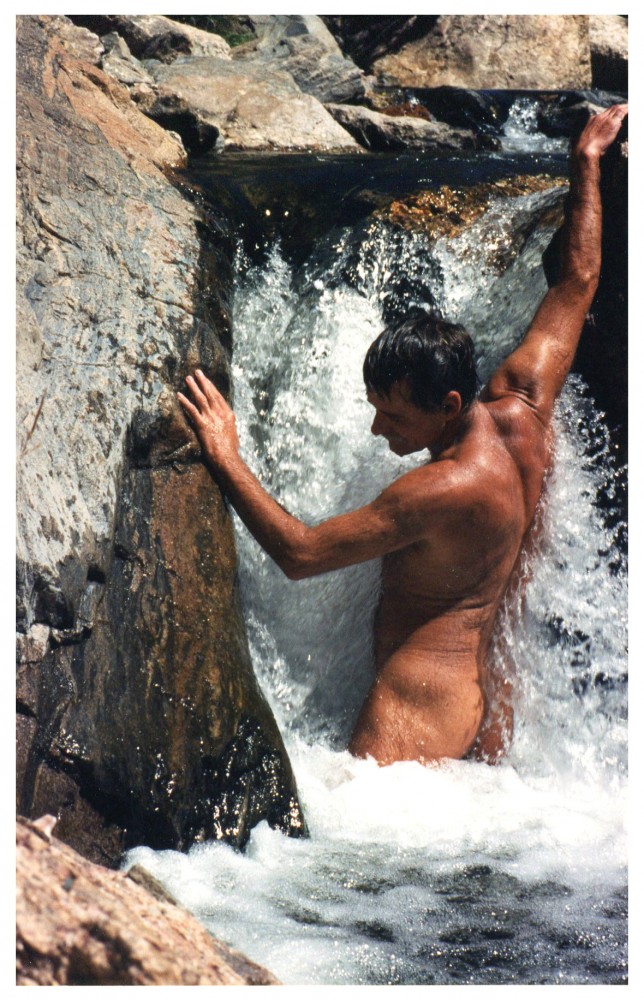
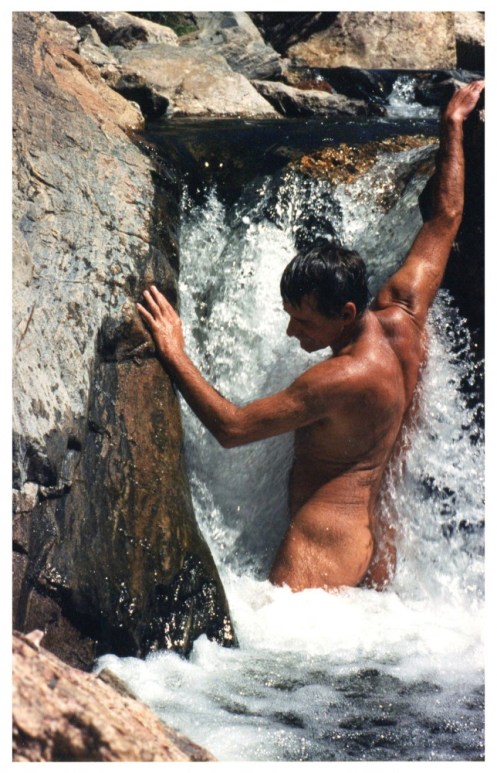
When I met in early May with Peter’s handyman, a tall, attractive Brazilian named Marcelo, he seemed interested in the work. The next day, May 10, I took Marc to my special spot on the Santa Cruz River in the Caja de Cundiyo, where we splashed and played in the rushing stream.
97 water games

This is moi in the Cundiyo waterfall. 

Back at home that afternoon, I didn’t decline Marc’s intimate proposition. After all, it had been at least five years since I’d gotten physical with anyone. Well, it turned out that Marc didn’t relieve me of any woodworking duties, but against my better judgment, we entered into an amorous liaison. As liaisons go, this one lasted longer than necessary—enough said. Marcelo is now back in Rio de Janeiro, and I’ve got good reason to think that he regularly checks in on this website. I hope he appreciates this fond mention.

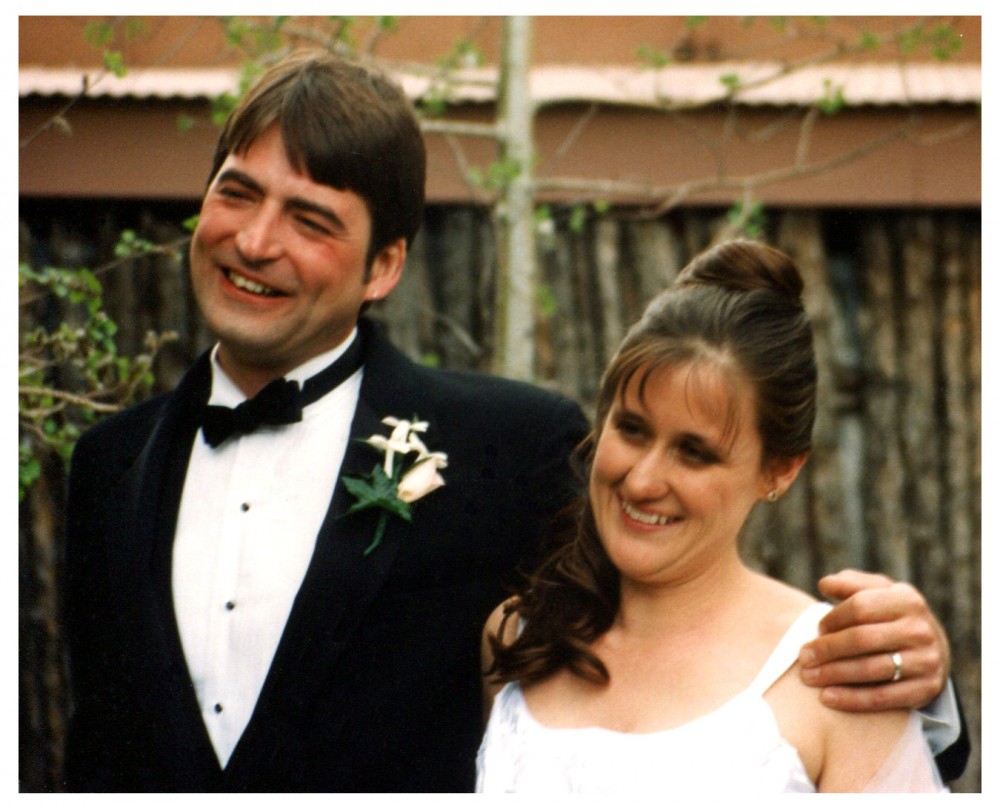
Meanwhile, on May 16 Aimée and Rich got married—after ten years together.

97 Rich and Aimee

 Aimée and Rich, May 16, 1997

The affair was in the garden of our local posh hotel, La Posada de Santa Fe (to whom long before I’d sold a huge Eastlake walnut over-mantle mirror which I’d brought from DC and painstakingly restored). The whole family from both sides showed up for the festivities, and I met Rich’s father Harvey for the first and only time. He looked exactly like Ernest Hemingway. I was resplendent in my tuxedo (not as much as Rich), and still have the rose (like his) that I wore in my lapel. Safely cushioned in a little jar, its pale pink has turned all golden brown after these 20 years. 

Actually I didn’t need any help with the woodworking after all. In June, some old professional friends offered me a job as Business Manager for their cultural nonprofit, Recursos de Santa Fe.  After only a week or so on that job, with great chagrin (for the first time in my life!), I told my friends that I was unable to do the job. What they really needed was an accountant.

No matter—the next week I snatched up another job as assistant to the Dean of the College at the College of Santa Fe. (Both he and the institution are now defunct.) No sooner did I report for work than the Dean took off for the summer to care for his ailing mother. With absolutely no job description and even less orientation, I had to figure out what I was supposed to do to run the academic show. It was fun, not to mention a snap, dealing with the closed universe of students and faculty, and rather pleasant having great clout. Big fish in tiny pond.

So the summer of 1997 turned out to be exceptional. I’d weathered my mid-life crisis and for that matter come out on the other side with a new professional niche—and what’s more, a young boyfriend. (Marc was only 32.)

As soon as the Dean got back, before the fall term was to start, I took my guy from Brazil on a grand tour of our western parks and landmarks. We hit Chaco Canyon, Canyon de Chelly, Hopi-land, Grand Canyon, Monument Valley, Hovenweep, Mesa Verde, and Aztec Ruins. Talk about a lot of film! I wish I could post a whole travelogue of photos of me and my Brazilian, but there simply isn’t space or time to do so.

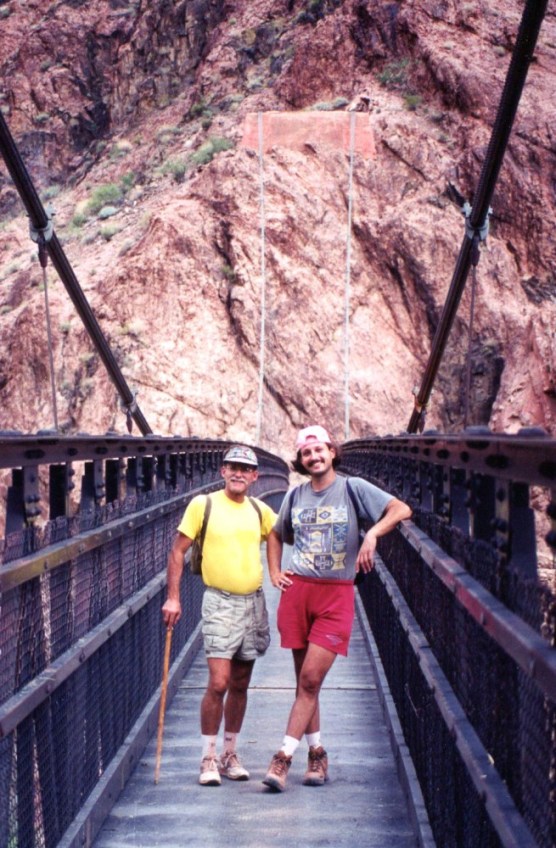
Of particular note was the morning Marc and I hiked to the bottom of the Grand Canyon, making the descent by 10:30. Shortly after a kindly hiker took this shot of us crossing the bridge over the Colorado River, when we were at Phantom Ranch wading in the creek cooling off our tired dogs, I remarked that we were just about as far from civilization as one could get. Not a minute later from over by the restroom shed a hiker, who had ironically been using the emergency telephone, hollered to his nearby friends: “Hey, guys, Princess Diana was just killed in a car crash!” So much for escaping from civilization. Within mere hours of its occurrence, that earth-shattering news had reached down to us at the very bottom of the Grand Canyon.
bridge over Colorado

Marcelo and me in the Grand Canyon, 1997

When we’d recovered from that culture shock and appropriately mourned the royal passing, Marc and I set off on the ascent. On the climb from Indian Gardens, we stopped frequently to breathe, etc., and made it up to the rim by early evening. We marveled at the 16 miles, the uphill half of which had felt more like 20. Marc said I was in terrific shape for such an old man. (Note the minimal middle-aged spread. I’m proud to have an even smaller paunch now—and to be in even better shape.)

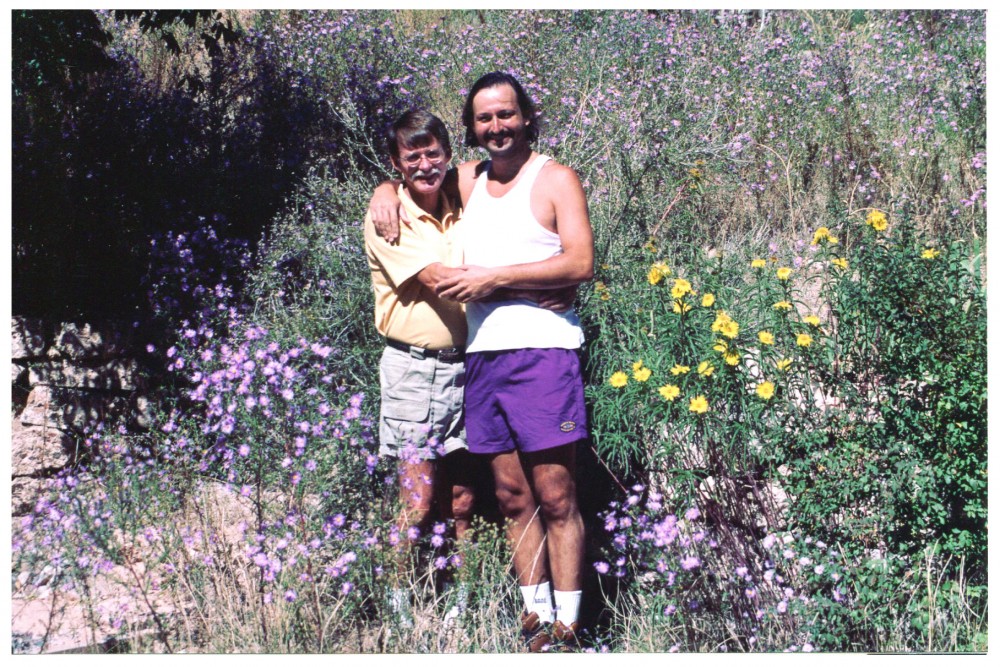
When we got back to Santa Fe, it was high autumn, and my rocky mountain asters were in full spate. In this sweet photo of Marc and me you can also see the golden maximilian sunflowers. Eventually, I’d make hunks of money at the Farmers Market selling them. Also eventually, I’d turn the hillside behind us into a bunch of terraces to display my found-object assemblages which I cleverly call Yard Art. However, I have not yet discovered another boyfriend.
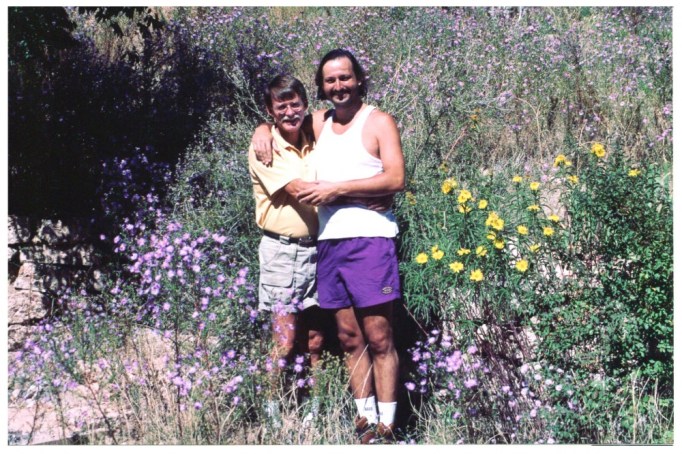
97 asters Marc and me hip-deep in asters


Aztec Icon #9. – MAYAUEL, Goddess of Pulque

After along haul of boggling detail, I’ve completed another icon in the series for the coloring book YE GODS!  THE AZTEC ICONS.  That makes nine in two years.  Only 17 to go.  Good thing I’m patient—and persistent.

The icon of this popular goddess of drunkenness (as well as intoxication by other drugs), was a lot of fun to draw if only because of all the drunken rabbits. She herself is based on an image from Codex Rios with details from Codex Laud and Codex Nuttall, and the vignettes come from various other sources like Codex Vindobonensis.  It was also a rare chance to draw the other hallucinogens:  psilocybin mushrooms, Datura and morning glory flowers, peyote cactus, and marijuana leaves.  The two little blooming peyotes are drawn from plants I used to have in my greenhouse.  The flowers are pink.

(You can still see or download the previous eight icons by clicking on them in the list on the page for the coloring book.)

ICON #9: MAYAUEL

(Goddess of Pulque)

To download this icon as a .pdf file with a page of caption and model images from the Aztec Codices, right click here and select “Save Target (or Link) As.”  You can also download it in freely sizable vector drawings from the coloring book  page.

mayauel icon

MAYAUEL is the personification of the maguey plant and a maternal and fertility goddess connected with nourishment. Besides fibers for ropes and cloth, the most important maguey product is the alcoholic beverage pulque (or octli).  As a pulque goddess, she is often depicted with many breasts to feed her children, the Centzon Totochtin (400 Rabbits), octli gods that cause drunkenness.  (Drinking was generally only permitted in ceremonies, but the elderly were free to drink whenever they wished.  There were rabbit deities for all kinds of intoxication.)  With the birth-name of Eight Flint, she also protects mature wombs and probably is the wife of PATECATL.


A Decade Ago

Two weeks into the New Year may be a bit late, but I’m inclined to reminisce about life as I knew it a decade ago. I feel like, you know, doing some spontaneous memoir-izing.  Indulge a few fond ‘memoiries,’ if you will.  Let’s look back on when I was still the Grandfatherly Gay Character around Santa Fe, 2005-2006, sole proprietor and employee of Babylon Gardens Salvage Nursery.  Oddly, of my two previous careers, it was the most wonderful and fulfilling.

Though I’d supposedly “retired” on early Social Security in 2004 from a long career of arts administration, I‘d kept on working half-time in local nonprofit organizations (including education, health care, and philanthropy), for minimal compensation, of course. For some years I’d been happily working on grants and technical assistance programs with the Santa Fe Community Foundation and then in April 2006 decided to move over to manage a new state-wide organization of nonprofits called NGO-NM.  The sad finale to my illustrious administrative career was having to close that worthy effort down at the end of the year.  I still have the incised plastic door-plaque somewhere.

My 2005-6 season (speaking both academically and organizationally) started quite dramatically in August with Hurricane Katrina. Residing in Metairie, my elderly mother (87) lived through it, sheltering at Bonabelle High School.  Of course, that’s a remarkable story in itself.  When she finally made it here to New Mexico—on her own! —to stay with me, I convinced her to write about the historic event for her descendants.  Soon I should type it up and post it for them and you.

In late November 2005 when at least Metairie was back to functioning again, I drove Mother home. Miraculously her home was essentially undamaged, no flooding at all as it stands atop a vestigial ridge between Lake Pontchartrain and the Mississippi.  A few blocks north or south had been six feet under water.  Personally, I’m inclined to attribute her good fortune to a Kwan Yin I’d given her.  Compassionately, the female Buddha still stood on a console directly across from a thin aluminum picture window to the southeast, having apparently peacefully faced down Katrina, the monster storm of the new century.  Meanwhile the big maple at that corner of the house had snapped off about four feet above the ground and merely fallen on the yard.

As if I weren’t being creative enough with the organization work, soon as I got back to Santa Fe for the holidays with my local family (grandson then just over three), I went back to work on my weird linguistic hobby of some 40 years, a structural definition of the innocuous English verb ‘get.’ By the time I started with NGO-NM, it was ready to publish with http://www.AuthorHouse.com, then under a different name, entitled “Getting Get, the Glossary of a Wild Verb,” which came online in November.  Sometimes since, I’ve humbly suggested to forbearing friends that this absurd little pamphlet could well be my work of genius.  If only anyone but I were eccentric enough to see its simple profundity.

NEWS FLASH:

GETTING GET is posted on this website for free download.

Just right click here and do it.

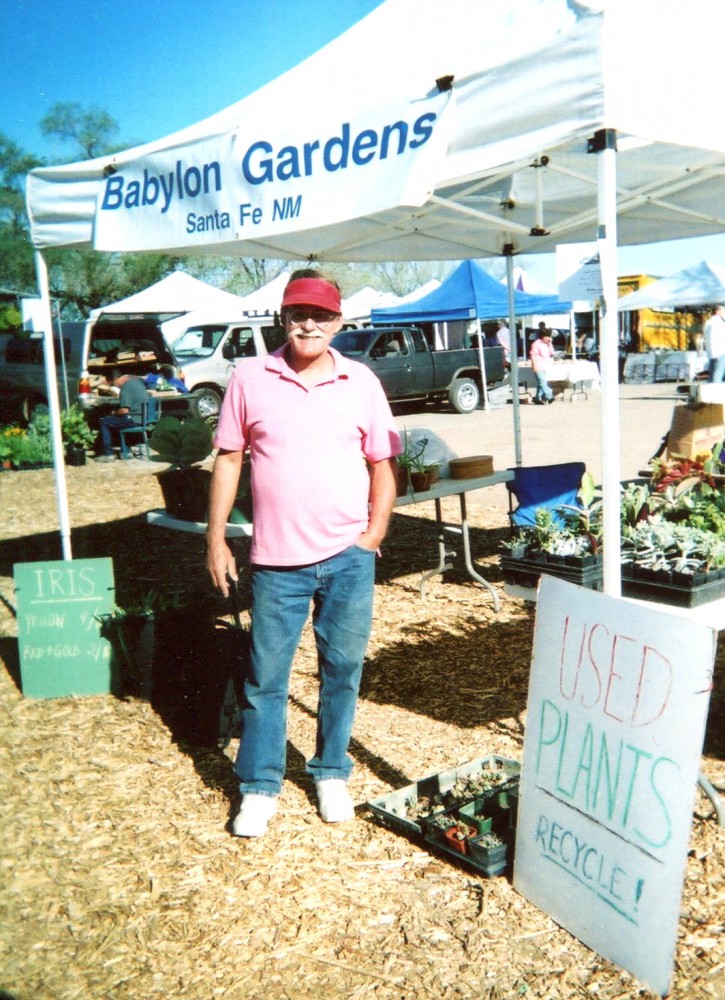
You probably already know, however, that Santa Fe’s notorious for poor folks having to work multiple jobs to get by. Accordingly, besides organizing stuff and defining the wild verb, I spent a miraculous third half of my time as the famous Used Plant Man at the Santa Fe Farmers Market.  In honor of my signature product, in the summers I turned into the infamous Iris Man.

Every Saturday morning, and Tuesdays in summers, I peddled previously-nurtured, restored, or recycled house plants. Not mention that in my spare time I did what I cleverly and artistically called ‘land-shaping,’ which involved terracing, rock walls, and laying flagstone patios.  In other words, I played around digging in various folks’ yards, gardens, and sandboxes.

2005 in the greenhole

2005 in the greenhole

2005 in my booth

2005 in my booth

That greenhouse was of my own design and construction. I called it my ‘greenhole,’ literally a hole I dug six feet deep and slapped a plastic roof over it .

The Greenhole

The Greenhole

The only other infrastructure for the business were folding tables, a portable pop-up tent with the proud banner of Babylon Gardens,

2006 booth at Farmers Market

2006 booth at Farmers Market

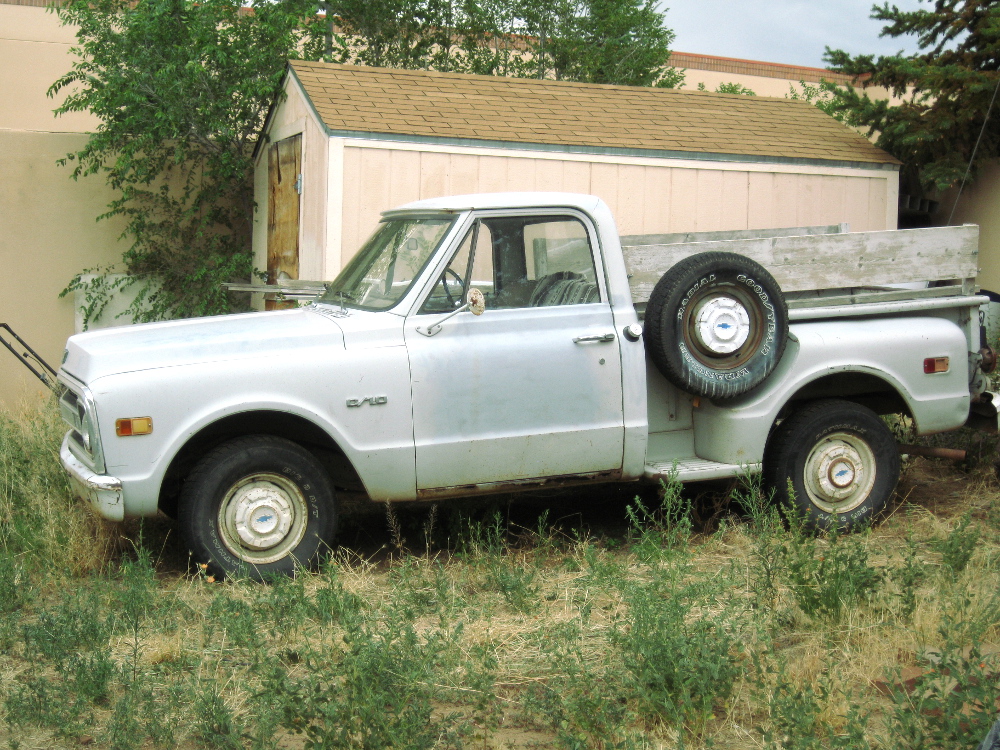
And the gallant Grover (the Grey, like Gandalf), a 1970 Chevy C-10 pickup. Grover hauled load after load of plants and paraphernalia through so many pre-dawns and then stood nearby for thousands of touristic snapshots of a typical Santa Fe scene.

Grover the Grey

Grover the Grey

As if doing meaningful work for society, publishing a fantastic book, and selling spectacular plants weren’t enough, in June, 2006 I came out as an artist in an art show for the Santa Fe Gay Pride celebration. I’d earned the gay category 45 years earlier, also in June.  I showed three pieces:  the assemblage shrine Bull of the Sun, the carved sandstone Venus, and my very first piece of digital art, the cover for my novel “Gymnopedie.”

NEWS FLASH:

“Gymnopedie” the novel has been withdrawn from publication and

rewritten as a backwoods novella called “Bat in a Whirlwind,”

available for free download by right-clicking here.

2006 publicity with baby jade

2006 publicity with baby jade

While we’re at it, I want to share with you a picture of one of my favorite plants in the greenhole. Soon I really should do a post with more stuff on the wondrous plants I had in there.  This one has an outrageous Latin name I loved reciting to folks:  pachyphytum oviferum amethystinum (fat-leafed, egg-shaped, amethyst).  Here it is in bloom in 2005.

Pachyphytum Oviferum Amethystinum

Pachyphytum Oviferum Amethystinum

The Farmers Market always went outdoors somewhere in late April around my birthday, and in both the 2005 and 2006 seasons that was on the wide-open corner of Guadalupe and Cerrillos skirting the railroad tracks behind SITE Santa Fe. In my humble used plant vendor opinion that point out there in view of two busy streets was the perfect, I mean the ideal, location for our wonderful community market.

In years past we’d simply popped up our tents, if we had one, further north along the tracks across Paseo de Peralta behind Santa Fe Clay. (And in years before my time, it had been in the parking lot of Sanbusco Center.)  Now almost all the vendors, including makeshift Babylon Gardens, flew a white canopy like a flag to be seen from all around.  We were truly a spectacle of folk life that made me proud.

As a matter of fact, it seemed a vindication of the pleasure a certain clueless kid once enjoyed in peddling peaches in a booth beside the highway. It was that splendid interaction with people around a subject you deeply love and the thrilling opportunity to share the work of your own hands with them.  Every day, even the slow ones, I loved the glory of hawking my beautiful plants, talking about them and how they like to be treated.  In a word, it was a trip.

Ironically, the fortuitous move from the hinterlands of the railyard up to this prime spot was caused by big city projects afoot for the neglected old railyard. I believe the powers that be moved the Market out where people could see it to get support for the new building they were preparing in those same hinterlands as an indoor place for us in the winters.

Among other opponents of that project, I felt the current arrangement, as I said before, was ideal. For the winter seasons, we’d been going indoors at El Museo Cultural, and vended there happily, even with poor lighting and no call for flashy tents.  It felt very folksy, local farmer cultural.

But the majority of vendors, or at least the power that were at the time, had their hearts set on a fancy market hall like in Boston or Seattle or wherever. This ambition caused a whole bunch of trouble, but don’t get me started.

(Can’t help it. For just a few repercussions.  Before the building was even done, the Trust for Public Land and other powers kicked the Market off that superb spot on the busy corner to make the new Railyard Park.  I suggested, clearly not vociferously enough, that they design that great space on the corner for a fancy open market plaza for us farmers and for other fairs on other days.  Irony Alert:  My sweet old vending space is now in a rotunda of rose gardens where few people care to walk.  Roses to be smelled and not sold.

Kicking us out made the Market wander for a couple summers around parking lots. The summer beside the DeVargas Center was a huge come-down, but in more levels of irony, our summer of 2008 in the almost ideal PERA lot was the most spectacular in the history of my unorthodox nursery.  To make matters worse for us gypsy farmers, for some reason we also lost the El Museo space and had to spend a winter in a grungy industrial place on Cerrillos Road.  Again the irony, it had once upon a time been a gay nightclub, the Cargo Club, I think it was called.  Or Club Luna?  I’d gone there only a few times to dance.)

At any rate, between Market days Grover and I would tootle all over town and even out to Espanola or Eldorado to grub freely in folks’ iris beds or do plant rescues or paid land-shaping jobs. It was a splendid gimmick, an ingenious concept if I say so myself.  I provided a free, much-appreciated community service and turned my (minimal) physical labor into totally free merchandise.  No overhead except gas for good old Grover.  Good job for an old guy.

Frequently folks gave me way more plants than I could ever hope to sell at the Market. Like 500 lb. of blue iris?  I’d just give them away.  Once I got a whole greenhouse collection from an estate and recycled (propagated) thousands of new plants to give away to garden clubs, school classes, and anybody I could foist them off on.  I always kept a FREE box at my booth, and folks checked it frequently for adoptions.  I joked that I was a “philplanthropist.”

Sometimes I’d simply show up at a business or office building, like that time at the Toney Anaya Building when I marched in and told the receptionist, “I’ve got a giant jade tree that wants to live in your lobby.” A couple times I simply arranged for gigantic plants to go to great spots like at the Capitol complex or other public spaces.  They had to do the hauling though.

A decade ago I was a plant freak in his element, and my only problem was believing what a happy old man I was. Even older now, I’m still a happy fellow—and I believe it.

Another Masterpiece Last Supper

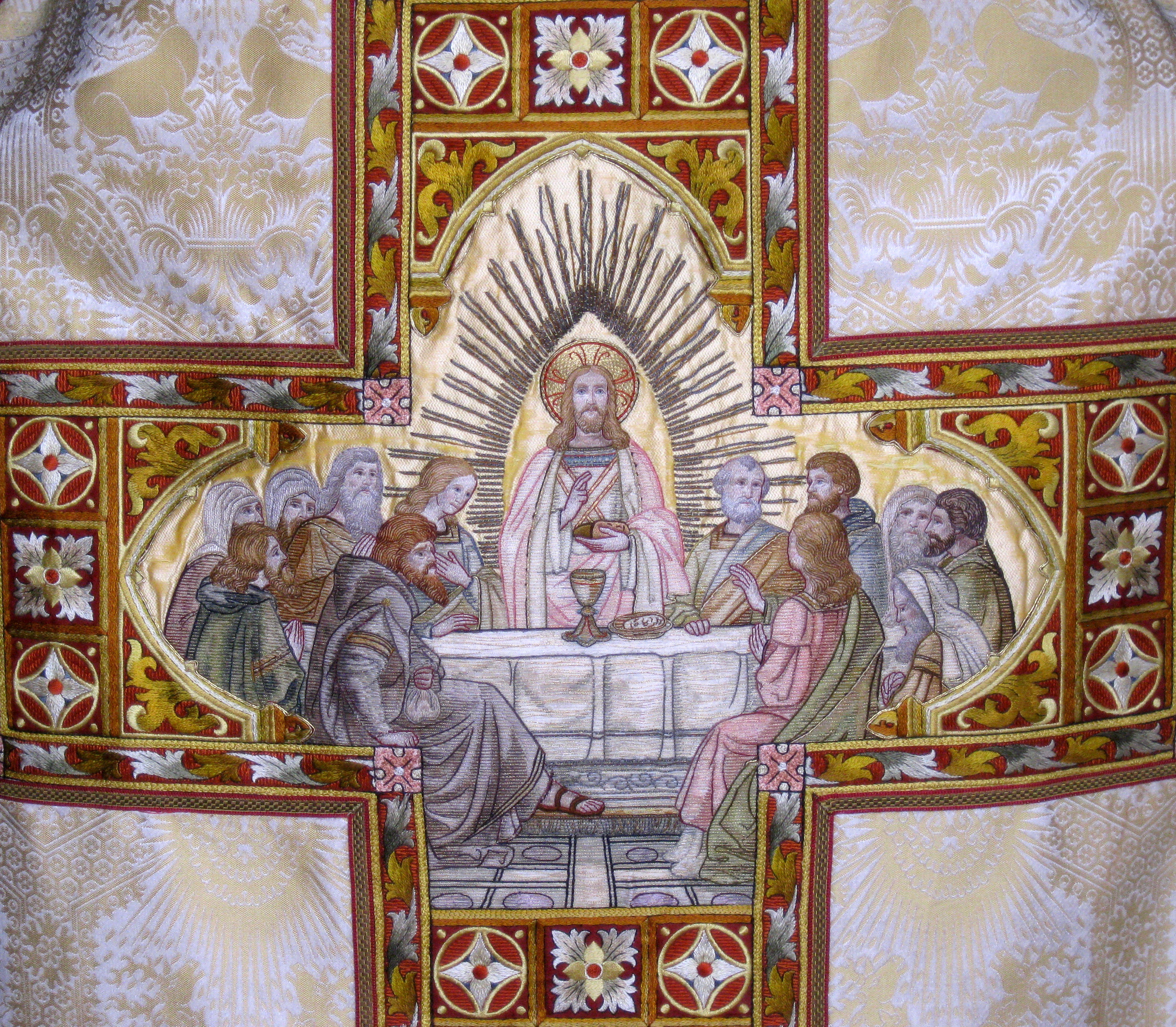
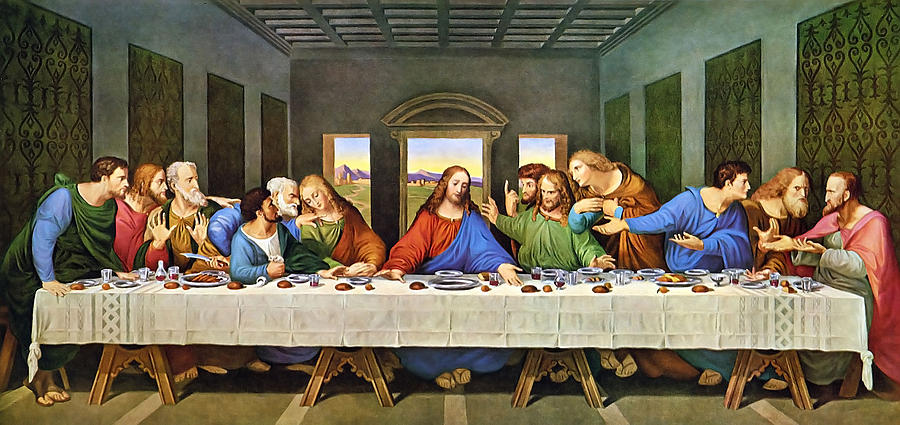
Roll over, Da Vinci!  Not to sound pretentious, but I’ve just discovered another masterwork of the Last Supper.  Apparently from the late 19th century, this one is probably the artistry of an anonymous nun in a Swiss convent, and it wasn’t painted on a wall but embroidered on a liturgical vestment.  Take a look at this baby:

Last Supper embroidery by Fraefel & Co.

Last Supper embroidery by Fraefel & Co.

The photo is high-resolution, so you can probably zoom in to see the incredible delicacy of the stitchery and execution of the figures.

Of course, it immediately begs comparison with Leonardo’s own masterwork.  I’m not sure what similarities there are beyond the groupings on either side of Jesus, with Mary Magdalene on his right.  Both works show “The Twelve” counting her, and the Judas figure clutches a bag (of silver pieces) in both, though less clearly in the painting.

The Disciples are presented as quite different physical types in the two artworks.  (Check out their incredible faces in those almost microscopic threads!)  You can’t really see eye color in the Da Vinci painting, but in the embroidery, most of the figures’ eyes are incongruously blue, and if not grey, in both works most of them have brown or russet hair.  Definitely a Eurocentric view of this crowd of ethnically Semitic types.

As well, the energies of the dinner groups are vastly different.  Da Vinci’s garrulous, talkative, argumentative apostles surround a resigned, pensive, very human Jesus is seated at a table covered with the remnants of the meal.  It is the eloquently human aftermath of the Communion, and just about time to go to the garden of Gethsemane.  The painting is a poignant personal moment in the passion of Jesus the man.

In the embroidery they cluster reverently around the table where a divine Jesus stands (in a glorious aura and halo) to bless their Communion of bread and wine.  This is the sacramental moment when Jesus the god says, “Take this and eat—this is my body.”  This is why I’d really rather call this artwork the New Covenant.

How does all that sound from a life-long fanatical agnostic?  Actually, whether you hold by it or not, you’ve got to respect a big honking myth that’s hung on for many thousands of years.  The myth of the dying and resurrecting god has been, if you will, resurrected several times in as many parts of the world since mankind began.  Often the divine deaths have been much more gruesome than a straight-forward crucifixion.  And at least one goddess came back:  Inanna/Ishtar/Astarte.

In my humble opinion, it’s human nature to try to explain the inexplicable, to embody the ineluctable, to describe the indescribable, to understand the incomprehensible, and to delimit the infinite—by creating myths.  Okay then, if you want to split hairs—by creating religions.

Often beautiful and inspiring (like the present masterpiece of embroidery), these imaginings or faiths, if you prefer, have provided the fabric of all human civilizations, guidance for people to live with one another (or not), answers for life’s unanswerable questions, a focus for spiritual growth and fulfilment, and a sense of the individual’s place (insignificant though it may be) in the cosmos.  You’ve got to give them that.  But please, we must also weigh those blessings against the immeasurable oppression, death, and destruction that reputedly enlightened faiths still cause in the name of merciful, loving deities.  Is that a fair trade?  But then life, like trade, isn’t always fair.

In any case, for purposes of encompassing the divinity, I agnostically think that any faith you care to concoct will be no more effective than spitting in the sea.


NIGHTLIFE IN SANTA FE

NIGHTLIFE IN SANTA FE

[Thanks for and to several compliments on my website (notably chock full of interesting stuff) and my first blog posting about dancing, I think I’m ready to get regular about this thing.  While in my youth I used to have trouble prioritizing inspirations, as I got older it got to be more of a yes or no question.  Now at my venerable age, I’ve got to balance the time and attention I give to several weighty priorities.

My multi-tasking isn’t doing several things at once, but rather synchronously.  I seem to turn focus like a searchlight from one obsession to another, largely by sheer will-power—and calendar-power.  If I’m going to blog, by golly, it better be on the calendar.  So, for the moment, I’m going to mark Thursdays for new postings.  Keep checking in on me!]

#

Regarding nightlife and dancing in Santa Fe NM, as I mentioned before, for the past few years the Rouge Cat had been Santa Fe’s more or less gay dance bar.  To my horror, without any fanfare or folderol, soon after my first posting it closed.  In fond memoriam of the Rouge Cat, here’s a cursory history of my dancing venues here in Santa Fe.

On visits in the late 70’s, I’d go to the Senate Lounge, a venerable bar just around the corner from the bus station.  It was my first experience of a “mixed” bar.  By the time I moved to Santa Fe for real in 1983, the Senate was gone, and being in a relationship, I didn’t go out very much.  Still, there were a few dance occasions at a great place called Club West on Alameda and another called El Paseo on San Francisco Street.  Then came the Cargo Club followed by Club Luna on Cerrrillos (or the other way around?).  After that my partnered years became a blur, and by the early 90’s I didn’t know from night spots.

Once single again in those early 90’s, I danced at the Club 414 on Old Santa Fe Trail, where I first encountered Oona’s disco wildness.  I found myself dancing on a table, starting a tradition of six or seven tables along one wall as go-go boy stands. Within a year or so the action moved to the Drama Club on Guadalupe Street, with a stage where we danced like wild people and had great holiday parties for hot, shirtless frenzies.  It reigned for a few years, only to be replaced by the same owners’ Paramount, a glitzy space on the corner of Montezuma and Sandoval.  That was a glorious institution for several years hosting Oona’s regular Wednesday Trash Disco, and life was exceedingly good.  But it closed; they tore it down, dug an enormous hole, and built the new Santa Fe County Courthouse.  Sic transit gloria.

With the passing of the Paramount, there was a drought for some time (years?) until Oona started dance nights at the lounge at Rainbow Vision, a gay retirement community, now called something less vivid.  There was a little stage where I shook my beauty with vigor and sweaty abandon.  Then the entrepreneurial Paramount owner opened the Rouge Cat, and the dance scene got a new lease on life.  For about four years.

Since my first posting, dancing this year was really difficult, with an occasional youth party at Molly’s Kitchen with electronic dance music (EDM, which I’m trying to appreciate) or a couple hugely appreciated Trash Disco nights at the Palace Restaurant.  That is, up till a month or so ago when there was a revolution in Santa Fe’s nightlife.  Maybe it had something to do with the election of Javier Gonzales as the city’s new mayor?

Suddenly music events started happening all over the place on the weekend nights, and walking around the (old) downtown almost reminded me of the (old) French Quarter.  What’s more, wonder of wonders, two new dance bars have opened!  First the Skylight on San Francisco, a huge place with a gallery overlooking the dance floor, and then the Blue Rooster, a reincarnation of the Rouge Cat, now as a self-proclaimed gay bar, with the familiar dance floor downstairs and Oona presiding on Saturday nights.

You’d think I’d be in hog heaven, but last weekend it was cold out and I wasn’t really feeling like driving downtown.  Instead, I realized that with that great Pandora online music system it was no problem.  I pulled up a “cumbia colombiana” station and danced shirtless and in slippers in my living room for a good hour and a half.  Dancing with eyes closed, I peeled away a half century and was once again in the mad third room of La Casa de los Marinos.  Maybe tonight I’ll pull up Greek and visit the Gin Mill, but on Saturday I’ll be at the Blue Rooster.  Promise.