Reading a Chasuble

You may recall my recent post about an embroidered scene of the Last Supper, which I presented there with no context.  Sorry about that.  In a consignment store recently I bought a chasuble which I consider a masterpiece of ecclesiastical embroidery.  It’s labeled “Fraefel & Co., St. Gall., Switzerland established 1888.”  An over-vestment worn by priests in celebrating Mass, the chasuble has a treasure of fine embroidered details on the frontal columnar design and on the cruciform design on the back.

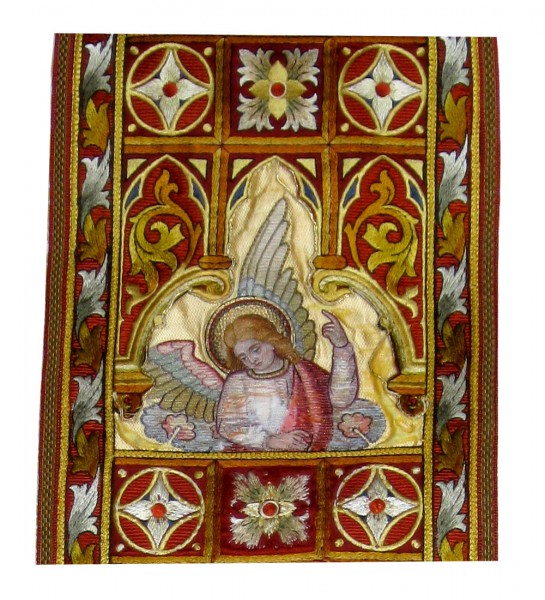
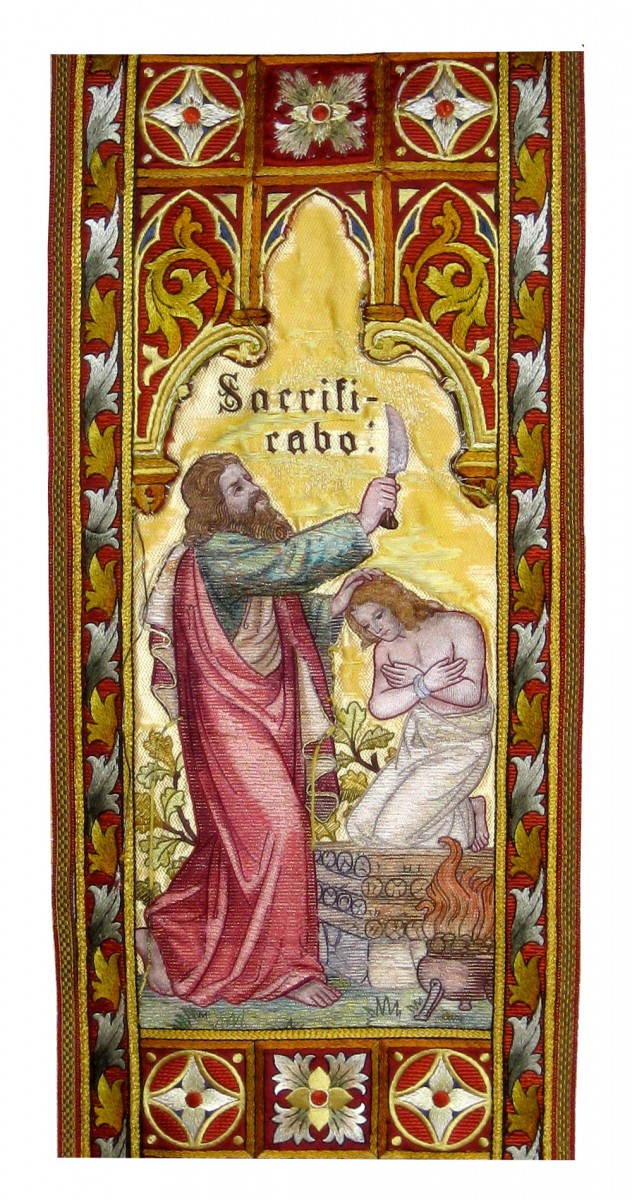
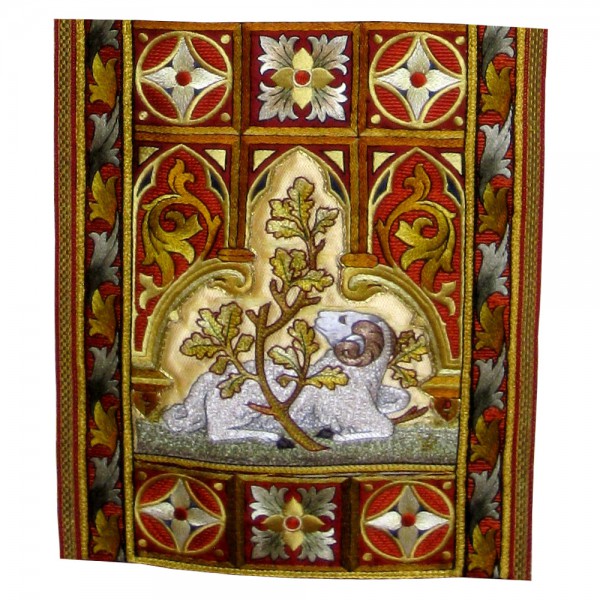
Oddly, on the narrower front are framed scenes from the Old Testament, at the top an angel, in the middle Abraham  preparing to sacrifice his son Isaac, and at the bottom a ram waiting to take the boy’s place on the altar.  I personally think the ram is one of the most magnificent details on the piece.

Angel, Fraefel & Co.

Angel, Fraefel & Co.


Abraham Sacrificing Isaac, Fraefel & Co.

Abraham Sacrificing Isaac, Fraefel & Co.

Ram for Sacrifice, Fraefel & Co.

Ram for Sacrifice, Fraefel & Co.

I really wondered about this Old Testament thing on the front of a Catholic vestment.  Then, when I looked at the broader back again and managed to tear my eyes away from the riveting Last Supper scene, I found the two details on the lower part of the cross even more intriguing.

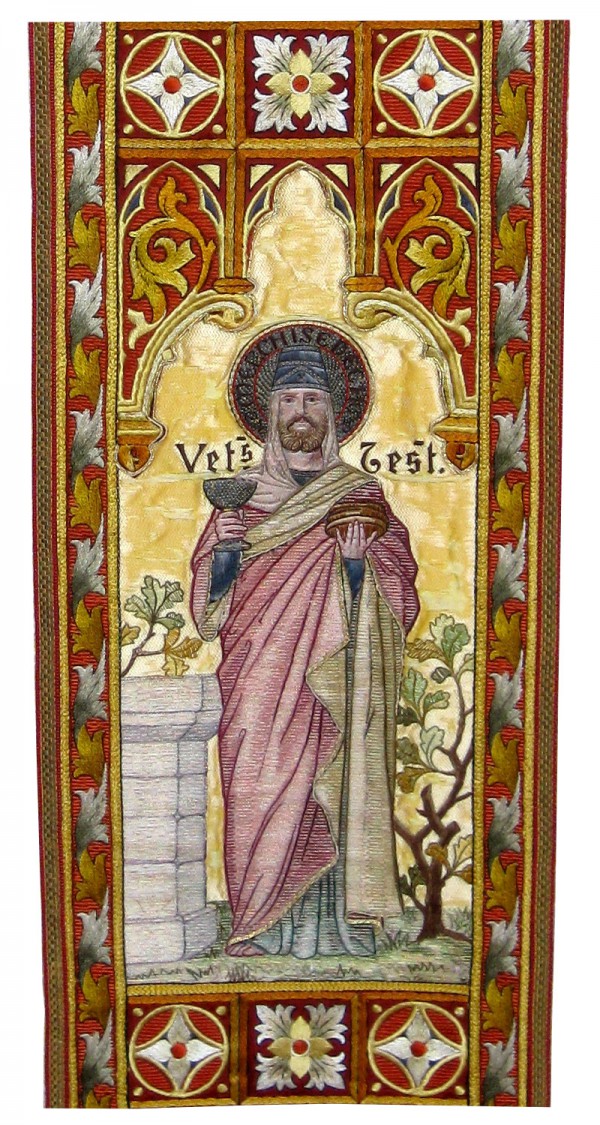
Melchisedech, Fraefel & Co.

Melchisedech, Fraefel & Co.

The imposing fellow is identified in his “halo” as Melchisedech.  When I checked him out, I discovered that he was basically the first priest of the Elohim back in Genesis times.  The name actually means the Righteous (or Rightful?) King, and it was the title of successive priest-kings of the Semitic peoples, including King David.  The iconic ritual of these priests of the order of Melchisedech was the sharing of bread and wine.

Incidentally, according to the Bible, it was a Melchisedech who blessed Abraham after the Battle of the Kings (which may have happened around 2000—1800 BC).  This is something I’ve long been intending to look into.  The late and oft disputed writer Sitchin offered an interpretation of Abraham’s Sumerian origins which begs serious consideration.

The depiction of this primordial priest of the Elohim just beneath the sacramental Last Supper scene I take to symbolize that Jesus (of the House of David) was a priest of the High God in direct line from the first Melchisedech appointed by the Elohim as Rightful King.  This message is an unusual twist on Christianity in that it weaves the Christ into the divine myths in the Old Testament.  Similarly, the Jesus story is another strand in the long tradition of dying gods.

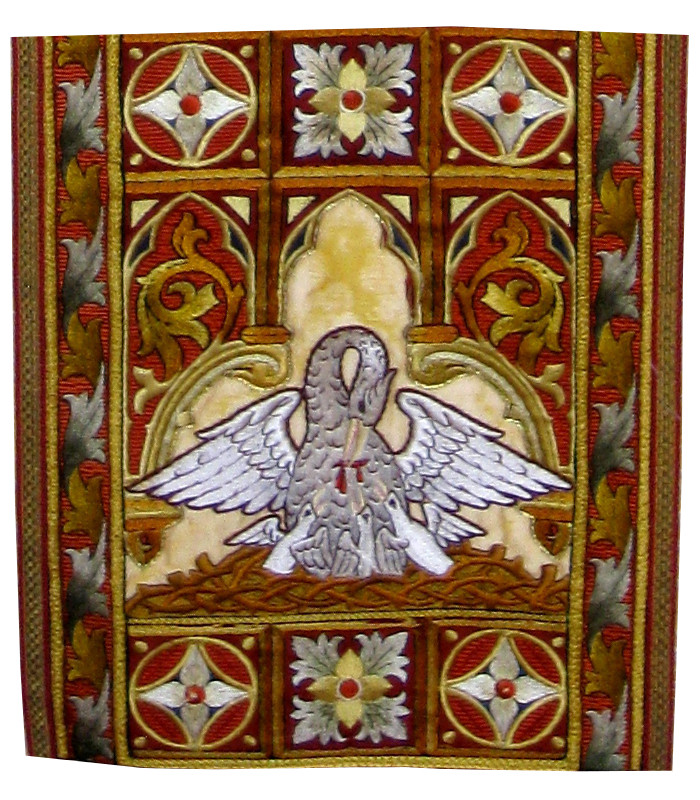
Pelican Piercing Breast, Fraefel & Co.

Pelican Piercing Breast, Fraefel & Co.

The other little detail, the pelican piercing its breast to feed its young, has long been seen as a Christian emblem of self-sacrificing love.  So what if pelicans don’t really do that?  It’s the thought that counts.  However, I recently discovered that this altruistic pelican is also a powerful symbol in Masonic rites.  Only they show seven little chicks, having something to do with the planets or other mystical concordance.  Does the “hidden” symbol indicate a Masonic element in this deep historical perspective on the Christ?  Might this stunning chasuble be a secret and wondrous heresy?

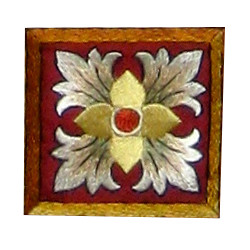
Before I let this go, I’ve really got to exclaim some more about the exquisite needlework on this chasuble.  The embroidery’s delicate shadings and the almost spider-web threads used (by motivated nuns) for details like lips and the irises of eyes is in a word, phenomenal.  Can you imagine any human being sewing this amazingly 3-D floret in a two-inch square?

Embroidered Floret, Fraefel & Co.

Embroidered Floret, Fraefel & Co.


Tattoo Rant


Now that I’ve let everybody in on one of my most intimate eccentricities, I don’t imagine that the rest of them would shock you.  So I’ll leave those disclosures for another time.  Instead, I’ll save you the trouble of reminding me and do a rant right now from my un-inked perspective about tattoos, relying largely on my spa experience.

Besides the physical exercise, going to the gym in the daytime (as well as out dancing at night), provides many eyefuls of the tattooed and otherwise ornamented bodies of young folk.  Sadly, I usually can’t discern details of the vast (and idiosyncratic) patterns or appreciate the artistic statements, since staring isn’t polite.

(As a sociological observation, I’ve been noting now at the EDM sessions of the local twenty-somethings that they don’t seem to be quite as taken with tattoos and piercings as are their elders.  I’m even seeing more “kids” nowadays at the Spa without a mark on their bods.)

Certainly some folks of my vintage have tats, but I think I’ll make do with my cockadoodle.  What I can’t quite grasp is the frame of mind somebody must be in to post some of the weird things I see as tattoos.  Of course, chacun á son weird.  Personally, I like more of the ornamental design stuff than the pictorial or narrative.  (One guy has a fox chasing a rabbit across his belly.)

By me there’s something classy about the patterned armband or ankle-band, but for some reason I find those maniacal Maori shoulders and orientally intricate sleeves personally disturbing.  But some of the full-back tableaus are impressive.  Aesthetically, I’d prefer more cohesive patterns, something more of an overall design.

In my historical wanderings, I’ve run across lots of tattoos amongst Native Americans.  There were some spectacular full-body tattoos amongst the extinct Timucua  people in northern Florida.  They were painted by the artist Jacques le Moyne  (around 1565) while at the ill-fated French settlement of Fort Caroline.  The best I can do for an illustration is a detail from an engraving of one of his lost paintings.

Timucuan full-body tattoo

Timucuan full-body tattoo

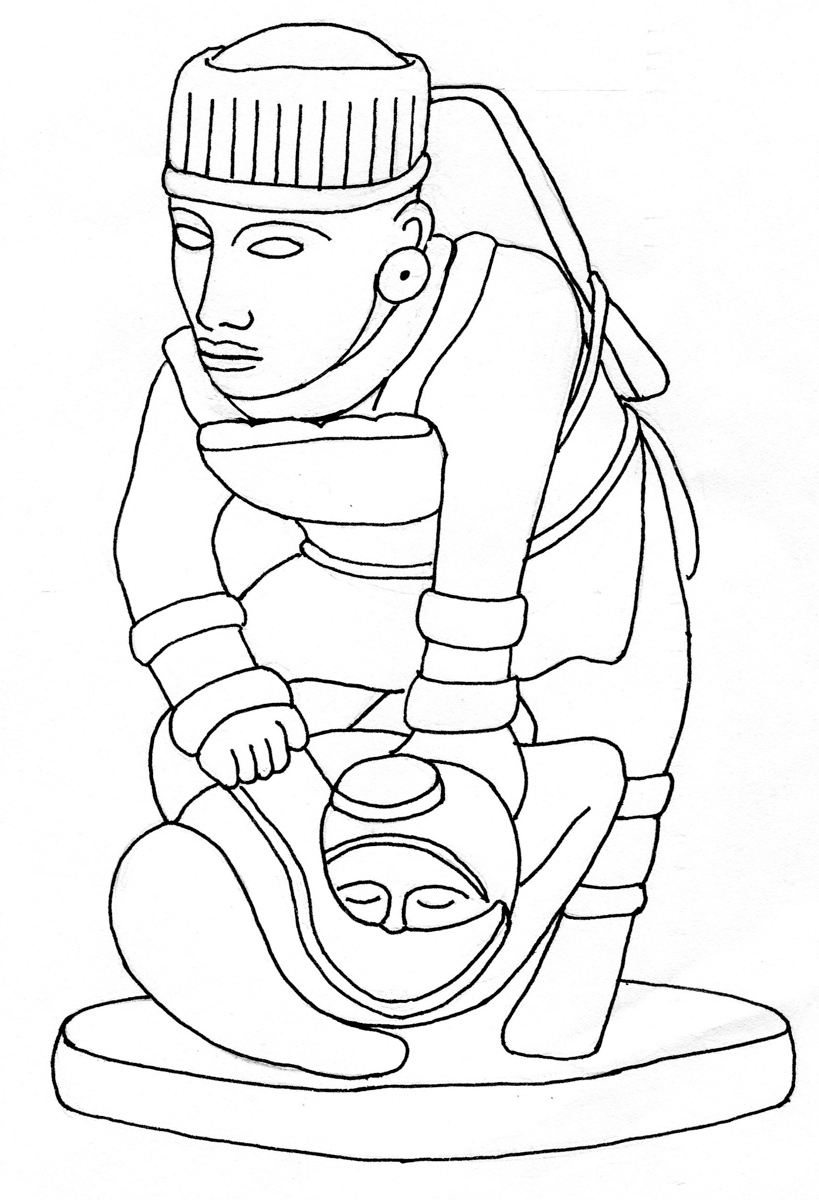
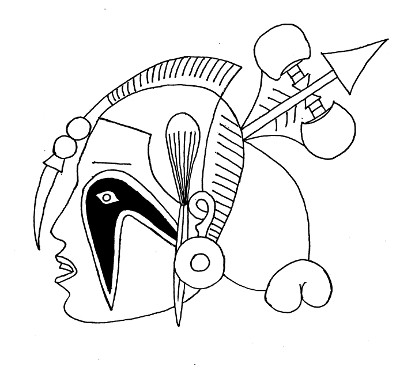
Full-body patterns like that are probably more than most folks could put up with, I suppose.  But I do wonder why facial tattoos are so neglected.  They would be a sure way to (modestly) get people look at your body art.  While enthralled long ago by the Indian mounds, I ran across some great line-art engraved on shell from the Mississippian site called Spiro Mounds in Oklahoma, some of which can be seen re-drawn in my Gallery of Pre-Columbian Artifacts.  My favorite is the head of a warrior with the so called “forked-eye” tattoo and a remarkable hairdo and headdress.

Warrior Head with forked eye tattoo

Warrior Head with forked eye tattoo

In my Aztec obsession I’ve run across any number of facial tattoos.  Frequently faces were sectioned in different solid colors, and they used eye embellishments.  It would seem that such designs were the identifying “signatures” or “trademarks” of specific individuals.  Talk about having an unmistakable identity.  Here are four I’ve drawn on authority of the marvelous Codex Nuttall  which is admittedly of Mixtec origin, but what the hay!  Don’t miss the other details including the (real) beards.

Aztec/Mixtec facial tattoos

Aztec/Mixtec facial tattoos

Native American tattooing traditions continued long after European contact and the colonies.  In the late 18th century a young Creek gentleman named merely John combined ink and jewelry in an elegant fashion statement.  Here’s my rendition of a 1790 drawing of John by the early American artist John Trumbull.

John the Creek

John the Creek

By the way, I have a superb suggestion for truly personalizing tattoos.  Considering the Aztec picture-writing of dates in their ceremonial calendar, folks could very easily sport their personal Aztec birthday-names as identity-tattoos.  All you’d need to do is consult the tonalpohualli to find out your number-day name, grab one of my day-signs, slap the appropriate number of dots in whatever arrangement around it, and there you go.  Here’s one for someone born on the day Five Flower (which is also the day-name of their god of games and parties).

Five Flower

Five Flower

Not to belabor the subject, though I will, I rather think that some of my Aztec deities would love to ride on somebody’s bare back.  Take for instance, Itzpapalotl, The Obsidian Butterfly (or Clawed Butterfly), the goddess of the night and stars.

Itzpapalotl, The Obsidian Butterfly

Itzpapalotl, The Obsidian Butterfly

Go for it—the colors are entirely up to you.


THE AZTECS ARE BACK!

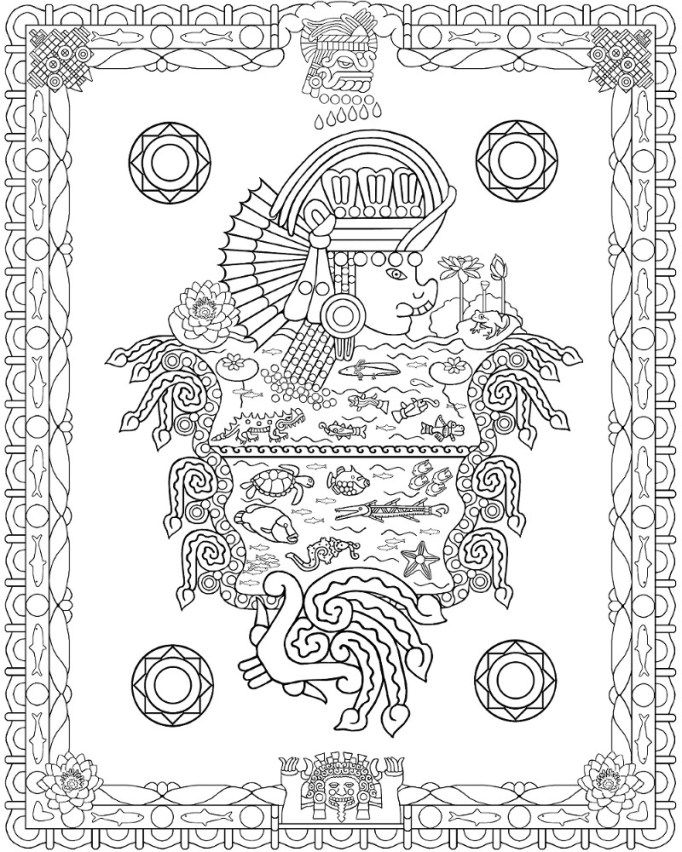
In case you guys wonder why I let several months go by after my first posting, it was because I was working on both the next instalment of memoir and on drawing.  I decided that my Aztec deity images  and book on the ceremonial calendar  weren’t of much use to anyone in those formats.  People should have some way to get involved in the images and learn about the Aztec gods and goddesses, I figured, and what better way than to work with them the way I did (with such fun) coloring them for the book.

So I’m doing a coloring book.  It’s a rather intensive project to rework the images into full-scale icons in the barbaric splendor of the historical codices.  (In a weird way, I feel like a “santero,” the traditional New Mexico painter of saints.)  I’m calling it rather appropriately YE GODS!  THE AZTEC ICONS and also planning an illustrated encyclopedia of the Aztec deities to be called YE GODS!  THE AZTEC PANTHEON.

Shooting for a total of 26, I have most of the basic images, but turning them into the icons is taking a while.  The project could easily take another year—or more.  And it gives me something to do in my dotage.  Presently I’m in the middle of the third in alphabetical order, so at least I can give you the first as an example:  ATL, the deified element of Water.

ATL, Aztec God of Water

ATL, Aztec God of Water

Click here to download the icon with a caption page and model images from the Aztec Codices.

It is also available in freely sizable vector drawings on the coloring book page. 

§§