Completing projects, I generally try to take a brief armchair vacation and then switch gears to address others waiting their turn. For instance, when I wrapped up my four-year Tonalamatl recreation last summer, I diddled for a week or so in the garden and then resumed my senile reminiscing for KID STUFF. With that fun analysis of my innocent childhood done, I took a week or so of restorative naps and lazy lying about.
Re-energized, I’ve moved on to a much-needed revision of my illustrated encyclopedia of Aztec deities called YE GODS! The Aztec Pantheon. The first edition from ten years ago is still available and frequently downloaded as a comprehensive reference, but I’m rather abashed by its limited scope and frequent errors and omissions. I pulled it together way back then in the early research for my coloring book YE GODS! Icons of Aztec Deities.
My vast stock of information on and images of the many Aztec gods and goddesses will provide galleries of authentic images of Aztec deities from the several surviving codices (manuscripts) for folks to form meaningful mental images of the strange gods and goddesses. This revision will probably take a considerable period of time, and I’ll be issuing the galleries with encyclopedic comments individually in blog posts. Look for the first posting shortly to be called The Aztec Lords of Five.
Meanwhile, as mental health breaks from these fits of Aztec mythology, I’d once planned more memoirs to fill in some blank periods of my relative youth, but I don’t think I ought to spend my few remaining years in such self-centered attention. Instead, I’ve decided to turn to historical fiction, a project long inspired by a fascinating old book by the notorious Immanuel Velikovsky. The chapters of this future novel, I plan to alternate with Aztec encyclopedic entries.
If and when I finish the Pantheon revision, I’ll start drawing icons for my coloring book again. Several important and dramatic deities remain to be envisioned ceremonially like Tlazolteotl, Xochiquetzal, Xolotl, Xiuhtecuhtli, etc. When I’ve multi-tasked through this aggressive agenda—should I live so long—we’ll see what comes next. Should there indeed be a future…
Now in early December 2025, I’m officially announcing the completion of the latest piece of an old man’s memory madness, twelve chapters on my exceptional childhood (from 1942-1960, from 0 to 18) called KID STUFF, A Memoir of Chronic Innocence.
My childhood was unique, just as every individual’s life is by definition unique, though folks usually share many cultural contexts and conditioning in creating their personas. After a more or less “normal” childhood, my pubescence and adolescence (12 to 18) turned exceptional when we moved to a truck stop café out in the backwoods of Arkansas… Also exceptional, though shared perhaps to a lesser degree with thousands of teenaged boys across the country, was my three-year romantic obsession with Annette Funicello of the Mickey Mouse Club.
Meanwhile, my chronic innocence persisted, largely dictated by a merciless religion, but also by isolation. Through those 18 years, I never touched anyone impurely nor was touched that way by anyone—except myself. Of course, all my innocent hopes and dreams were dramatic, if futile.
I’ve been working on my “childhood” memoir KID STUFF since the middle of last year and have just now wrapped it up with a 12th and final chapter called THE VALEDICTATOR.
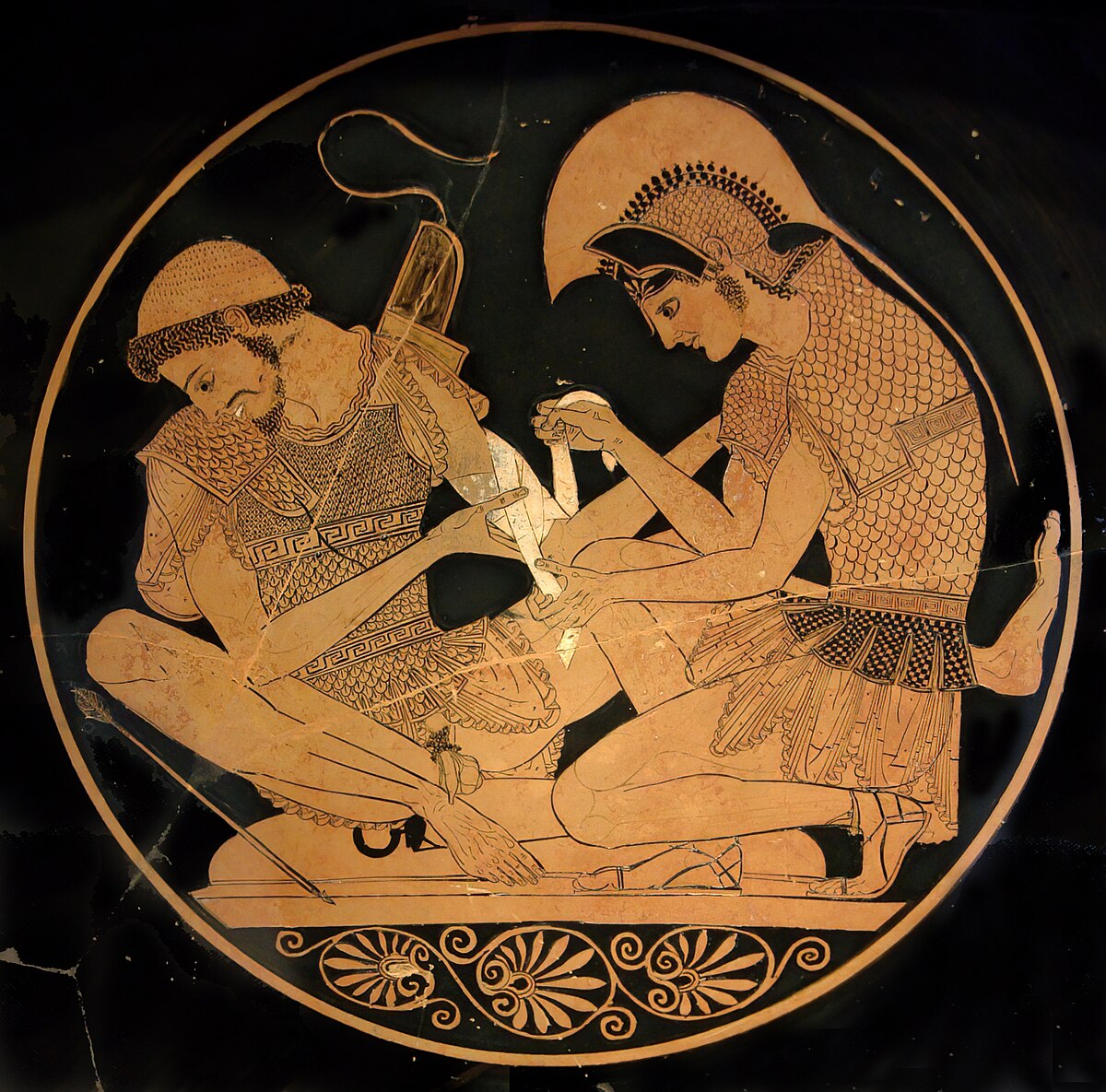
In the disturbed aftermath of my insane obsession with Annette Funicello, my busy senior year in an Arkansas high school brought a whirlwind of social activity, heavier work in our café, and anxiety about college. For the first time I began to feel like a “normal” teenage boy. However, in escaping from Annette’s enchantment, I ceased most heterosexual inclinations. My frequent strong attractions to and affections for boys I cleverly rationalized as profound brotherly love in the tradition of Achilles and Patroclus. At the mature age of 18, I remained an innocent virgin who had never kissed or even touched anybody impurely (other than myself).
In the midst of the recent political, economic, and social uproar, I’ve kept my head down in my little house and plugged along in my memoir series called KID STUFF. It was a long haul, but I’ve now wrapped up Ashdown High III – Trying to Forget. (One more chapter to go!)
In the previous chapter, I’d abjured my insane love (platonic passion) for Annette, but that wasn’t the end of it. Three years of futilely adoring the Mouseketeer I consider to have been in fact a severe, protracted emotional trauma, resulting in posttraumatic stress syndrome (PTSD). Through the fall of 1959, that disabling psychological disorder disturbed and reshaped my adolescent self. As a classic symptom, I couldn’t quite make myself let Annette go finally and completely. Still caring for her, I decided to whittle a little wooden doll as a birthday present and formal farewell gift, which led to a blood sacrifice and burnt offerings.
Heads up! The next chapter of my childhood memoir KID STUFF has now hit the website. Another long slog through the latter half of my Junior year at Ashdown High, it’s entitled simply LOVE THY NEIGHBOR. Easier said than done…
This chapter describes how a feckless romantic teenager tried to stop adoring Annette Funicello. It was like that ancient song by Teresa Brewer (my father’s favorite singer): “Let me go, lover / Let me be / Set me free / From your spell…” But the beautiful TV star continued to haunt my heart. I was caught in a trap, a vicious loop of futile passion, despair and depression, platonic attraction to others’ beauty, bitter loneliness for a brother, futile passion, etc.
Trying to quit my addiction to Annette cold turkey by loving everybody platonically with no exceptions, simply aroused suspicions of perversion and didn’t work anyway. The only respites from my insane possession came with an atomic adventure in Atlantic City (the high point in my high school career), a trip to Texarkana for my first and only date (kissless), and a few days of clean fun at 4-H Camp with a brief eye-opening experience.
My memoir of innocent childhood KID STUFF keeps growing by leaps and bounds. This is to announce its latest instalment (the ninth if I’m not mistaken). I call it SHORT SHORTS for what is perhaps the most impactful image in the adolescent chapter.
Covering most of my junior year in a new high school with new friends, this chapter describes a teenaged me escaping from two very tenacious cults. One, a popular religious cult, I kicked by spiritual means, and the other, a romantic celebrity cult, simply died on the vine.
I escaped from the Catholic cult by rejecting its myths and dogmas as unnecessarily complex and nonsensical phantasms, replacing them with a new personal creed around the biblical instruction simply to love each other. It was liberating, opening my heart to affection for everybody, girl or boy. Free of sexual under- or over-tones, I practiced it at every opportunity.
Escaping from fanatical, platonic fantasies of Annette Funicello was a much slower process. In this third year of my passion for her, that spring I got flooded with her guest spots acting on TV programs. However, this older Annette, now a professional actress, was a disappointing virtual reality, and I came to see that my obsessive love for her was insanity.
At last I’ve wrapped up the eighth chapter of my memoir of innocent childhood KID STUFF, only in this one, I’m an addlepated adolescent. Following up on the previous spurts of creative juices, this instalment I call WRITING A LIFE, covering the two years of my freshman and sophomore years in high school. That’s simply the biographical side of my life, and on the emotional side, it describes my escape from Arkansas reality into the delusions of writing.
Meanwhile, those two years were the brief, happy life of my beloved dog Sambo, and the chapter says next to nothing about him. I want to rectify that omission with this impromptu addendum. (Click HERE to download this file.)
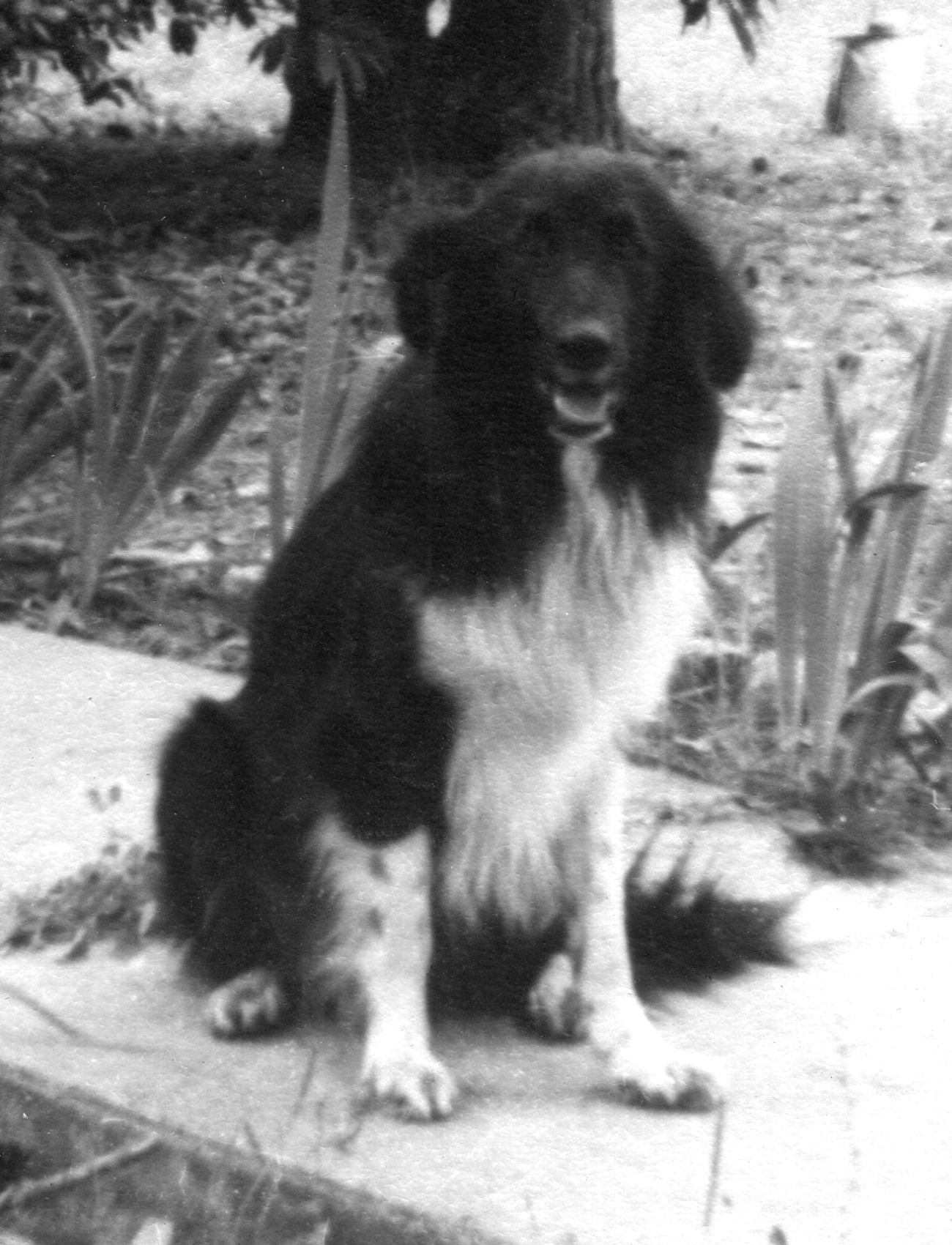
THE LIFE OF A DOG A Digression by Richard Balthazar
On the Fourth of July 1956, he was found abandoned on the side of a highway, a tiny, mangy puppy, injured and abused. Adopted by an adolescent boy-person and soon nursed to health and maturity, he was named Uncle Sam, which became simply Sambo. While he convalesced and grew, the rescued pupdog enjoyed the run of a great big yard and pasture, the maternal attentions of an older brown and white bitch, mother of many litters, and enormous fun chasing and barking at ducklings. Like magic, dishes of fresh water and tasty food always appeared near a thick bush, and Sambo tried to chase the cats away. With the slash of a sharp claw, the white one gave him to know that it was their supper too, thank you very much.
Sambo quickly bonded to the boy-person as his alpha-master but didn’t see all that much of him during the days. He’d often leave Sambo by himself in the yard and disappear into the nearby big block. (The big female person in there wouldn’t let Sambo or other animals come into that block.) Sambo thought of his young master as the kid with too many teeth. When he bared his front teeth, there was nothing at all threatening about that mouthful of jumbled teeth. His silly expression was like a big joke, enough to make a little dog laugh. It radiated approval and affection. Sometimes Many Teeth would leave the puppy and cross over the hard, black strip that Sambo and Mama Bitch were forbidden to cross, disappearing into another big block. But the dog would wait patiently for many hours for his master to appear again.
When the weather got really hot, Many Teeth started spending nights out in the yard under the hickory tree. Little Sambo and the other animals snuggled up and slept with him. The puppy had never felt such intimacy and love before and licked Many Teeth’s face gratefully. When his master started sleeping inside the block again, Sambo missed the closeness, but when he appeared the next day, many daytime snuggles and cuddles almost made up for it.
Pretty soon, Many Teeth started waking up early and after petting Sambo for not even a minute, would get into a huge yellow beetle on the black strip, disappearing for almost all day. Sambo always got awfully lonely and tried making friends with the other animals. The cats wanted nothing to do with him. He sniffed between the big boards at the huge brown dogs inside that fence, but they ignored him. Chickens and ducks always ran away, and turkeys gobbled angrily at him. The mama bitch would let him come with her when she wandered in the pasture and visited with the big long-legged, long-necked animal that ran so fast around the field.
Late in afternoons, the master would appear out of the yellow beetle, snuggle Sambo, and run into the nearby block, not to be seen again for way too long. Then he’d show up again with food for all the animals and special pats, pets, rubs, and strokes for little Sambo. The best time of the day! Or maybe that was the sunset evenings when he’d lie on Many Teeth’s lap getting his ears scratched—or when they’d play tug’o’war with a strip of something—or when they’d chase each other wildly around the yard—or when they’d wrestle in the moonlit pasture grass…
That fall, Many Teeth spent many evenings on the other side of the black strip, and lots of big yellow beetles kept stopping on both sides of it. Sambo knew enough to steer clear of all that confusing activity and wait in the dark front yard of the block to bark at intruders if need be. Often the master would eventually show up with a crowd of boy- and girl-persons. He and many of them would pet and even cuddle Sambo and then go into the block to make a lot of noise.
Some days, Many Teeth didn’t go away on the yellow beetle and happily spent more time with Sambo, though not nearly enough. Often he’d go into the other block for hours or magically disappear entirely for a whole morning, but Sambo would meanwhile profoundly appreciate and preciously treasure every moment of his master’s presence, the squeaky sound of his voice, the eloquent smell of his face, the taste of his nose.
At times in those days at home on the hilltop, Many Teeth took Sambo with him off into the woods. At first, it was overwhelming, frightening, for a young dog used to the gentle environs of an animal haven. So many trees and tangled bushes, bewildering, intriguing whiffs and smells from everywhere. Tempted to run around exploring the wilderness, Sambo was intimidated and stuck close to his master’s heels. On future walks the pup was more adventurous exploring the nearby olfactory wonders of the forest, the intoxicating odors of earth under rotting leaves, a fragrance floating on the breeze of unknown animals and insects.
When the green things on the trees and bushes turned colors and fell on the ground, Sambo found it great fun to play in and shove them around. One morning when Many Teeth didn’t’ go off in the yellow beetle, instead of his usual wooden stick, he picked up a different stick-thing and took his adoring pupdog into the woods. He kept pointing up into the branches of the trees and shooing Sambo away off into the bushes beside the trail, but the faithful dog hung close to Teeth’s heels. The odors there were as many and fascinating as any in those old bushes. As they walked along, the master suddenly shouted and pointed up into the trees where a small grey creature raced along a tree limb and disappeared behind the tree trunk.
Sambo watched as Teeth tossed a stick behind the tree and raised his odd stick, which made a huge bang. The grey animal fell down to the ground, and the master shoved it under Sambo’s nose. The puzzled dog had never seen a dead thing before, and this one smelled disgusting. The red stuff on it was vaguely appetizing, but the stench of its fur was repellant. Many Teeth put the dead thing into a bag, and they continued their walk without further confusion or noise.
Back in the yard, Teeth sliced the fur off the dead thing with a blade and tossed it with the little head to Sambo, who ran away from it, still disgusted. The pupdog was glad that they didn’t have to go through that ever again. Sometimes Teeth killed other grey and red tree animals with his bang-stick, but Sambo paid no attention. However, on their later walks in the woods he ranged much more widely among the trees enjoying the symphony of smells.
As the weather got colder, to keep warm Sambo and Mama Bitch with her current litter of tiny puppies—and three aloof cats—slept in a box beside the hounds’ fence. Once, Teeth picked Sambo up and perched him along the ridge on top of the box, his little legs straddled down the slopes to either side. While Teeth made funny loud noises and rolled around on the grass. Sambo lay on top of the box looking down, uncomfortable and confused, then carefully slid off and jumped on his beloved master to wrestle.
With the cold weather, Sambo’s life got very quiet. Teeth was gone away on the yellow beetle most days, and when at home, he stayed in the big blocks all the time doing something. The dogs were left to lie about. At least he always brought them dishes of water and food, doling out his wonderful pets and pats, and the idle time was no bother when they had big bones to gnaw on. Sambo loved stalking a flock of black birds that often pecked around in the back field. He’d creep through the grass up close to make them caw and fly up and away. Sometimes, one would lunge at the pup trying to poke him with its sharp beak, but he’d run back into the yard.
By the time it started warming up and green things appeared on the bushes and trees again, Sambo had gotten bigger and brave enough to ramble in the nearby woods on his own, both during the day and night, sniffing out little creatures to chomp. Some of the tiny fuzz-balls were very tasty. On a moonlit night, Sambo stumbled into a big red animal with way too many sharp teeth and a fascinating, fetid odor that turned his stomach. It chased him up the hill—right into a foul-smelling black and white creature that squirted Sambo with putrid stuff and made his eyes burn and nose scream. The toothy red animal shrieked and raced away.
Blinded by the pain and barely able to breathe, Sambo crawled across the field into the yard, whining and barking in distress. Teeth hurried out of the block and stopped at a distance holding his nose. He dumped Sambo into a tub and rubbed his fur with a red juice, something that made a lot of bubbles, and something else that fizzed madly. It soon cut the stench down to a mere stink. Teeth rinsed Sambo off with more water and then did it all again, which almost cleaned him up. He learned never again to mess with a black and white critter that smelled so horrible.
Careful now about exploring, Sambo spent the warm spring days and weeks lying or wandering around the yard and patiently waiting for Teeth’s rare appearances. He happily watched the endlessly fascinating little birds flutter around in the tree tops, the brightly colored insects flitter among the flowers around the block and in the field, the mysterious white shapes floated slowly across the blue sky, and the brilliant light overhead moving even more slowly from one side to the other. The darkness was full of curious sounds and smells—and little dark birds that zipped around and bugs buzzing. Life was grand for the pup, even if lonely for his dear master.
Later on, Teeth kept shoving a thing with wheels around and around the yard to chop down the grass, spreading an intoxicating smell everywhere. Sambo faithfully followed in his master’s footsteps barking at bugs that jumped out of the way. When Teeth took the chopper across the black strip to cut the grass on the other side, he’d pick up Sambo in his arms, carefully look each way, and then run across. Sometimes he’d take the excited dog out into the woods over there. Otherwise, Sambo learned to stay on the yard side of the strip, just like Mama Bitch.
Lots of days later, Teeth stopped getting on the yellow beetle, and Sambo followed him all over the place hoping for a tiny scrap of affectionate attention. They often went into another fence where a huge red, bristly animal wallowed in mud. It’s fragrance was intoxicating, heavenly, and when it sniffed at Sambo with its flat round nose, it would snort friendly grunts. In another fence down the hill were more of the flat-nosed, muddy beasts (brown but smelling just as delicious), whose snorts at Sambo weren’t friendly. Some more days later, Red Bristles simply disappeared.
Ecstatically, Sambo went on lots of forest wanders with his wonderful Teeth, who carried his big stick but not the bang-stick. Sometimes, they’d stop in the huge hole in the ground where Teeth would shout and howl, making terrific echoes off its high sides. Sambo occasionally imitated his ingenious master, howling along in harmony. Down the hill a way at the creek, they’d jump in and splash around. Those wet hugs were the absolute best joy ever.
When they got out, while Sambo shook to dry his long fur, his splendid master would often climb up into a tree and call to his adoring dog to follow. The poor pooch could only bark an apology. At times, Teeth would rub up against a tree trunk and hump it gently. Innately, Sambo understood he was marking his territory, and he’d go over to lift his own leg and tag the same tree. This place was their private paradise, and all black and white stinkers must stay away!
When Mama Bitch’s latest litter of pups disappeared, they were replaced by a new pupdog, a short-tempered, short-legged, long-eared young bitch that wouldn’t play with Sambo. When it got really hot, Teeth and his other persons in the block came outside to sleep again, and Sambo and the other critters snuggled in with him in bliss under the hickory tree. The new bitch-pup snapped at Sambo trying to get into the master’s embrace. Sambo snarled at her to go away.
After many, many days and nights of rapture, suddenly Teeth went away. While Sambo and the other critters waited for his return, they still got their water and supper dishes brought by the young girl-person, but she’d only pet the snooty cats. On one of those abandoned days, Mama Bitch went into heat, and Sambo lost his canine mind over the hypnotic fragrance coming from her rear end. Compelled to mount and hump her frantically, he did it several times in a few days. Then the magic smell and his madness faded away, and he gnawed all day on another big bone.
Eventually, many bright, peaceful days and dark, lonesome nights passing on into forgetfulness, suddenly glorious Many Teeth reappeared to his patient dog. With barely a hug or a pet for Sambo, he started pushing that clanky thing around and around to cut down the grass. Right away, the dog sensed his master was only partially present with him, not all there in his affection and attention, preoccupied in some other world. A few more nights they all slept joyfully cuddled up together under the tree, but Teeth kept on moaning sadly in his sleep, nuzzling intimately into Sambo’s fur, mumbling affectionate things, and jabbering nonsense. Then one bright morning he jumped up early and got back on the big yellow bug.
The dog’s life on Penney Hill settled back into the familiar routine of Teeth gone all day, back in afternoons in the block, out later to bring food to the crowd of yard critters, and gone again into the block across the black strip. Sadly, he slept again inside the near block and disappeared most mornings on the yellow bug. At least Sambo could rejoice in the master’s brief visitations with his supper dish. Once, he was supremely delighted to lie in Teeth’s lap and get his sleek black fur brushed out smooth.
Soon, most nights started once again getting crowded with yellow bugs out front and groups of persons coming over to make crazy noise in the near block. Sambo listened to the squeaking and howling with confused pleasure, knowing that his dear Teeth was having fun. Then Mama Bitch surprised Sambo out of nowhere with a litter of seven strange spotted puppies, some with lots of black in their little coats. Mama Bitch nursed but otherwise ignored them, meaning they played with him instead, pulling on his ears and paws with their sharp little teeth. Many Teeth often picked them up to cuddle, making Sambo intensely jealous.
Through the days of falling leaves and chilling weather, the puppies grew quickly, turning into a wild pack of playful, scrambling, wrestling, chasing, yapping, snapping little beasts. Then Teeth started bringing his noise-making companions to see the boisterous batch, and in a few days’ time, they all fortunately disappeared. Sambo settled back into pleasantly lying about, gnawing bones, wandering fields and forests, digging down after fragrant edibles, and marking his Edenic world with tags of urine on rocks and trees. Once, he even caught a rabbit—smelt like candy and tasted even sweeter—and brought one of its crunchy ears home in tribute to divine Teeth. Soon after that, Teeth took him out into the woods again with his bang-stick, but Sambo wasn’t at all interested in whatever he was looking to bang with it.
Warm in long winter nights with dogs and cats scrunched up together in their little block, Sambo slept soundly and dreamt. He’d dream of floating like a white thing overhead, of flittering like a little bird among the tree branches, of stalking stealthily through bushes, of running-jumping-leaping in the field, of falling off into the howling hole in the ground, of slithering through the grass like a lizard or fuzzy mouthful, and most often, of snuggling up close to Many Teeth.
As the weather warmed up, Sambo took off all day on a hike to extend his territory to the west as far as he could. Encountering nothing but woods, he explored for hours and suddenly wound up at the edge of a vast flow of water. Woods were green on the other side, but Sambo wasn’t crazy enough to jump in, no matter how fertile and luscious the water’s fragrance. He tagged a huge tree on the bank and headed upstream for a while, checking everything out proprietarily and posting requisite tags. Marking another large tree, Sambo instinctively turned away from the water’s edge and made a beeline for heavenly home, his domain now vast.
Sambo was late afternoon getting back to heaven hill. Below the field, near the fence of those scrumptious-smelling Flat Noses, he made out a faint whiff of Mama Bitch’s rear end and was instantly fired with a primal energy. Near the back yard, Sambo saw a smaller gray dog coming from elsewhere, obviously driven by the same energy. Near the back gate, they tangled violently, and happily Many Teeth was there to break them up and chase the intruder away. Up this close, that magical rear-end aroma drove Sambo berserk, and he gratefully and furiously humped his master’s leg. At the first opportunity, he humped Mama Bitch too. The next few days, while keeping an eye out for invaders, Sambo mounted her several times and then lost the urge.
The contented spring days passed quietly as green things burst out everywhere. Sambo would be more content if Teeth spent more time with him. His master mostly went off into a block, but in rare moments, he was inattentive and brusque, obviously thinking about something other than his adoring, groveling dog. In the course of things, another litter of pups, six this time, suddenly appeared, and for many, many, many days, he and Mama Bitch happily suffered their respective roles in raising the sharp-toothed beasties into healthy pupdogs to give away, a free-puppy farm.
When Teeth disposed of the last puppy, Sambo was relieved and begged his master to take him out in the woods or whatever. Teeth only reluctantly paid attention to his humble dog. A few times they went on listless, though blissful, rambles and sang in the howling hole, or Teeth would climb a tree to make Sambo bark at him to come down. Then Teeth suddenly disappeared again, leaving his fervent worshipper bereft in the back yard for several more days and nights. When he reappeared, he spent another several days with the critters and then was gone again for another big bunch of days. It was awfully frustrating and disturbing for a devoted dog.
Teeth returned to high heat that made Sambo pant all the time, and he pushed the clanky grass cutter around and around again with his loyal dog following. Otherwise, he went into the other block almost all day. One morning, Teeth helped an old person onto an enormous grey beetle and then waved his hand. He came back into the yard and sat under the pines with Sambo in his lap. The loving dog licked his cheeks, wet and salty, and wondered what was the matter.
Later, greeted by Sambo, Teeth came out of the block to feed everybody and distractedly hugged his pooch. “Shepherding” him across the black strip to the other block, he told his dog to stay and went into its side door. Waiting patiently outside, Sambo sniffed along the wall and came at the corner upon a fresh tag left by some strange dog. He sniffed it closely, fascinated by its detailed story, and then looked up to see Teeth already across the strip with his two buckets. Terrified, Sambo streaked after him and heard a horrid screech. A black bug with round eyes and silver teeth slammed him out of the light and into silent, empty darkness.
The next chapter of KIDSTUFF I’m calling CREATIVE JUICES for reasons that will be obvious when you read it. The above equestrian picture of me in the late summer of 1956 is a great rarity. At my sister’s urging, I agreed to mount her horse for a picture—and dismounted a moment later. I’ve never been a fan of sitting on large animals.
My eighth grade year was very busy, exploding with adolescent energy, ambitions, questions, and urges. However, our innocent, now teenaged Ricky got caught philosophically between a rock and a hard place.
On the one hand, the modern world of popular music and TV told me to go out and find myself a girlfriend to get mushily romantic, but meanwhile the Catholic Church insisted that romance should involve absolutely no thought of sex. Besides, living out there in the woods, how was I going to go out and find myself one in the first place—and what would I do with her if I did?
I got around this logistical problem with a novel strategy: concocting a historical story imagining a romance between myself as hero and a TV celebrity acting as the girl. Of course, my fictional romancing led to zilch because I still figured sex was taboo. At least sex with other people…
The next chapter of KID STUFF, the memoir of my unusual, un-traumatic childhood, deals with the special age of 12 when I’d decided to go by the name of Ricky. That Edenic interlude in Arkansas, blessed by the splendid companionship of a boy named Kay. is called TWO LITTLE SAVAGES, for an ancient novel written and illustrated by Ernest Thompson Seton.
“The dam was a great success.”
Covering my last year of innocence, when my head still totally empty of carnal knowledge, the chapter involves a truck-stop café out in the wilderness, lots of dogs and hogs, squirrel hunting, and enchanting forest landscapes. Unfortunately, our dam was not a great success.
This fifth chapter of KID STUFF deals with a single year of my juvenile life.
SOUTHLAWN II – A DORKIER DORK describes the brief, busy year when I was eleven. Though widely read, I was still cluelessly naïve about life, love, and the world and was just starting to discover the wonders of music, song, and dance. It was a splendidly exciting time.
Not that I was a prodigy, but I had inspiration and aspirations that could have gone somewhere. When Daddy suddenly took us away from Southlawn Circle, at almost twelve, my promising childhood ended abruptly—like a budding flower yanked out of the ground by its roots.