Aztec Icon #9. – MAYAUEL, Goddess of Pulque

After along haul of boggling detail, I’ve completed another icon in the series for the coloring book YE GODS!  THE AZTEC ICONS.  That makes nine in two years.  Only 17 to go.  Good thing I’m patient—and persistent.

The icon of this popular goddess of drunkenness (as well as intoxication by other drugs), was a lot of fun to draw if only because of all the drunken rabbits. She herself is based on an image from Codex Rios with details from Codex Laud and Codex Nuttall, and the vignettes come from various other sources like Codex Vindobonensis.  It was also a rare chance to draw the other hallucinogens:  psilocybin mushrooms, Datura and morning glory flowers, peyote cactus, and marijuana leaves.  The two little blooming peyotes are drawn from plants I used to have in my greenhouse.  The flowers are pink.

(You can still see or download the previous eight icons by clicking on them in the list on the page for the coloring book.)

ICON #9: MAYAUEL

(Goddess of Pulque)

To download this icon as a .pdf file with a page of caption and model images from the Aztec Codices, right click here and select “Save Target (or Link) As.”  You can also download it in freely sizable vector drawings from the coloring book  page.

mayauel icon

MAYAUEL is the personification of the maguey plant and a maternal and fertility goddess connected with nourishment. Besides fibers for ropes and cloth, the most important maguey product is the alcoholic beverage pulque (or octli).  As a pulque goddess, she is often depicted with many breasts to feed her children, the Centzon Totochtin (400 Rabbits), octli gods that cause drunkenness.  (Drinking was generally only permitted in ceremonies, but the elderly were free to drink whenever they wished.  There were rabbit deities for all kinds of intoxication.)  With the birth-name of Eight Flint, she also protects mature wombs and probably is the wife of PATECATL.


A Decade Ago

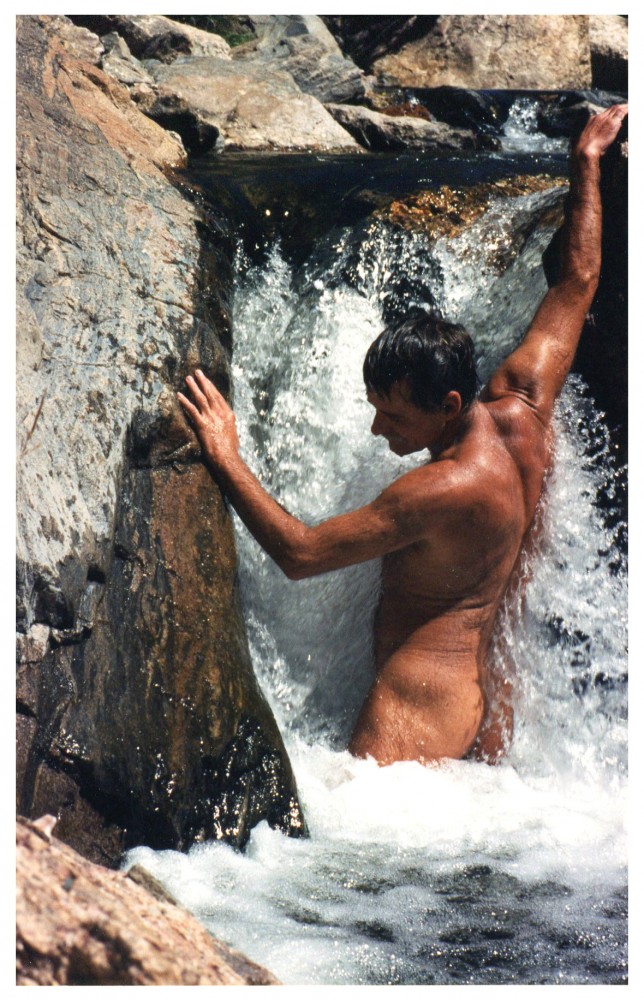
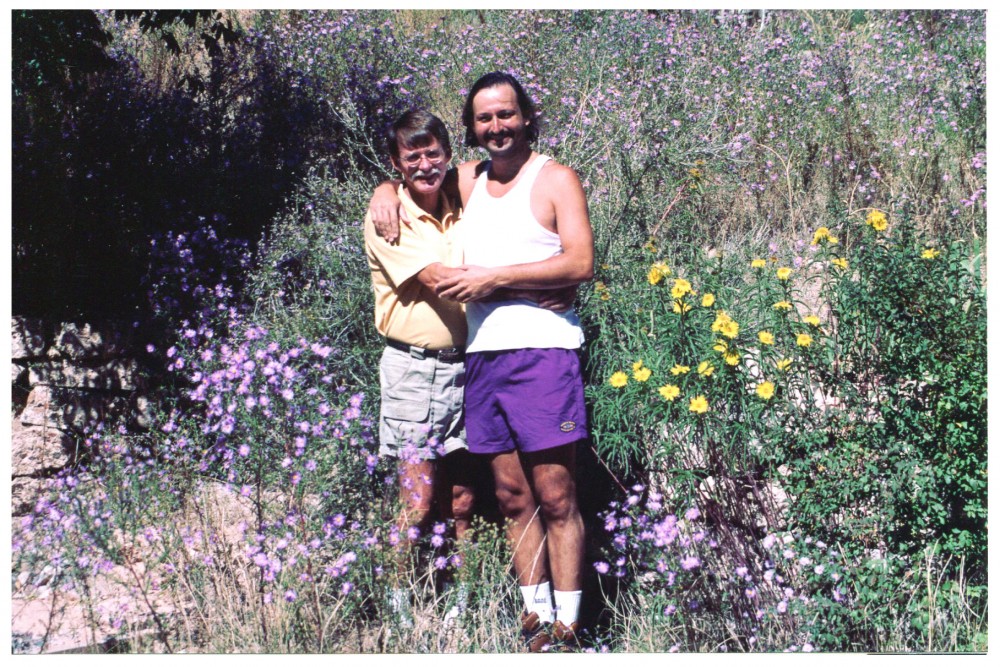
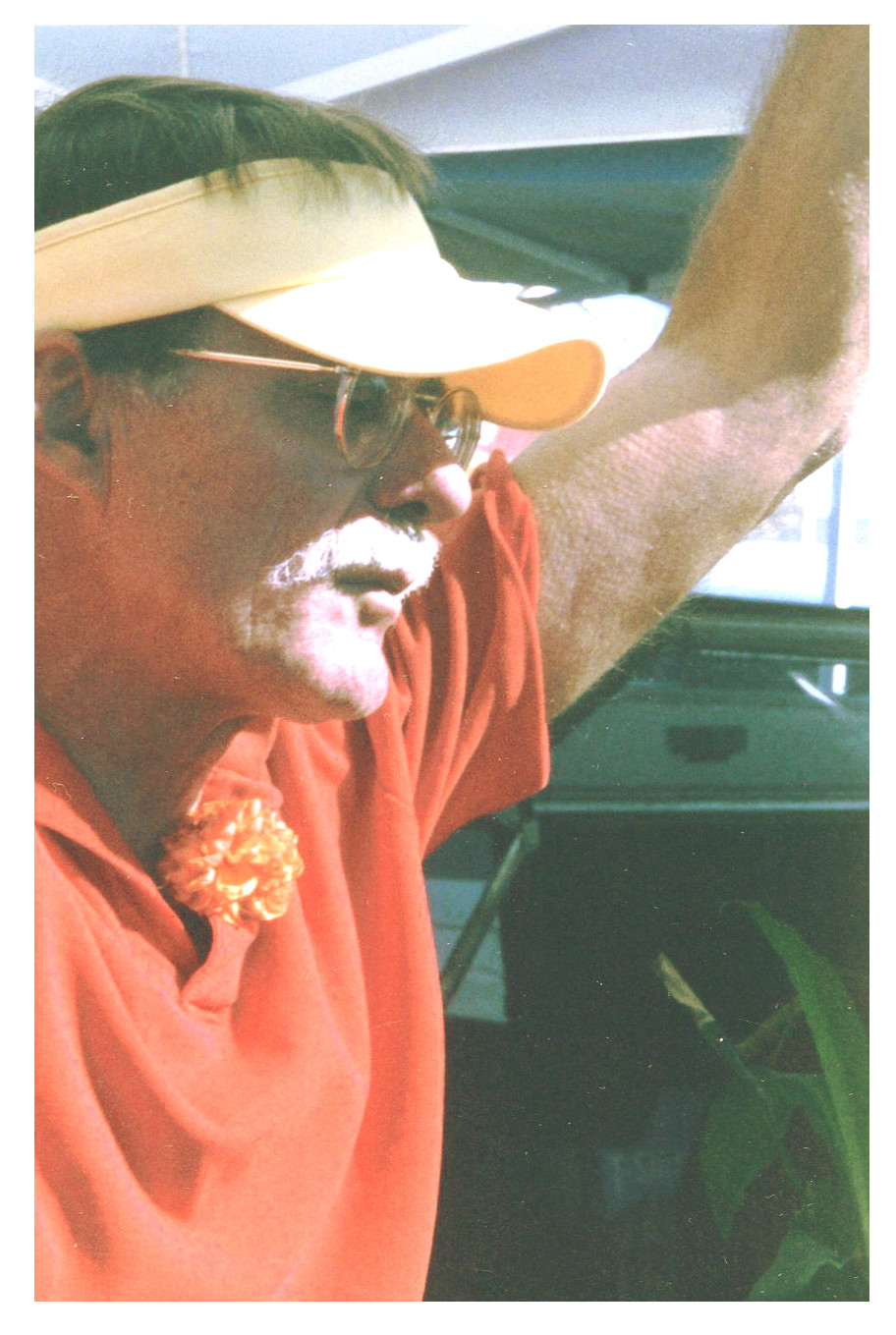
Two weeks into the New Year may be a bit late, but I’m inclined to reminisce about life as I knew it a decade ago. I feel like, you know, doing some spontaneous memoir-izing.  Indulge a few fond ‘memoiries,’ if you will.  Let’s look back on when I was still the Grandfatherly Gay Character around Santa Fe, 2005-2006, sole proprietor and employee of Babylon Gardens Salvage Nursery.  Oddly, of my two previous careers, it was the most wonderful and fulfilling.

Though I’d supposedly “retired” on early Social Security in 2004 from a long career of arts administration, I‘d kept on working half-time in local nonprofit organizations (including education, health care, and philanthropy), for minimal compensation, of course. For some years I’d been happily working on grants and technical assistance programs with the Santa Fe Community Foundation and then in April 2006 decided to move over to manage a new state-wide organization of nonprofits called NGO-NM.  The sad finale to my illustrious administrative career was having to close that worthy effort down at the end of the year.  I still have the incised plastic door-plaque somewhere.

My 2005-6 season (speaking both academically and organizationally) started quite dramatically in August with Hurricane Katrina. Residing in Metairie, my elderly mother (87) lived through it, sheltering at Bonabelle High School.  Of course, that’s a remarkable story in itself.  When she finally made it here to New Mexico—on her own! —to stay with me, I convinced her to write about the historic event for her descendants.  Soon I should type it up and post it for them and you.

In late November 2005 when at least Metairie was back to functioning again, I drove Mother home. Miraculously her home was essentially undamaged, no flooding at all as it stands atop a vestigial ridge between Lake Pontchartrain and the Mississippi.  A few blocks north or south had been six feet under water.  Personally, I’m inclined to attribute her good fortune to a Kwan Yin I’d given her.  Compassionately, the female Buddha still stood on a console directly across from a thin aluminum picture window to the southeast, having apparently peacefully faced down Katrina, the monster storm of the new century.  Meanwhile the big maple at that corner of the house had snapped off about four feet above the ground and merely fallen on the yard.

As if I weren’t being creative enough with the organization work, soon as I got back to Santa Fe for the holidays with my local family (grandson then just over three), I went back to work on my weird linguistic hobby of some 40 years, a structural definition of the innocuous English verb ‘get.’ By the time I started with NGO-NM, it was ready to publish with http://www.AuthorHouse.com, then under a different name, entitled “Getting Get, the Glossary of a Wild Verb,” which came online in November.  Sometimes since, I’ve humbly suggested to forbearing friends that this absurd little pamphlet could well be my work of genius.  If only anyone but I were eccentric enough to see its simple profundity.

NEWS FLASH:

GETTING GET is posted on this website for free download.

Just right click here and do it.

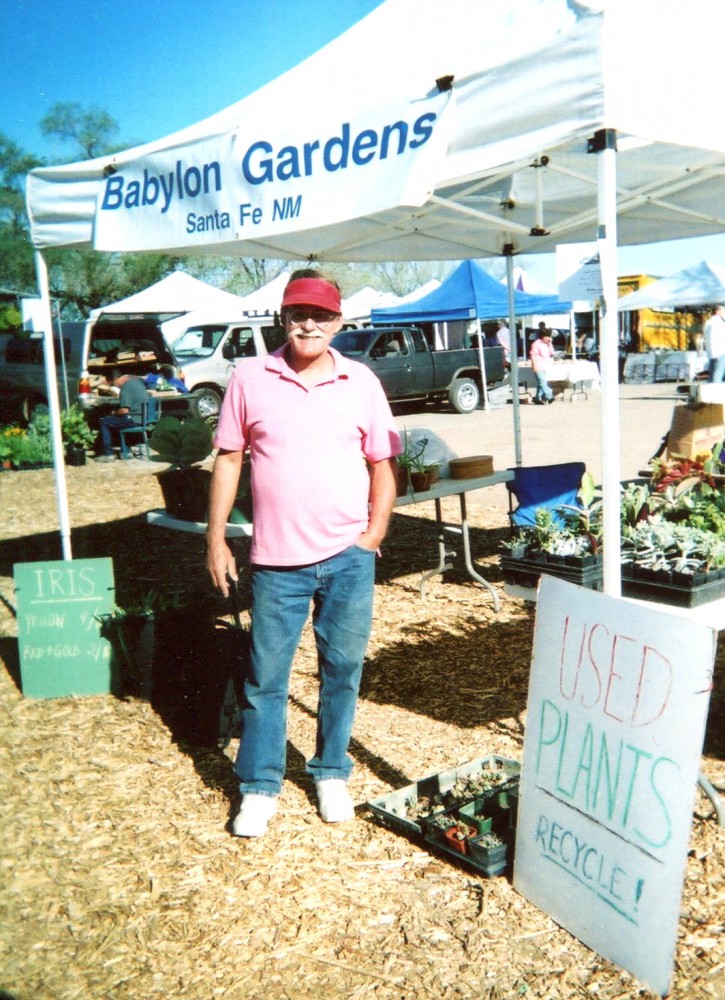
You probably already know, however, that Santa Fe’s notorious for poor folks having to work multiple jobs to get by. Accordingly, besides organizing stuff and defining the wild verb, I spent a miraculous third half of my time as the famous Used Plant Man at the Santa Fe Farmers Market.  In honor of my signature product, in the summers I turned into the infamous Iris Man.

Every Saturday morning, and Tuesdays in summers, I peddled previously-nurtured, restored, or recycled house plants. Not mention that in my spare time I did what I cleverly and artistically called ‘land-shaping,’ which involved terracing, rock walls, and laying flagstone patios.  In other words, I played around digging in various folks’ yards, gardens, and sandboxes.

2005 in the greenhole

2005 in the greenhole

2005 in my booth

2005 in my booth

That greenhouse was of my own design and construction. I called it my ‘greenhole,’ literally a hole I dug six feet deep and slapped a plastic roof over it .

The Greenhole

The Greenhole

The only other infrastructure for the business were folding tables, a portable pop-up tent with the proud banner of Babylon Gardens,

2006 booth at Farmers Market

2006 booth at Farmers Market

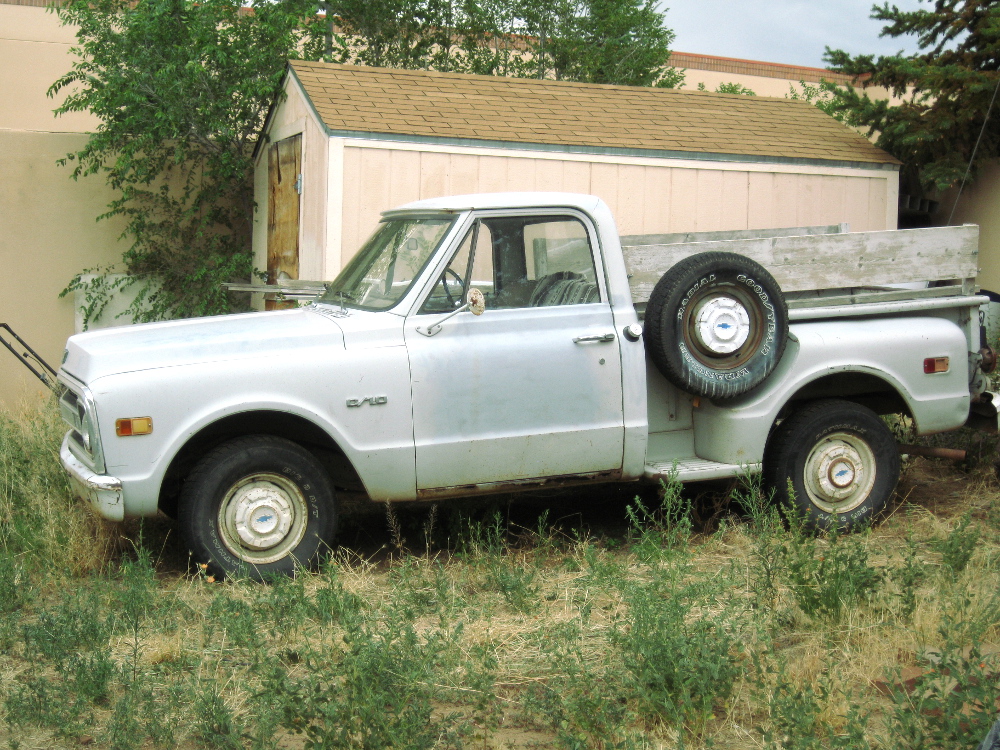
And the gallant Grover (the Grey, like Gandalf), a 1970 Chevy C-10 pickup. Grover hauled load after load of plants and paraphernalia through so many pre-dawns and then stood nearby for thousands of touristic snapshots of a typical Santa Fe scene.

Grover the Grey

Grover the Grey

As if doing meaningful work for society, publishing a fantastic book, and selling spectacular plants weren’t enough, in June, 2006 I came out as an artist in an art show for the Santa Fe Gay Pride celebration. I’d earned the gay category 45 years earlier, also in June.  I showed three pieces:  the assemblage shrine Bull of the Sun, the carved sandstone Venus, and my very first piece of digital art, the cover for my novel “Gymnopedie.”

NEWS FLASH:

“Gymnopedie” the novel has been withdrawn from publication and

rewritten as a backwoods novella called “Bat in a Whirlwind,”

available for free download by right-clicking here.

2006 publicity with baby jade

2006 publicity with baby jade

While we’re at it, I want to share with you a picture of one of my favorite plants in the greenhole. Soon I really should do a post with more stuff on the wondrous plants I had in there.  This one has an outrageous Latin name I loved reciting to folks:  pachyphytum oviferum amethystinum (fat-leafed, egg-shaped, amethyst).  Here it is in bloom in 2005.

Pachyphytum Oviferum Amethystinum

Pachyphytum Oviferum Amethystinum

The Farmers Market always went outdoors somewhere in late April around my birthday, and in both the 2005 and 2006 seasons that was on the wide-open corner of Guadalupe and Cerrillos skirting the railroad tracks behind SITE Santa Fe. In my humble used plant vendor opinion that point out there in view of two busy streets was the perfect, I mean the ideal, location for our wonderful community market.

In years past we’d simply popped up our tents, if we had one, further north along the tracks across Paseo de Peralta behind Santa Fe Clay. (And in years before my time, it had been in the parking lot of Sanbusco Center.)  Now almost all the vendors, including makeshift Babylon Gardens, flew a white canopy like a flag to be seen from all around.  We were truly a spectacle of folk life that made me proud.

As a matter of fact, it seemed a vindication of the pleasure a certain clueless kid once enjoyed in peddling peaches in a booth beside the highway. It was that splendid interaction with people around a subject you deeply love and the thrilling opportunity to share the work of your own hands with them.  Every day, even the slow ones, I loved the glory of hawking my beautiful plants, talking about them and how they like to be treated.  In a word, it was a trip.

Ironically, the fortuitous move from the hinterlands of the railyard up to this prime spot was caused by big city projects afoot for the neglected old railyard. I believe the powers that be moved the Market out where people could see it to get support for the new building they were preparing in those same hinterlands as an indoor place for us in the winters.

Among other opponents of that project, I felt the current arrangement, as I said before, was ideal. For the winter seasons, we’d been going indoors at El Museo Cultural, and vended there happily, even with poor lighting and no call for flashy tents.  It felt very folksy, local farmer cultural.

But the majority of vendors, or at least the power that were at the time, had their hearts set on a fancy market hall like in Boston or Seattle or wherever. This ambition caused a whole bunch of trouble, but don’t get me started.

(Can’t help it. For just a few repercussions.  Before the building was even done, the Trust for Public Land and other powers kicked the Market off that superb spot on the busy corner to make the new Railyard Park.  I suggested, clearly not vociferously enough, that they design that great space on the corner for a fancy open market plaza for us farmers and for other fairs on other days.  Irony Alert:  My sweet old vending space is now in a rotunda of rose gardens where few people care to walk.  Roses to be smelled and not sold.

Kicking us out made the Market wander for a couple summers around parking lots. The summer beside the DeVargas Center was a huge come-down, but in more levels of irony, our summer of 2008 in the almost ideal PERA lot was the most spectacular in the history of my unorthodox nursery.  To make matters worse for us gypsy farmers, for some reason we also lost the El Museo space and had to spend a winter in a grungy industrial place on Cerrillos Road.  Again the irony, it had once upon a time been a gay nightclub, the Cargo Club, I think it was called.  Or Club Luna?  I’d gone there only a few times to dance.)

At any rate, between Market days Grover and I would tootle all over town and even out to Espanola or Eldorado to grub freely in folks’ iris beds or do plant rescues or paid land-shaping jobs. It was a splendid gimmick, an ingenious concept if I say so myself.  I provided a free, much-appreciated community service and turned my (minimal) physical labor into totally free merchandise.  No overhead except gas for good old Grover.  Good job for an old guy.

Frequently folks gave me way more plants than I could ever hope to sell at the Market. Like 500 lb. of blue iris?  I’d just give them away.  Once I got a whole greenhouse collection from an estate and recycled (propagated) thousands of new plants to give away to garden clubs, school classes, and anybody I could foist them off on.  I always kept a FREE box at my booth, and folks checked it frequently for adoptions.  I joked that I was a “philplanthropist.”

Sometimes I’d simply show up at a business or office building, like that time at the Toney Anaya Building when I marched in and told the receptionist, “I’ve got a giant jade tree that wants to live in your lobby.” A couple times I simply arranged for gigantic plants to go to great spots like at the Capitol complex or other public spaces.  They had to do the hauling though.

A decade ago I was a plant freak in his element, and my only problem was believing what a happy old man I was. Even older now, I’m still a happy fellow—and I believe it.

Rediscovered Sculptures and Artist Statements

While I was digging around in the piles of stuff we surround ourselves with, I was very pleased to find some forgotten photos and rediscover some more pieces of my sculpture, which I’ve just added to the gallery. Check it out.

Since I’m now in a leisurely mood, I think I’ll run off at the keyboard about the newly remembered pieces with attempts at artist statements. In case they’re helpful in inspiring your aesthetic appreciation.

Boy on a Dolphin (sold)

Boy on a Dolphin (sold)

Boy on a Dolphin:      This is the first piece I ever sold—at my first show.  It’s composed of two pieces of old iron (like plow-points or teeth of some kind) on a micaceous stone wave.  The upright boy was found in the DC area in the 70’s, the dolphin was found in New Mexico in the 80’s.  When I put the two pieces together, they echoed that prehistoric/modern Cycladic art of the Minoan era from around the Aegean Sea.  Though at the time I didn’t know from Cycladic, I heard the Art loud and clear.

Dark of the Moon (sold)

Dark of the Moon (sold)

Dark of the Moon:      The most complex of all my assemblages, this shrine includes wood, stone, metal, glass, magnets, ceramics, lava, white sand, and (apparently) rubber, all on a slate panel.  It’s one of my favorite pieces, but it sold in my second show and moved to California.  Zoom in on the surreal details, like the ball-bearing stars.  There are even piston rings.  The true enigma is the figure on the altar with the dark visage (rubber?).  I once found a similar piece, but less detailed, and the “head” was empty.  The centered “dark moon” globe on the “sky” backdrop is a spherical lava geode, and the 13 irregular porcelain “white moons” are for the visible stages.

What does the dark of the moon mean to you? To me it’s connected with a verse of Robert Herrick’s poem “The Night Piece, to Julia” that I’ve quoted elsewhere.  Starting, “Let not the darke thee cumber, / What though the Moon do’s slumber?” the verse embodies my refusal to live in fear, which I mentioned emphatically in a recent blog on fear and violence.

Cipactli - Earth Monster (sold)

Cipactli – Earth Monster (sold)

Cipactli:         Being an inveterate curiosity collector, one of my stash piles was of interesting weathered wood.  Over the years I’d walk by and occasionally add another piece as inspiration seized me to the plank lying on the ground, and either the pile or the sandy New Mexico dirt (spontaneously?) spawned this Earth Monster of Aztec cosmology, cipactli, the first day of the month.  The primordial one that ate Tezcatlipoca’s left footwhen the Black God defeated it and created the First Sun (world) on its back.  I like its mythic animistic Art.  The Monster went from my first show to a friend of my Farmers Market days.

Tepeyollotl - Heart of the Mountain (sold)

Tepeyollotl – Heart of the Mountain (sold)

Tepeyollotl:         Another Aztec shrine, this is the Heart of the Mountain.  I can’t resist listing the components on the board:  two axe-heads, one broken; broken hammer-head, fragment of gear-wheel, sheet-iron triangle, and multiple piston rings and pieces.  In the foreground stands a heavily rusted chisel-pointed spike on a magnet with fallen rust flakes clinging to it, and the base is a grindstone from an electric drill.  It went to another Farmers Market friend.

(Forgive me for this for parenthetical sentimentalism: I gave that (Sears) drill to my late father for his birthday when I was 10.  You do the math.  Then, believe it or not, that drill in its little red box became my only legacy from him.  And then in the late 80’s, when I had some workers doing something around the house, the heirloom drill disappeared, less its battered red box and accessory bits, which I still have hanging about somewhere.)

Signifires (sold)

Signifires (sold)

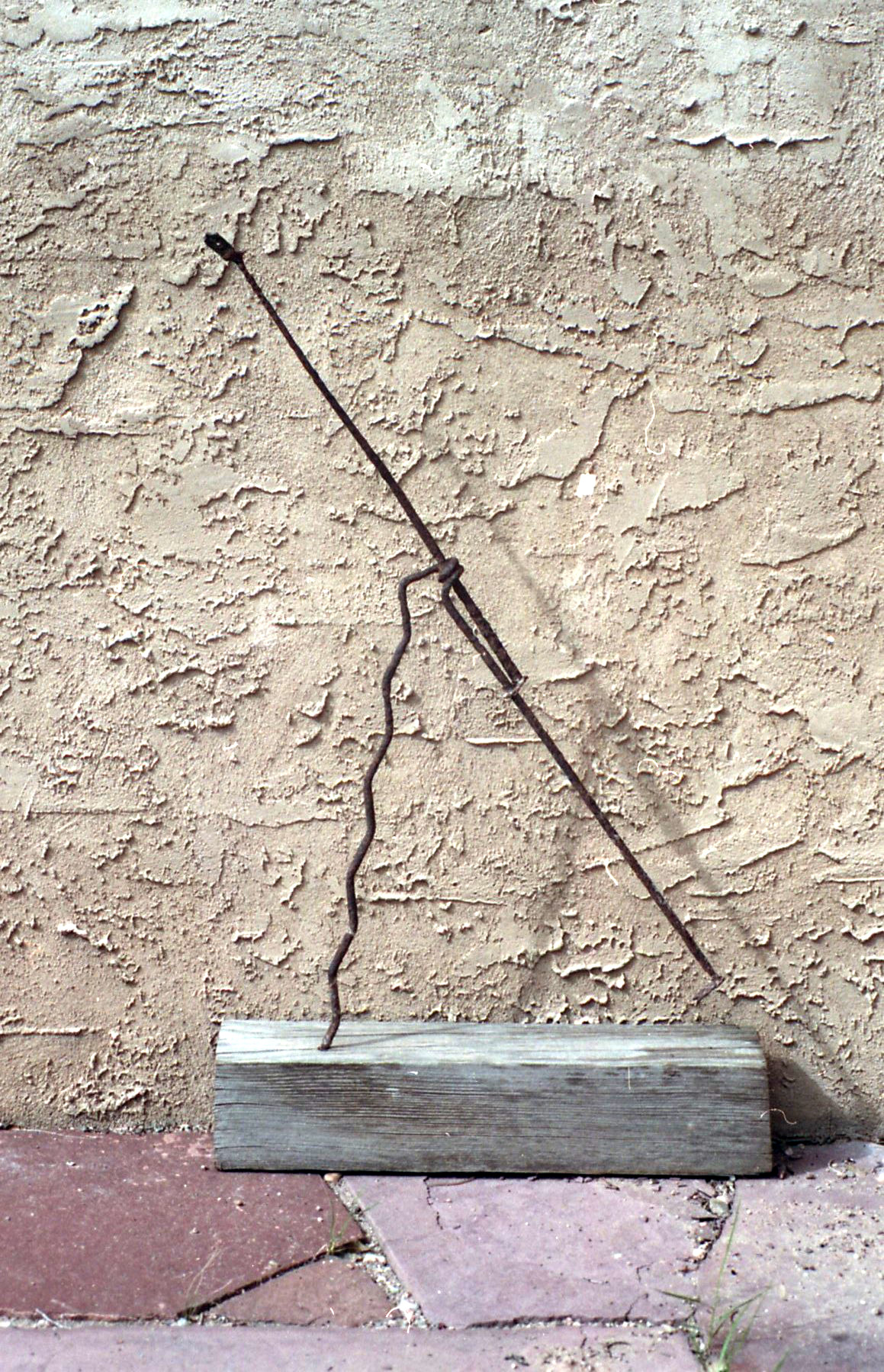
Signifires:                   Regrettably the clumsy photo shows only two of the three installations on weathered wooden posts mounted on a long, narrow board, another of my favorite early pieces.  On a much shorter piece of wood and at a greater distance, the missing third is an identical rusty nail with identically twisted wire around it with loop and free ends waving like flames or smoke in the wind, signal fires.  At least that’s my artist’s rationale for the feeble neologistic title.  But of course they might also be misspelled signifiers.  But then what might they signify?

I find the back-story on this one astounding. Over the course of many (20?) years, I found and kept each of the (identical) flaming/smoking nails singly in open/wild places in far-flung locales I’ve now forgotten.  Probably one here in NM.  Maybe Florida?  But identical!  Same gauge nail and wire, same wire-end and loop length and orientation.

(Twice being coincidence, what’s thrice? Magic?  Spontaneously Generated Art (SGA)?  Otherwise, what arcane rural or ritual need might give rise to identical artifacts in such widely disparate locations?  I’m talking identical!  In my book, finding those three nails bearing aloft their signifires like torches amounted to a minor miracle, or at least a miraculous event.)

Nevertheless, someone bought the tri-incidental (or is that transcendental?) Signifires from my first show. I treasure the poor photo for the messages its two fires still convey.

Strident (sold)

Strident (sold)

Strident:             Here’s another piece of SGA, more proof that Art, like Beauty, is in the seeing.  What I see in this inscrutably functional found object, in helpful combination with its multi-layered title of course, is Art on a par with that of Giacometti.  I can justifiably claim such excellence because I didn’t make it.  I merely came serendipitously along, saw its Art lying in the weeds, and called its name.  That late world-famous sculptor probably wouldn’t have minded the impertinent comparison.  A discerning Santa Fe collector bought it from my second show.

#

While we’re on the topic of SGA (Spontaneously Generated Art), I want to pull a couple pieces out of the gallery to show what I mean about seeing the Art in things you find by the roadside of life. In both bent and mutilated found objects I saw their inherent Art, a transformation they had spontaneously achieved through an unknown, but clearly violent, history.  SGA, if I may presume to define it, is initially a creation of human hands, but then it is transformed by time and elements, i.e., by cause and effect, or more crassly chance, into something that somebody, often me, sees as SGA.  Remember, Art’s in the eye of the beholder, and seeing it creates it.

Rainbow Man

Rainbow Man

Rainbow Man:             Lying in the dust of a path, the Rainbow Man waved to me, and I instantly recognized his Zuni attitude.  His curly head now bows over a clump of cactus on my balcony.  I don’t know what to make of him.  Do you?

Predator

Predator

Predator:                     I’ll try and sneak this into SGA, since I only added that tiny prey dangling from its beak.  It’s meant merely as a grace note on the Art espied in this metal something mangled by mysterious forces, which I found rusting in the middle of a field.  The avian predator is visible from several angles and is particularly effective perched on a rock.  As one of the more primordial elements of reality, predation still has terrible meaning in our dog-eat-dog world.  It’s both inevitable and inescapable, the process by which all life lives. On permanent loan, that’s how this raptor is installed in the backyard of a neighborly friend.

That was rather fun rummaging through my amazing sightings of Spontaneously Generated Art. Maybe I’ll devote another blog to it sometime when I feel like blathering again.

Coyote Art and Stone Sculpture

After all the work these past several months finishing and posting two literary pieces (the novella BAT IN A WHIRLWIND and my gay memoir THERE WAS A SHIP), completing and posting my next Aztec icon (ITZPAPALOTL, the Obsidian Butterfly) for the accumulating coloring book YE GODS!, surviving fairly merry holidays, and starting a happy, hopeful new year, I’m now taking a breather of sorts. However, constitutionally incapable of totally disengaging, I’ve shifted writing gears and in my idle time started in on a sci-fi epic inspiration from my box of intriguing ideas.

In the unaccustomed leisure of the past week, I’ve also played in some of my other artistic frivolities, like manipulating photographs. At some point I’ll be able to post some improved shots in my photo gallery.  Check out the current stuff anyway.  In the past few days I’ve photographed some more of my collection of others’ art for a future blog post, probably quite soon.  In digging around, I stumbled on a couple interesting sculptural items of my own proud handiwork to add to my sculpture gallery.

First, I’ve got to confess very contritely to doing something that most artists in Santa Fe won’t admit to doing—as too trite and commercial: Coyote Art.  But I won’t recant.  Recently, I brazenly posted my Aztec icon of HUEHUECOYOTL, the Old Coyote, which I dare say far transcends the trite and commercial.  But this wasn’t my first offense.

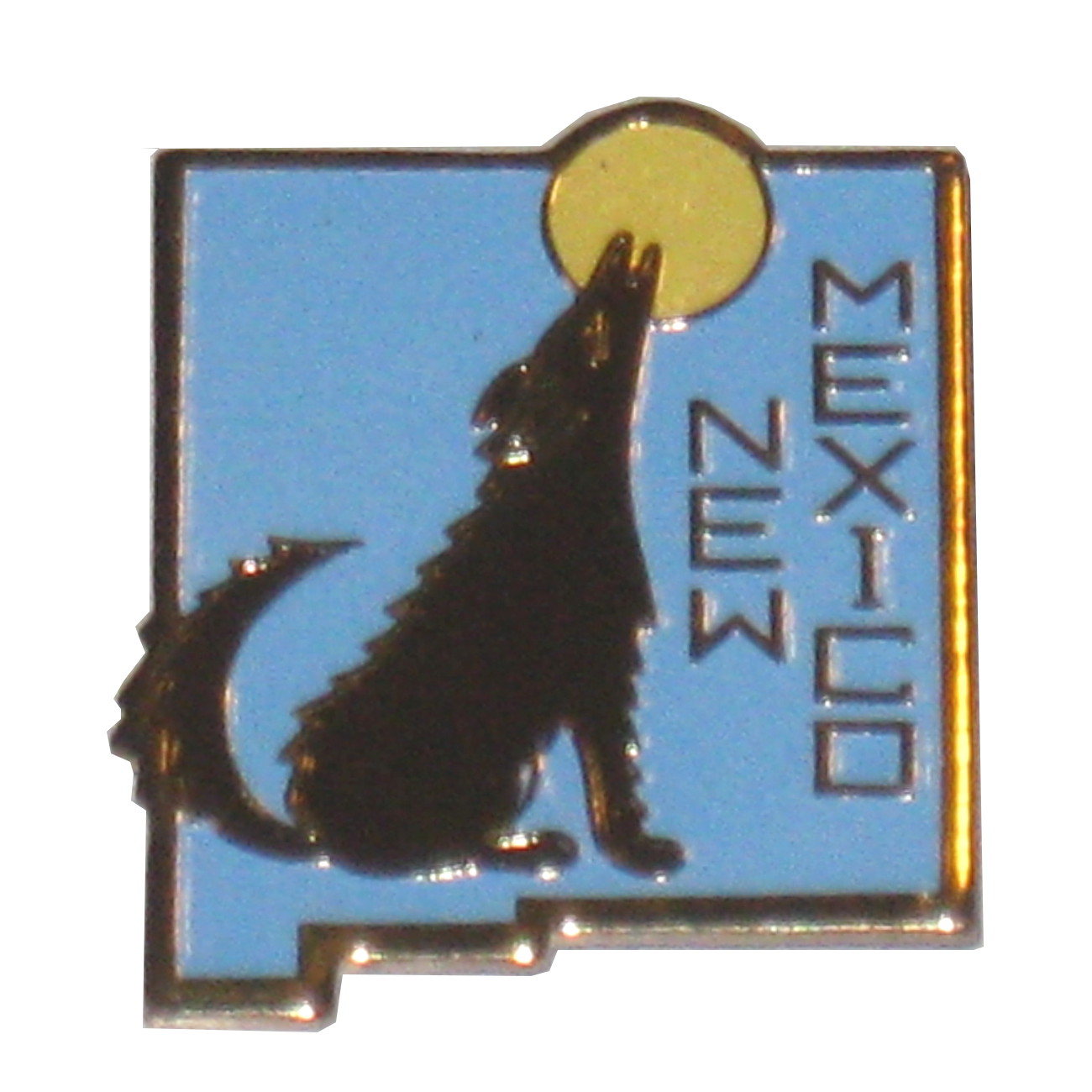
Way back when I was simply a Mature Gay Professional (maybe 1991), a dear lady I worked with asked me to design a commemorative pin for her installation as the Grand Worthy Matron of the Order of the Eastern Star. Even for gratis, I call that a splendidly official commission.  She wanted a coyote.  I shamelessly framed it in New Mexico with an obligatory moon:

Coyote Pin

Coyote Pin

Later on, when I was becoming a Grandfatherly Gay Character (around 1996), I wore out a lot of files and chisels on a sculpture that was dictated by the medium itself. It was a stone with a thin stratum of lighter stone into which I gnawed out an intaglio of the Serpent Mound in Adams County, Ohio, more or less per the Squier survey as it appears in my old book REMEMBER NATIVE AMERICA.  There’s something about its emphatic reality that I really appreciate:

Serpent Mound intaglio

Serpent Mound intaglio

So, although I claim to be a sculptor of found object assemblages, in fact I’ve done a few things in good, old-fashioned stone, though some of those are also assemblages. These are already shown in my sculpture gallery, but let me highlight them here.

Canyon Viejo

Canyon Viejo

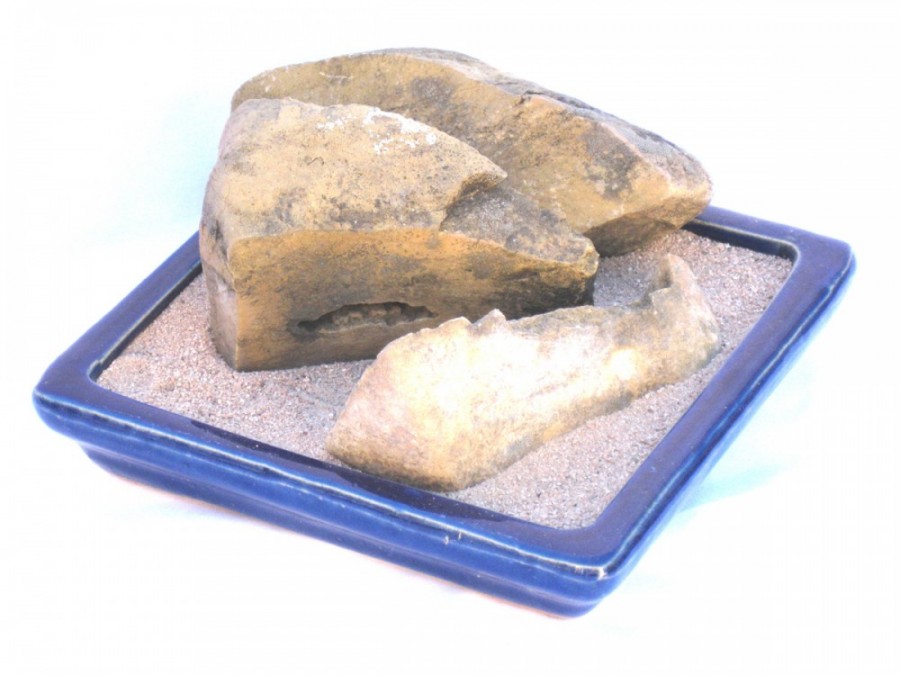
Canyon Viejo is a split piece of stone in a bowl of sand that makes for a miniature Zen sculpture of a cliff-dwelling in homage to Canyon de Chelly.

Creeping Creature and Calf

Creeping Creature and Calf

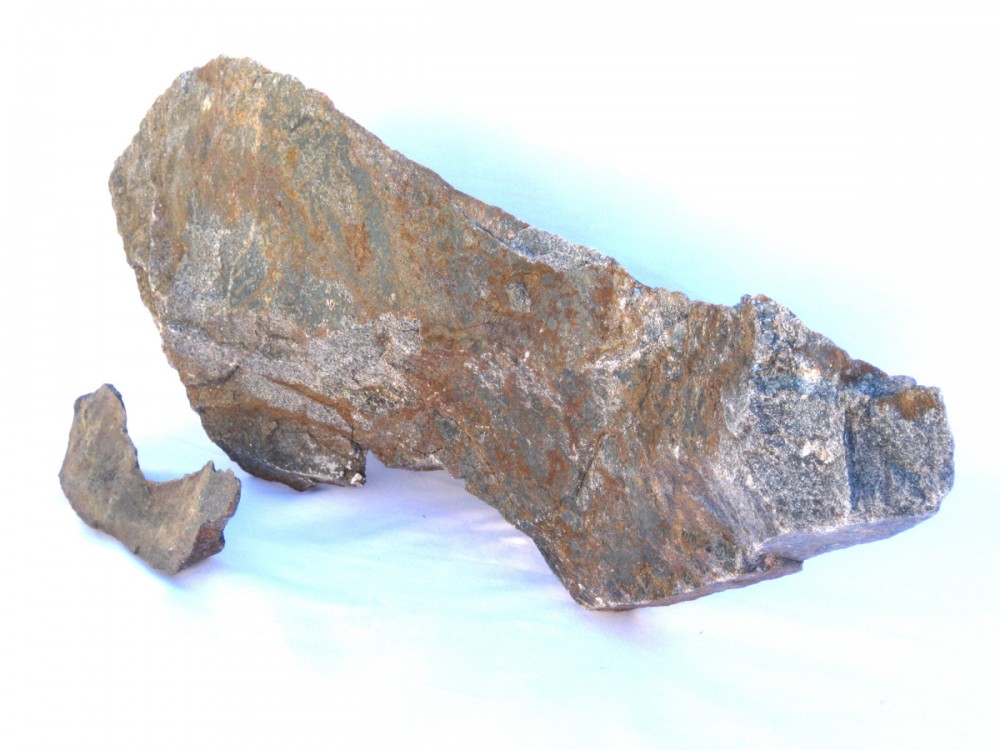
Creeping Creature and Calf is two eccentric fragments of stone found in widely separate locations that called out to me that they are family.

Crouching Creature with Cub

Crouching Creature with Cub

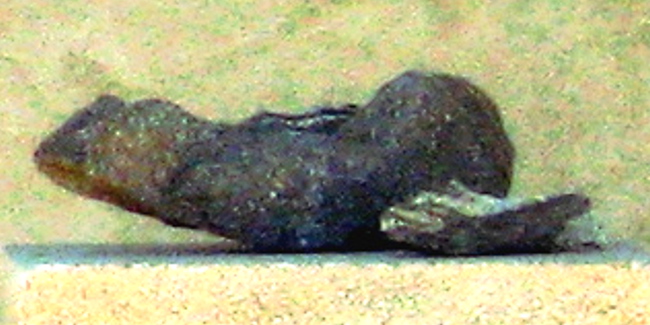
Crouching Creature with Cub is another pair of strange pieces of stone that are clearly related.

Lair of the Bear

Lair of the Bear

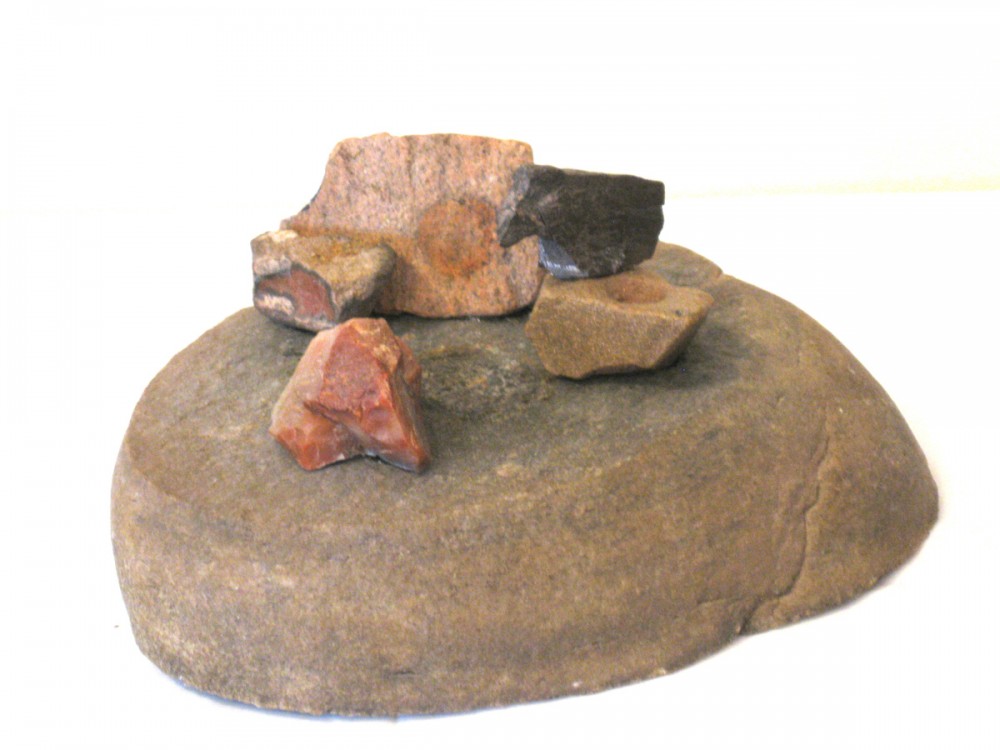
Lair of the Bear assembles a few ursine and otherwise anomalous stones found in many locations over the years to create a mythical environment.

As maybe you can tell, I think art is where you find it.

Aztec Icon #8 – Itzpapalotl, The Obsidian Butterfly

It’s been about two months since I’ve been able to celebrate completion of an icon, but here at last is the next in the series for the coloring book  YE GODS! Hooray!  Besides the many days of maniacal drawing, I suffered through some sickness and enjoyed two days in the hospital with a collapsed lung.  Now totally fixed.  So much for daily diary matters.

I think you’ll agree that this icon of the goddess Itzpapalotl, the Obsidian Butterfly, is startling and disturbing, if not frightening, but you should also know that these demonic images are absolutely authentic. Check out google images for Codex Borgia. This lady of mystery and death is a good example of how Aztec deities are a mix-up of what we nowadays rather simplistically call good and evil.  The Aztec aesthetic embraces both the beautiful and hideous, just as their philosophy affirms both life and death.

(You can still see or download the previous seven icons by clicking on them in the list on the page for the coloring book .)

ICON #8: ITZPAPALOTL

(The Obsidian Butterfly)

To download this icon as a pdf file with a page of caption and model images from the Aztec Codices, right click here and select “Save Target (or Link) As.”  You can also download it in freely sizable vector drawings from the coloring book page.

Itzpapalotl, The Obsidian Butterfly

Itzpapalotl, The Obsidian Butterfly

ITZPAPALOTL {eets-pa-pa-lotł} is the ancestral goddess of the stars (Milky Way), lady of mystery and death, but also of beauty and fertility. Patron of the day Cozcacuauhtli (Vulture), she is a fearsome warrior who rules over the paradise of Tamoanchan for victims of infant mortality.  She may be the mother of Mixcoatl, the Cloud Serpent, and is patron of the Cihuateteo, harmful spirits of women who died in childbirth.  She is also one of the Tzitzimime, star demons that devour people during solar eclipses.  She is usually depicted as a skeletal figure with butterfly, eagle, or bat wings but can also be a beautiful, seductive woman.  Sometimes she’s known as the Clawed Butterfly.

Violence and Fear in America

I’m really upset—I’ve had it with all this violence.  Here comes my rant.

Actually I’ve been bothered and tormented about violence for 14 years—ever since the catastrophe of 9/11.  That was a social blow we could well have quickly recovered from, had not the terrified powers that were (and still are) used it (and still use it) to terrorize the population (ever since).  In truth, that apocalyptic event was a decisive and lasting victory for the reputed “terrorists,” whoever they may have been (or be).

Those Powers That Be (PTB) have been terrorizing our people by constantly reminding us of the threat of random violence at any time or place.  Any exposure to violence gives it a toehold in our consciousness, an inroad into our awareness, and that is in no way a good thing.  Violence is as contagious as any black plague, maybe more, and way more lethal.

It almost goes without saying that the normal animal and human emotional response to violence is fear.  How one manifests that emotion makes all the difference:  resistance, defense, retreat, or terror (surrender).  These are all fear-based reactions.

Fear has now become the basis of our whole culture or if you will, civilization.  It’s really big business embracing our whole way of life.  Actually it’s several mega-industries:  the insurance industry, the security and policing industries, the medical and pharmaceutical industries, the military industry, the political industry, the media and advertising industries, and the entertainment and sports industries.  Those are just the big kahunas in the economic ocean of fear.  I won’t even try to list all the other fish in this frightful sea.

To return to those constant reminders of the threat of random violence, just think for a moment on how in the past 14 years news reporting has been ramping up intensity and volume of stories about horrific slaughters and atrocities, now with mass shootings almost a weekly spectacle.

Sensational coverage of this supposedly important news has been commandeering the airwaves with continuous mind-numbing video loops and litanies of ominous, hypnotic memes.  And now with the San Bernardino abomination, it has suddenly turned into a reality show with live feeds to the gory details of police action, investigation, supposition, and philosophical commentary.  The insistent message is simple:  This could happen to you.  Be afraid—be very afraid.

Heeding that warning, people now seem to be hiding themselves away in their safe-haven homes.  Sadly, rather than use this private time for interpersonal or personal relations or activities, most turn to the TV and Internet for immersive, violence-based entertainment.  This is a vicious circle, a self-reinforcing mechanism for terrorizing folks.  Plain and simple, we’re being brain-washed, no, make that force-fed, with images and thoughts of violence at every turn, news programs, action dramas, sitcoms, and even in commercials.

Of course, this begs the question:  Why do folks willingly, even compulsively, watch violence?   Frankly, I believe that watching violence is the same as watching pornography—just as vicarious and shameful.  They both pander to the negative, atavistic side of the human being and awaken similar bestial emotions.  And both are super-addictive.

So where does a fearful population go from here?  Seems to me, there are three ways to go.  My preference is to close my eyes and ears to the insidious message, living my life without fear of threats and surviving or not.  Of course, you could always retreat like Gollum deeper into the bowels of the earth with your precious screen still spewing its poison, but then there is nowhere to go but even deeper down.

The third option might be to negotiate with the PTB, trading off our rights and humanity for security.  Maybe that’s what the PTB have had in mind all along.  Just saying.

Such horrible bargains have been struck many times in the course of history.  Remember the Romans’ pacification of their population with bread and circus (which was simply glorified violence)?  Nowadays it’s junk food and TV (even more vilely violent).  Don’t forget the relative social security of medieval feudalism or the prosperity of empires, of course at the cost of personal liberty.  Some monarchs or dictators have occasionally provided reasonable peace and security at the cost of social freedom, and theocratic states still sell protection for total control of their people’s thoughts and behavior.

Personally I’m not going to settle for any of those raw deals.  Again, my choice is to live without fear.  Whether or not I fear it, my future lies solely in the hands of Providence.  We get what we’ll get, and pre-emptive fear of dire possibilities is a miserable waste of time.  Most won’t even happen, and if one does, well, that’s the way the cookie crumbles.

My personal mantra is Frank Herbert’s transcendent dictum in “Dune:” “I must not fear. Fear is the mind-killer. Fear is the little-death that brings total obliteration. I will face my fear. I will permit it to pass over me and through me. And when it has gone past I will turn the inner eye to see its path. Where the fear has gone there will be nothing. Only I will remain.”

To break this cycle of fear-inducing violence, we’ve got to deny it any place in our spirit, banish it from our thoughts and fantasies, and quell our instinctual fears.  We must shut out society’s pervasive drone of violence and create a new personal music, a true entertainment for our fearless minds.  For my own part, I’ve recently taken up nonchalant whistling.

Again it almost goes without saying that my strong (and realistically rational) opinions about today’s atmosphere of fear aren’t going to change squat.   My only (perfectly realistic) fear is that the terrorized people of the world might surrender their lives and liberty to the PTB for a pittance of dubious security.  Believe me, folks, surrender won’t banish fear—or violence.

Meanwhile I’ll just whistle a happy tune, letting that fear pass over and through me, and only I will remain, a free human being.

Aztec Icon #7 – HUITZILOPOCHTLI, Hummingbird of the South

Let’s get back to my coloring book of Aztec icons called YE GODS!  THE AZTEC ICONS.  Here comes the big guy, the patron deity of the Aztec tribe (the Mexica), a war god, oddly named for a tiny bird.

In all good conscience, I must apologize for the exuberance of miniature detail in this drawing, but it’s all necessary to tell his story. The motifs in the icon are modelled on images from several codices too numerous to mention.  If you find the vignettes too tiny to work with, all I can suggest is to blow the image up to maybe 200X.

Meanwhile, since this icon is so detailed, I’ll give some more notes below, after the caption.

Don’t worry, you can still see or download the previous six icons by clicking on them in the list on the page for the coloring book .

ICON #7: HUITZILOPOCHTLI

(Hummingbird of the South)

To download this icon as a pdf file with a page of caption and model images from the Aztec Codices, right click here and select “Save Target (or Link) As.”  You can also download it in freely sizable vector drawings from the coloring book page.

huitzilopochtli

HUITZILOPOCHTLI {hwee-tsil-o-poch-tłee} is the god of war, power, force, action, accomplishment, and nobility, as well as patron of the city of Tenochtitlan and god of the South. As patron god of the Mexica (Aztecs), he was credited with both their victories and defeats on the battlefield, requiring sacrificial human hearts in either case. He is sometimes called the Blue Tezcatlipoca, the sun at mid-day, and as Lord of the warriors of the day, the Eagle Knights, he wields the Xiuhcoatl (Fire Snake) with which he slew his 400 brothers.  Son of Coatlicue (Snake Skirt), he led the Mexica people on their epic migration from legendary Chicomoztoc (Seven Caves) into the Valley of Anahuac.

###

NOTES TO ICON #7:

The god surmounts a symbol of the sun at zenith. Central above him rises the Tree (cacao) of the South in which sits an unidentified Bird of the South.  To the left of it crouches an Eagle Knight, and to the left is the god’s birth day-name, One Flint.

The figured frame, starting on the upper left and running traditionally counterclockwise, presents episodes in the many-year migration of the Mexica. Largely it reflects Fray Durán’s account in his 16th-century “History of the Aztecs.”  The vignettes down the left side represent:

  • Departure from the mythical homeland of Aztalan and long wandering in the desert.
  • Settling down in Chicomoztoc (Seven Caves) for many years.
  • Birth there of Huitzilopochtli (including the beheading of the god’s mother Coatlicue and slaughter of his multitudinous brothers).
  • Migrating on and conquering the Red City (probably Gran Chichimec in Sonora).
  • Abandoning the god’s sorceress sister Malinalxochitl.
  • Settling down at Coatepec and executing the god’s conspirator sister Coyolxauhqui.
  • Migrating on and killing the god’s nephew Copil, son of Malinalxochitl.
  • Flaying the “Woman of Discord,” daughter of the king of the city of Colhuacan.
  • The five day-signs, Lizard, Rabbit, Grass, Vulture, and Flower (bottom center) are symbols of the South as well, noting the direction of the migration.

Rising from the lower right, the vignettes represent:

  • Arrival of the Mexica at Tenochtitlan, Place of the Cactus, an island in Lake Texcoco (with volcanoes Popocatepetl and Itzacihuatl in the background).
  • Merchants (pochteca) with their god Yacatecuhtli trading with many cities.
  • Warriors conquering many other cities.
  • Warriors capturing prisoners for sacrifice.
  • Priest sacrificing people atop the double temple of Huitzilopochtli and the storm god Tlaloc, now known as El Templo Mayor in Mexico City.

Aztec Icon #6 – HUEHUECOYOTL, The Old Coyote

I guess it’s time to post the next Aztec icon in my coloring book called YE GODS!  THE AZTEC ICONS.  Looking almost Egyptian with the animal head, this one emphasizes dancing, music, and sex, which is a combination close to my heart. I must admit to identifying closely with this deity while drawing him. It’s full of the music of Aztec instruments and singing, all shown in graphic symbols. Details are based on various codices, but mostly Codex Borbonicus.

Don’t worry, you can still see or download the previous five icons by clicking on them in the list on the page for the coloring book.

ICON #6: HUEHUECOYOTL

(The Old Coyote)

To download this icon as a pdf file with a page of caption and model images from the Aztec Codices, right click here and select “Save Target (or Link) As.”  You can also download it in freely sizable vector drawings from the coloring book page.

huehuecoyotl icon

HUEHUECOYOTL (Old Coyote) {hwe-hwe-koy-otł} is the trickster god of mischief and pranks and can lead one into trouble. (His tricks on other gods often backfired.) Patron of the day Lizard, along with Macuil Cuetzpallin (Five Lizard), he’s a deity of sexual indulgence, and with XOCHIPILLI and Macuil Xochitl (Five Flower), he’s also a deity of music, dance, storytelling, and choral singing. Personifying astuteness, pragmatism, worldly wisdom, male beauty, sexuality, and youth, he’s a balance of old and new, worldly and spiritual, male and female, and youth and old age. He is a shape-shifter, turning into animals or humans with sexual partners female or male of any species. Among his male lovers were XOCHIPILLI and Opochtli, god of hunting. He brings unexpected pleasure, sorrow, and strange happenings, and people appealed to him to mitigate or reverse their fates.

Aztec Icon #5 – EHECATL, God of Wind

Hold on to your hats! Here comes a wild wind. Actually the fifth icon for the coloring book YE GODS! THE AZTEC ICONS is the Aztec God of Wind, Ehecatl. My apologies that he’s going to be crazy to color, but I didn’t exactly make him up. The deity’s image is quite authentic, based on one with very similar detail from Codex Borgia.

Don’t worry, you can still see or download the previous four icons by clicking on them in the list on the coloring book page.

ICON #5: EHECATL

(God of the Wind)

To download this icon as a pdf file with a page of caption and model images from the Aztec Codices, right click here and select “Save Target (or Link) As.”  You can also download it in freely sizable vector drawings from the coloring book page.

ehecatl icon

EHECATL {e-he-katł} is the deified element of air and the breath of life. He’s a nagual of QUETZALCOATL, whom he helped create the current Fifth Sun by breathing life back into the bones in Mictlan. He is the god of secrets and mystery, intelligence, and spiritual life. Only smoke, feathers, and birds should be sacrificed to him. His temples were round, sometimes with protruding masks for the wind to blow through. His breath moves the sun and drives the high clouds and rain across the sky. Ehecatl is the 2nd day of the month, and Nahui Ehecatl (Four Wind) was the day-name for the Second Sun, a world ruled by QUETZALCOATL. When that Sun was destroyed by the eponymous wind (hurricane), its people were turned into monkeys.

Aztec Icon #4 – CHANTICO, Lady of the House

In the eternal struggle between life and art, I’ve been much occupied recently by life, the daily doing of things, most with pleasure, and some with stoic duty. So it’s been a while since I last managed to post something. Now with my ailing computer almost healed, I’ll launch the fourth Aztec icon for my coloring book YE GODS!  THE AZTEC ICONS.

Remember, that’s 4 of a planned 26. At the moment I’ve mostly completed the fifth and sixth and am half-way through the seventh. Don’t worry, you can still see the third icon by clicking here or any of the first three through the list on the coloring book page.

ICON #4: CHANTICO

(The Lady of the House)

To download this icon as a pdf file with a page of caption and model images from the Aztec Codices, right click here and select “Save Target (or Link) As.”  You can also download it in freely sizable vector drawings from the coloring book page.

Chantico icon

CHANTICO, The Lady of the House {chan-tee-ko} is the goddess of fire in the family hearth and fire of the spirit, as well as fire of the earth (volcanoes), and logically the wife of XIUHTECUHTLI, the god of fire. Patroness of cooking, eating, domesticity, and weaving she represents the feminine side of life, fertility, and the waters of birth. She is also the goddess of precious things, the lady wealth and jewels, defensive of her possessions and vindictive with gods or mortals who take her treasures. Her own particular omen-bird (parrot?) is attached to her headdress. (Each deity has one.) The jaguar-pelt seat indicates a divine or royal being.