
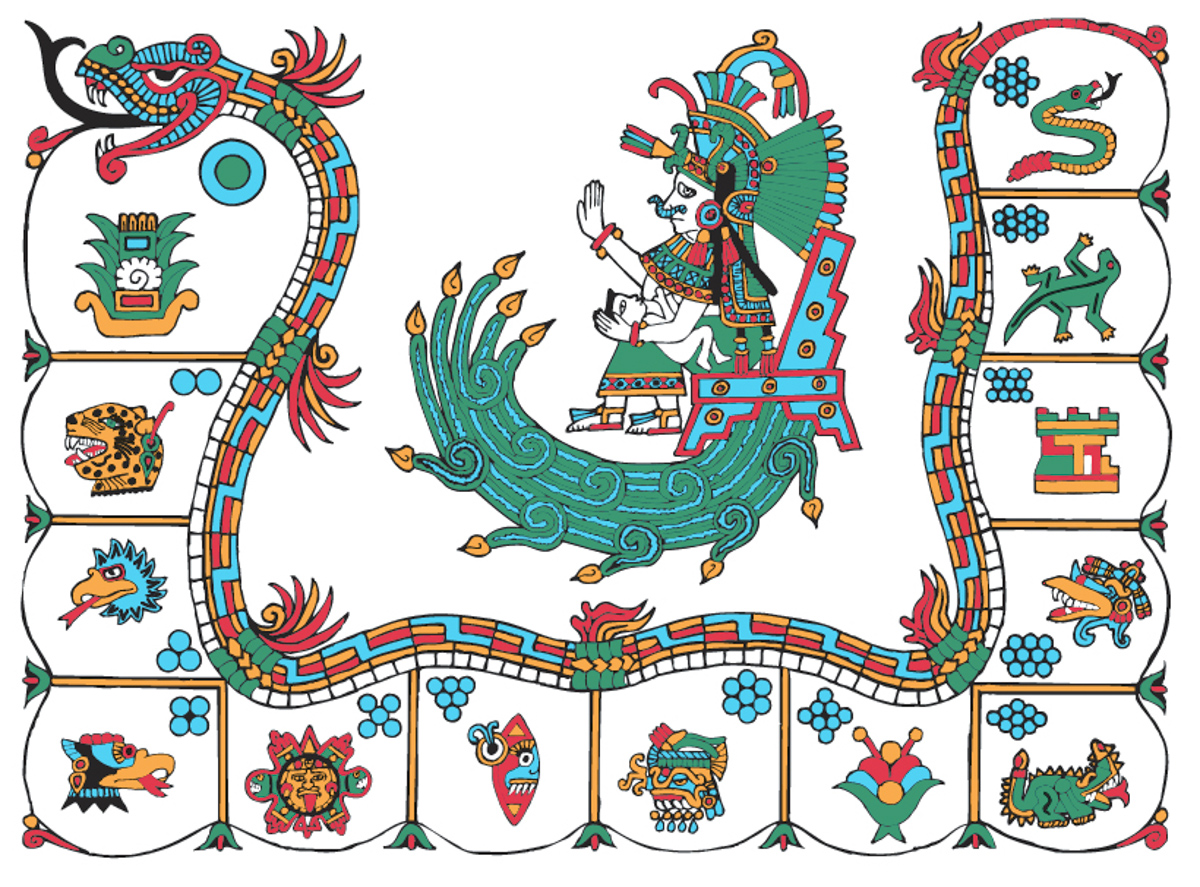
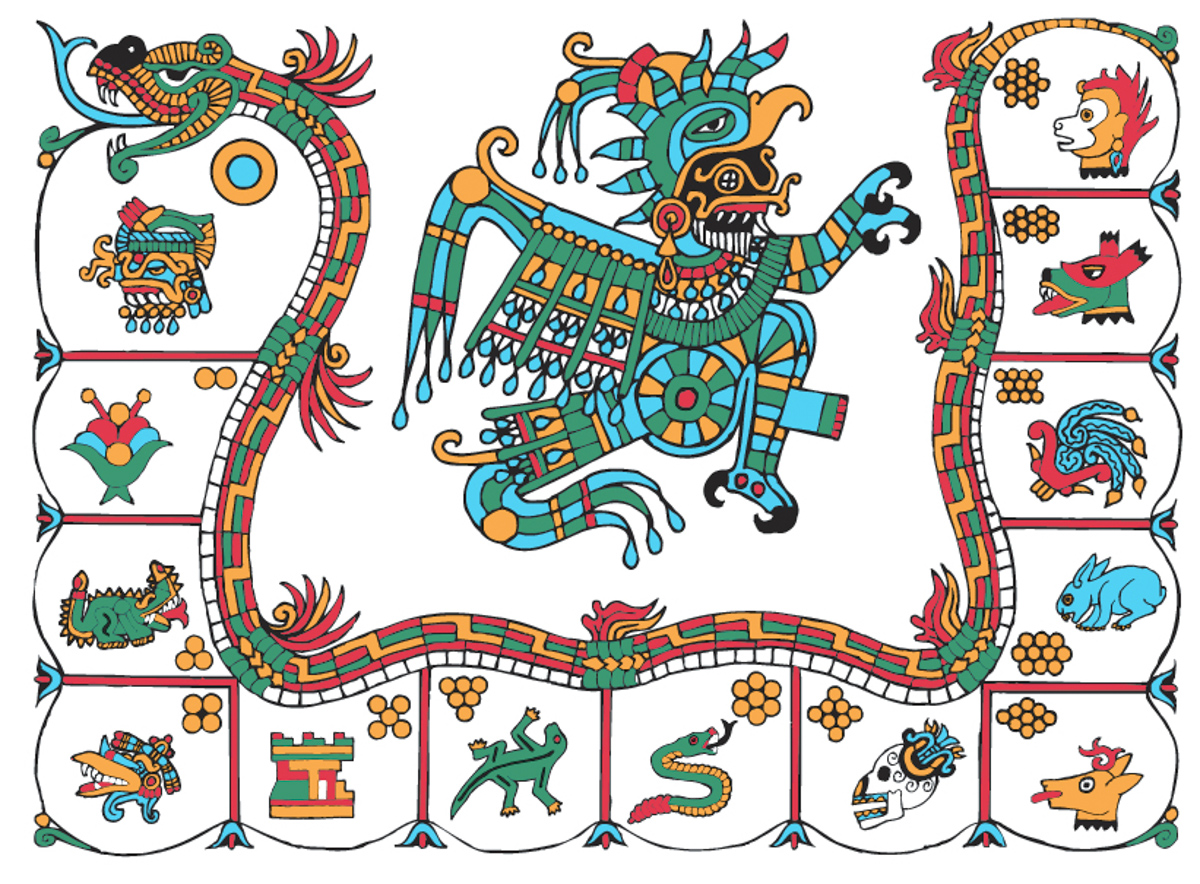
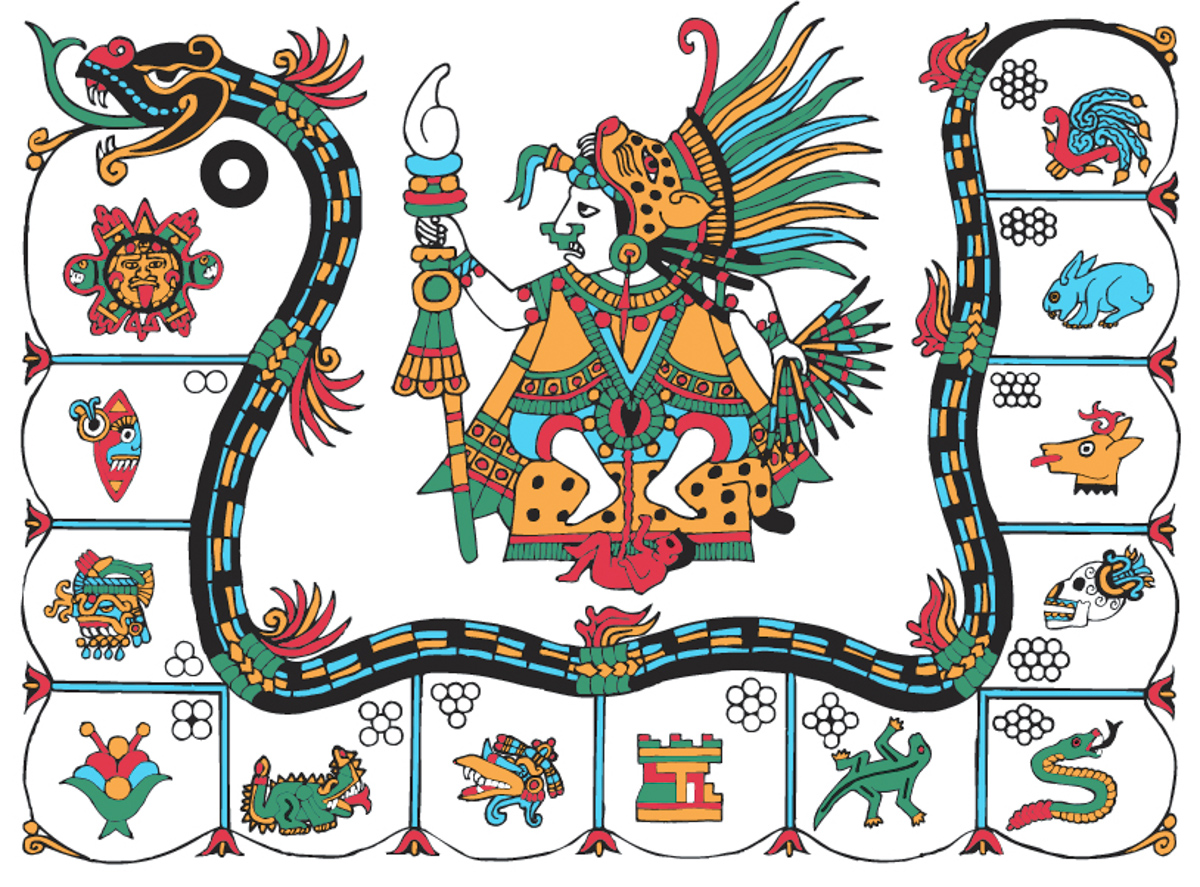
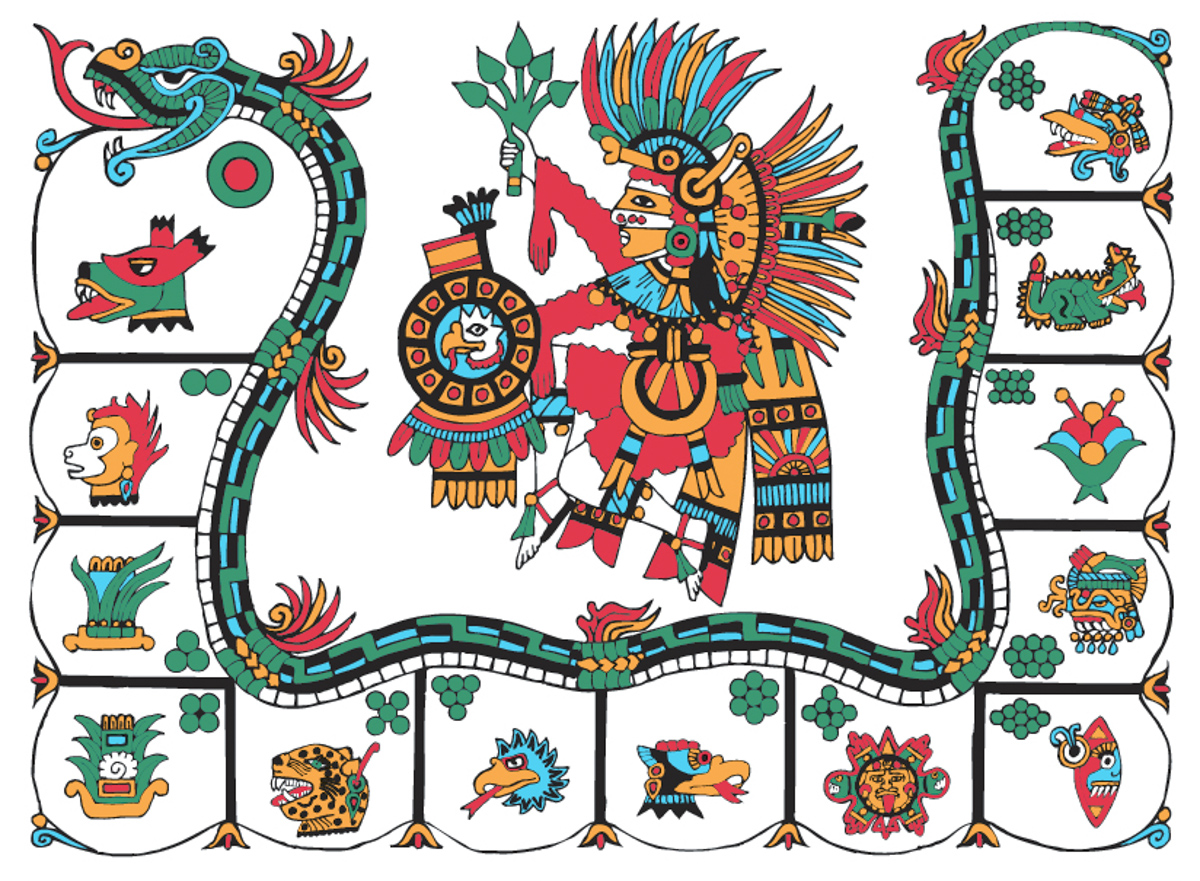
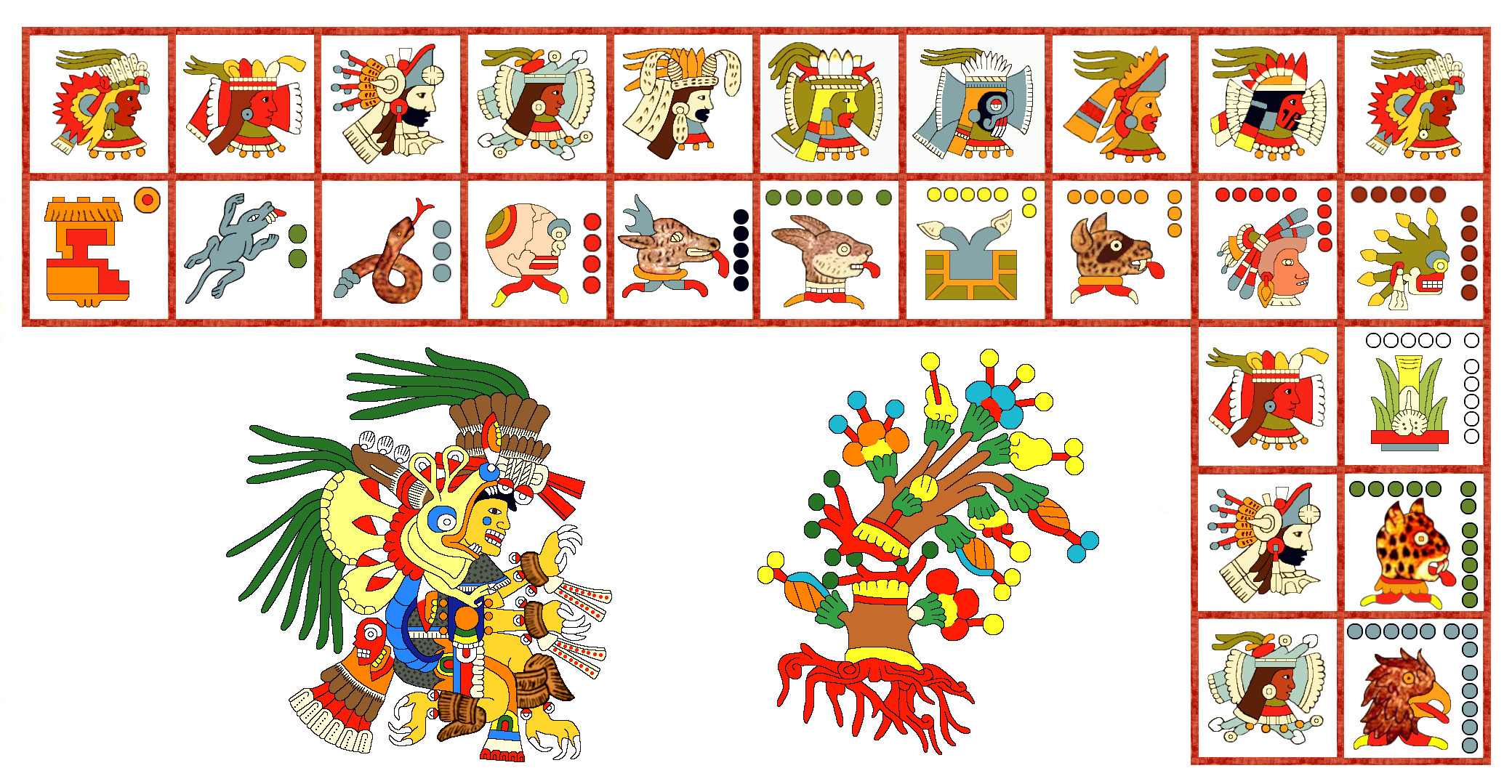
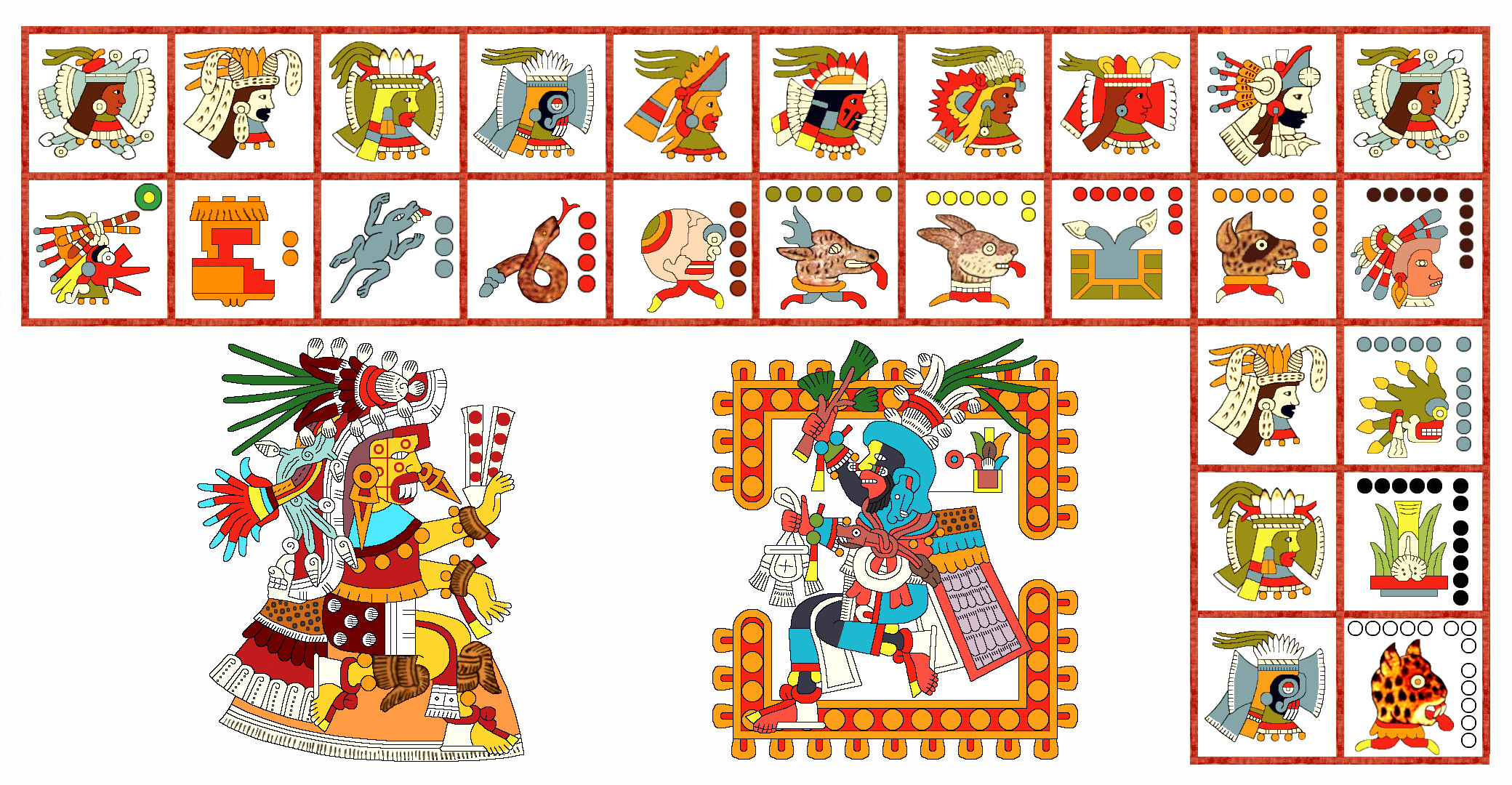
The following are three versions of the trecenas (13-day “weeks”) of the Aztec ceremonial calendar, each named for the first day of that period. The Tonalpohualli (count of days) or Turquoise Year consists of 20 trecenas, totaling 260 days (tonalli). See my blog posts by trecena name for mythological details: (Crocodile, Jaguar, Deer, Flower, Reed, Death, Rain, Grass, Snake, Flint, Monkey, Lizard, Earthquake, Dog, House, Vulture, Water, Wind, Eagle, and Rabbit.
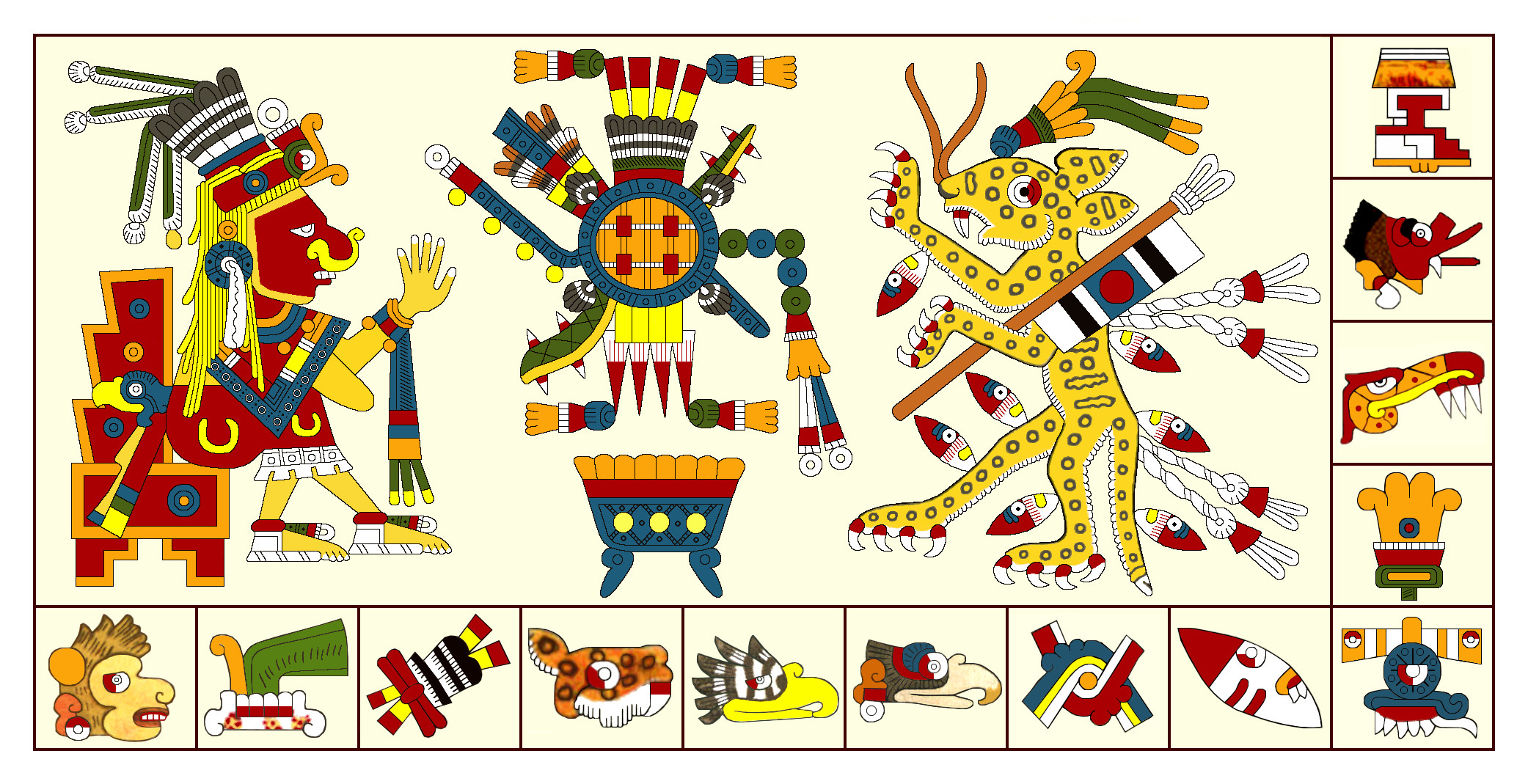
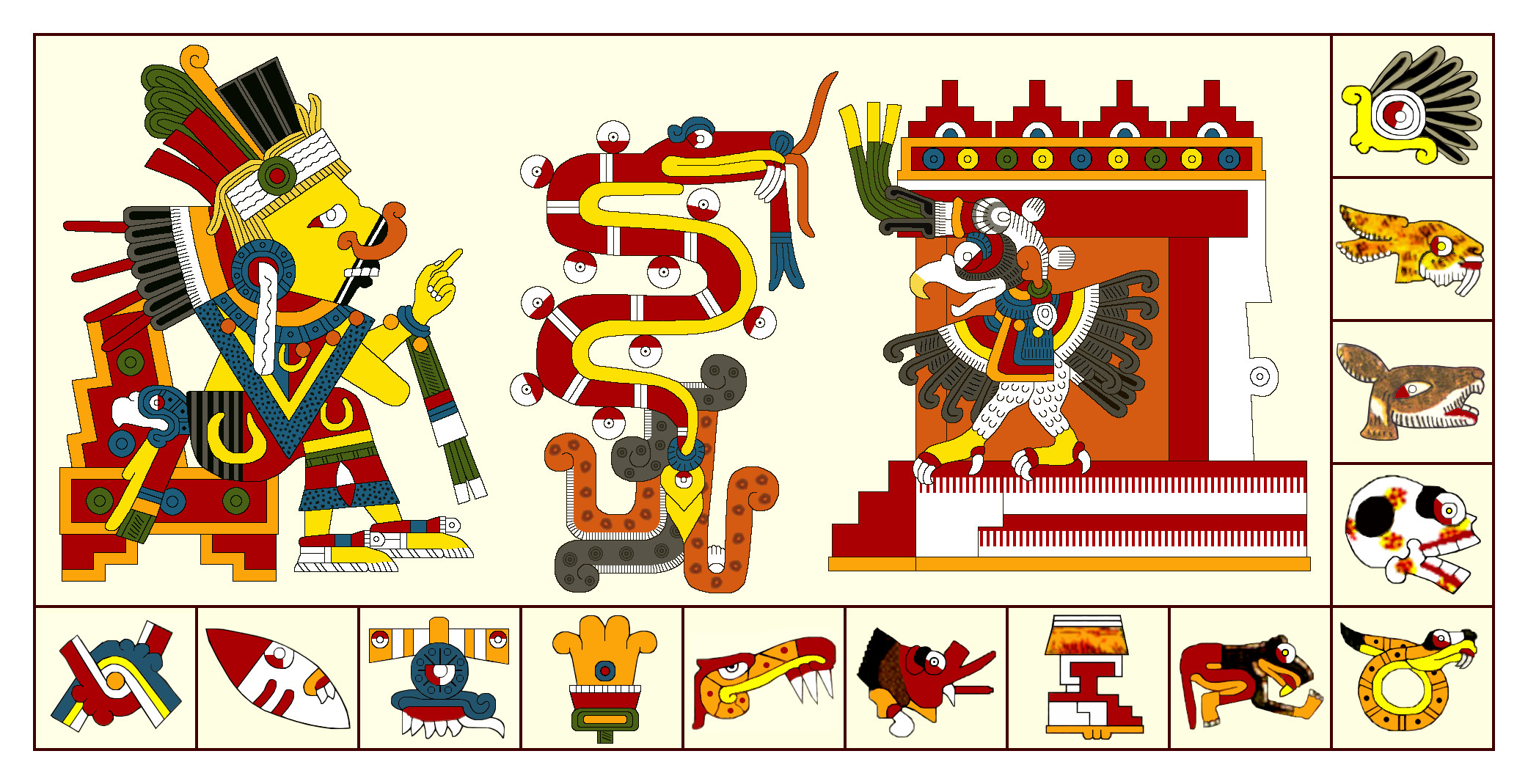
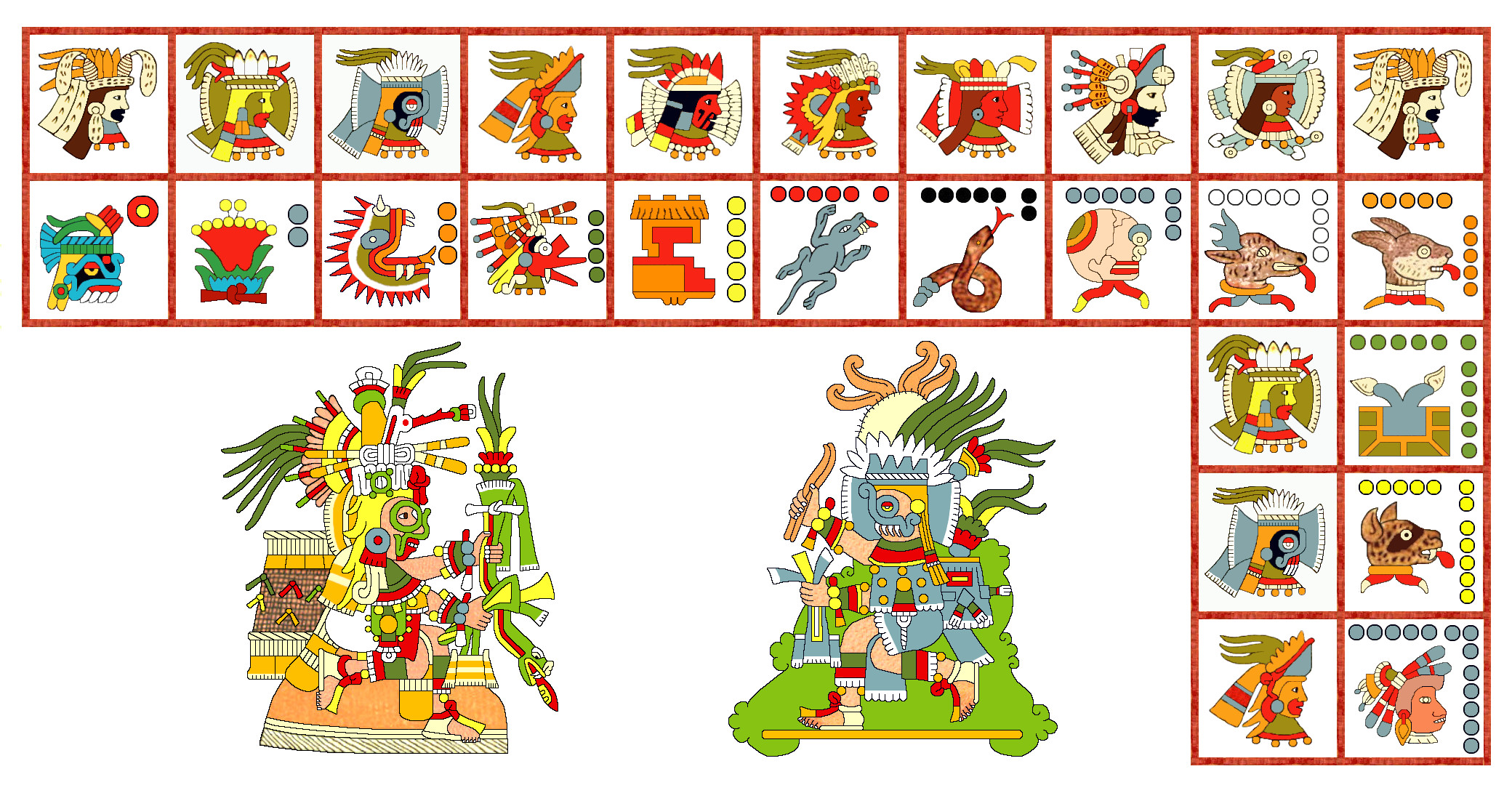
TONALAMATL BALTHAZAR
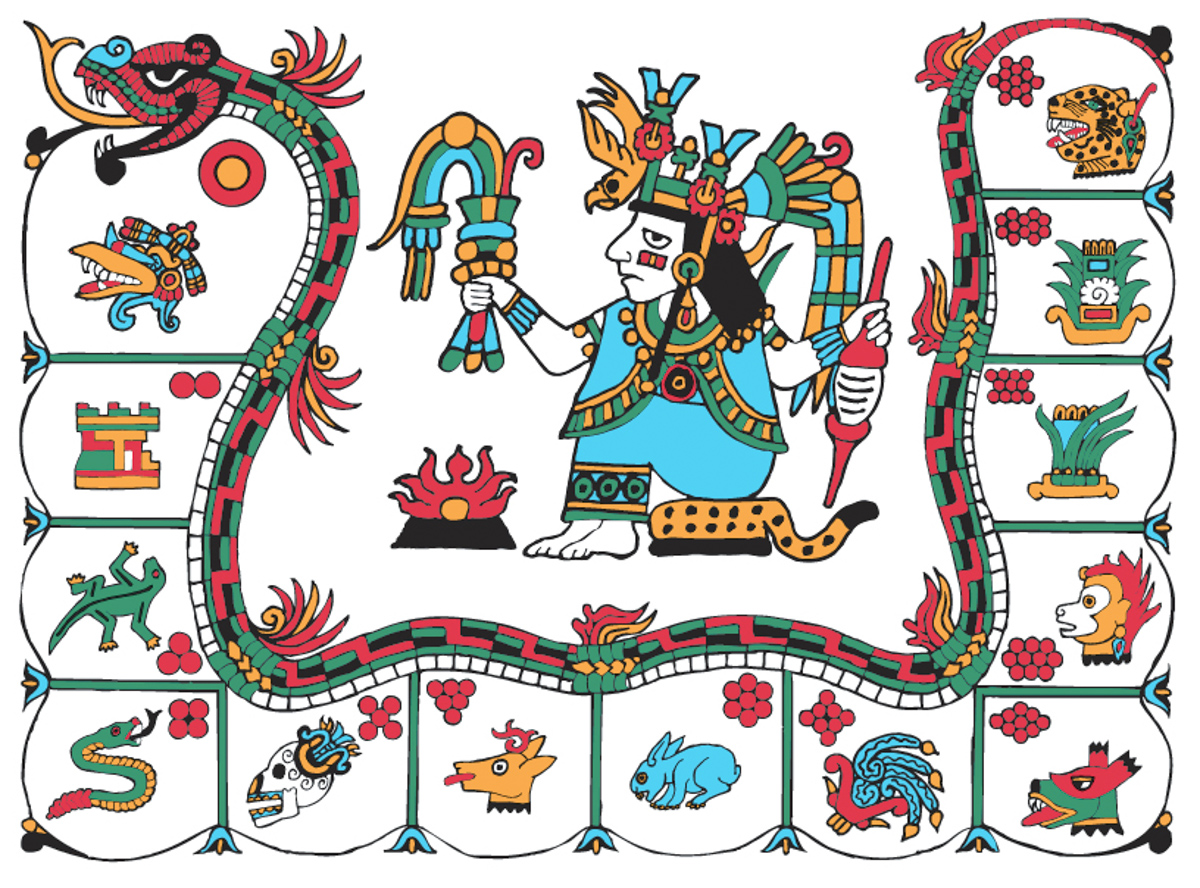
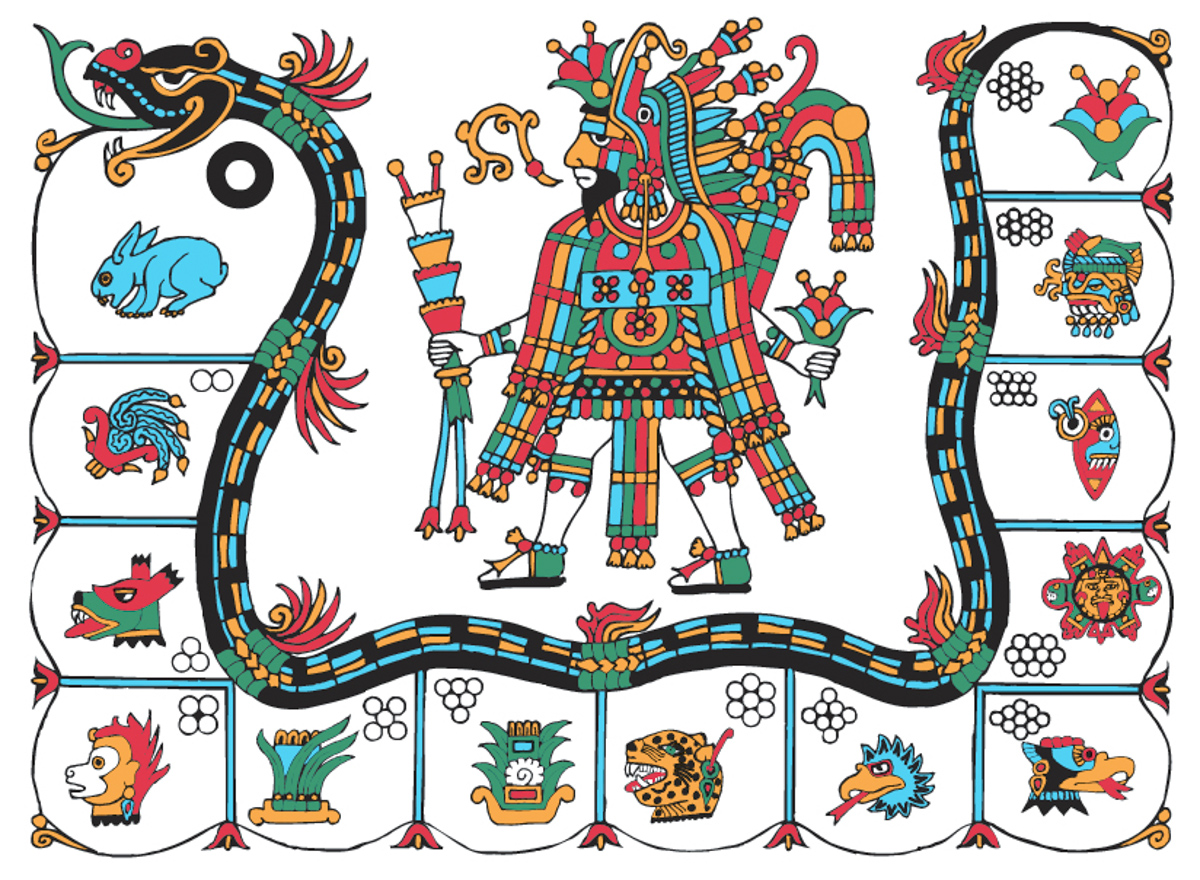
I created this collection of trecena images for my 1993 book CELEBRATE NATIVE AMERICA! based largely on the iconography of Codex Nuttall. The patrons of the trecenas are the authentic deities–except for the last (Rabbit) trecena for which the patron is supposed to be Itzli (Flint), the sacrificial knife. I was artistically offended and substituted my favorite god, Xochipilli, the Prince of Flowers. Mea culpa!








###
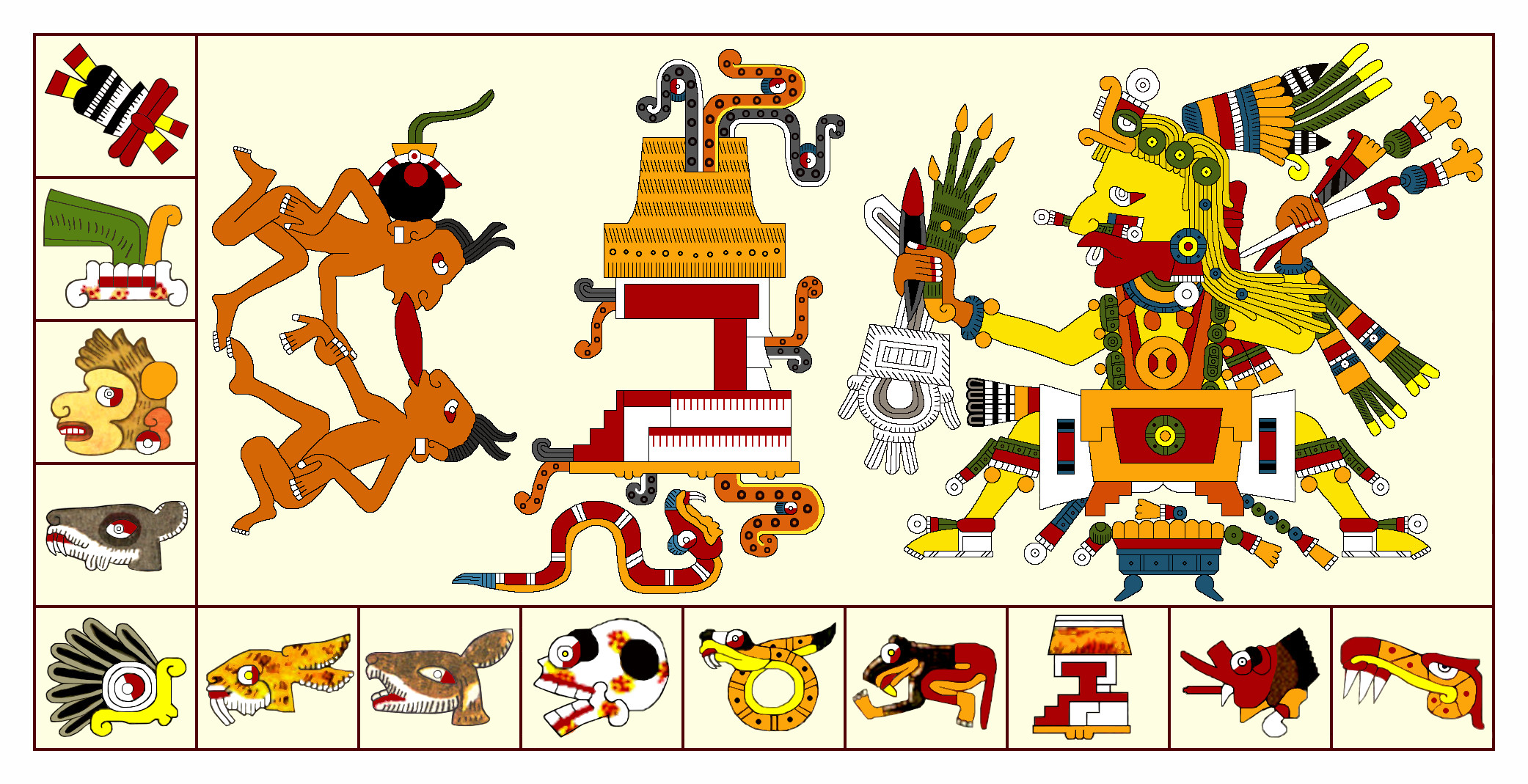
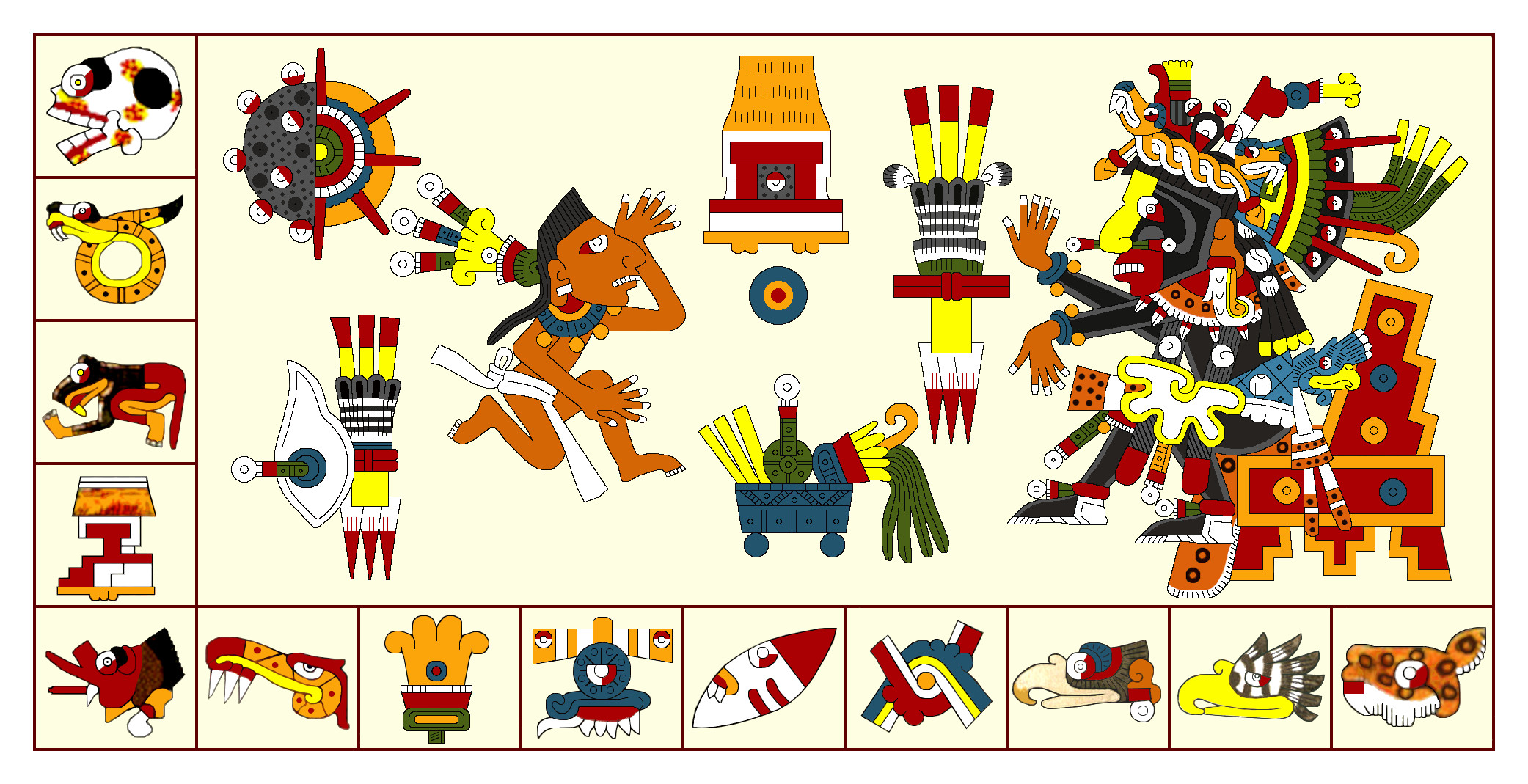
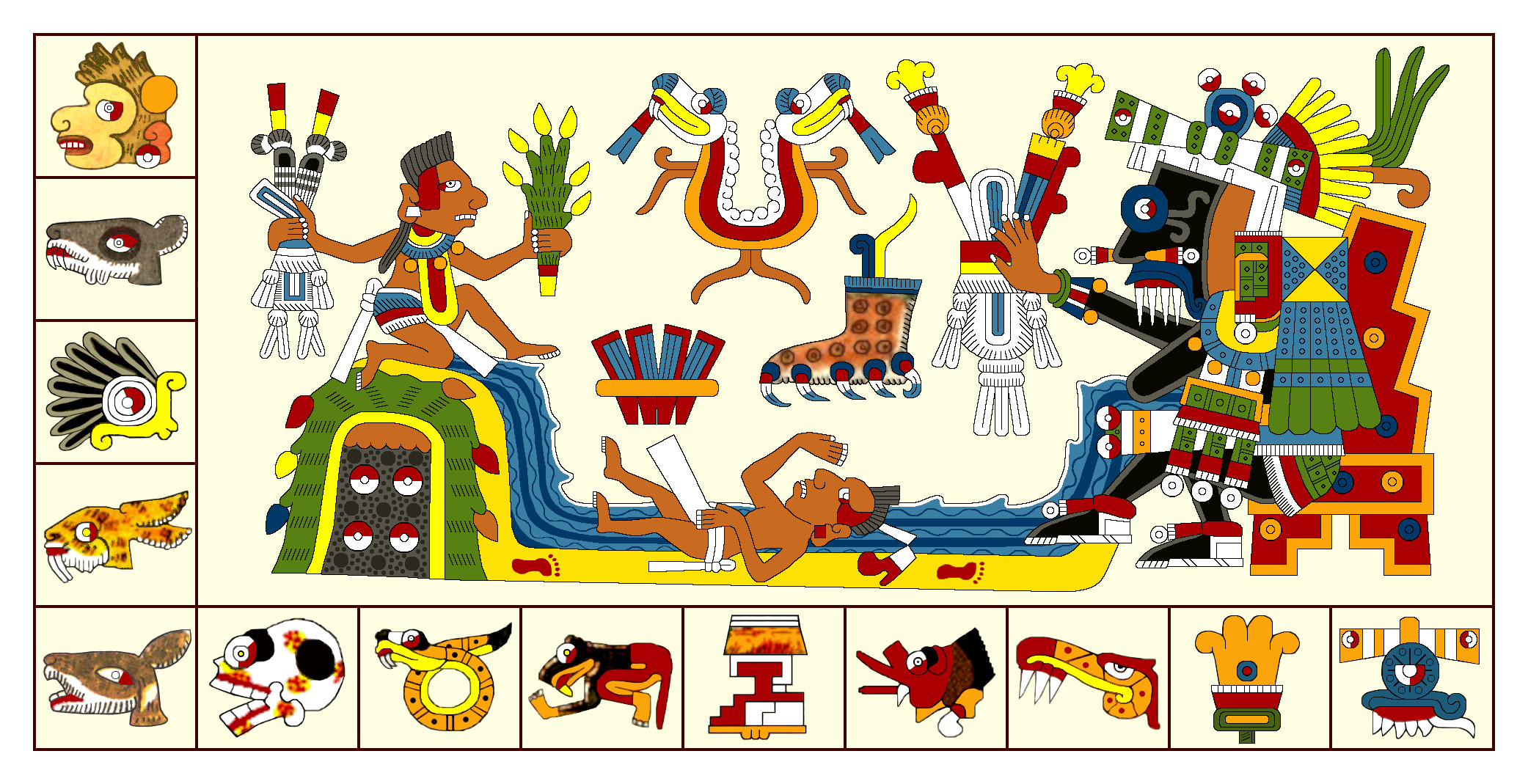
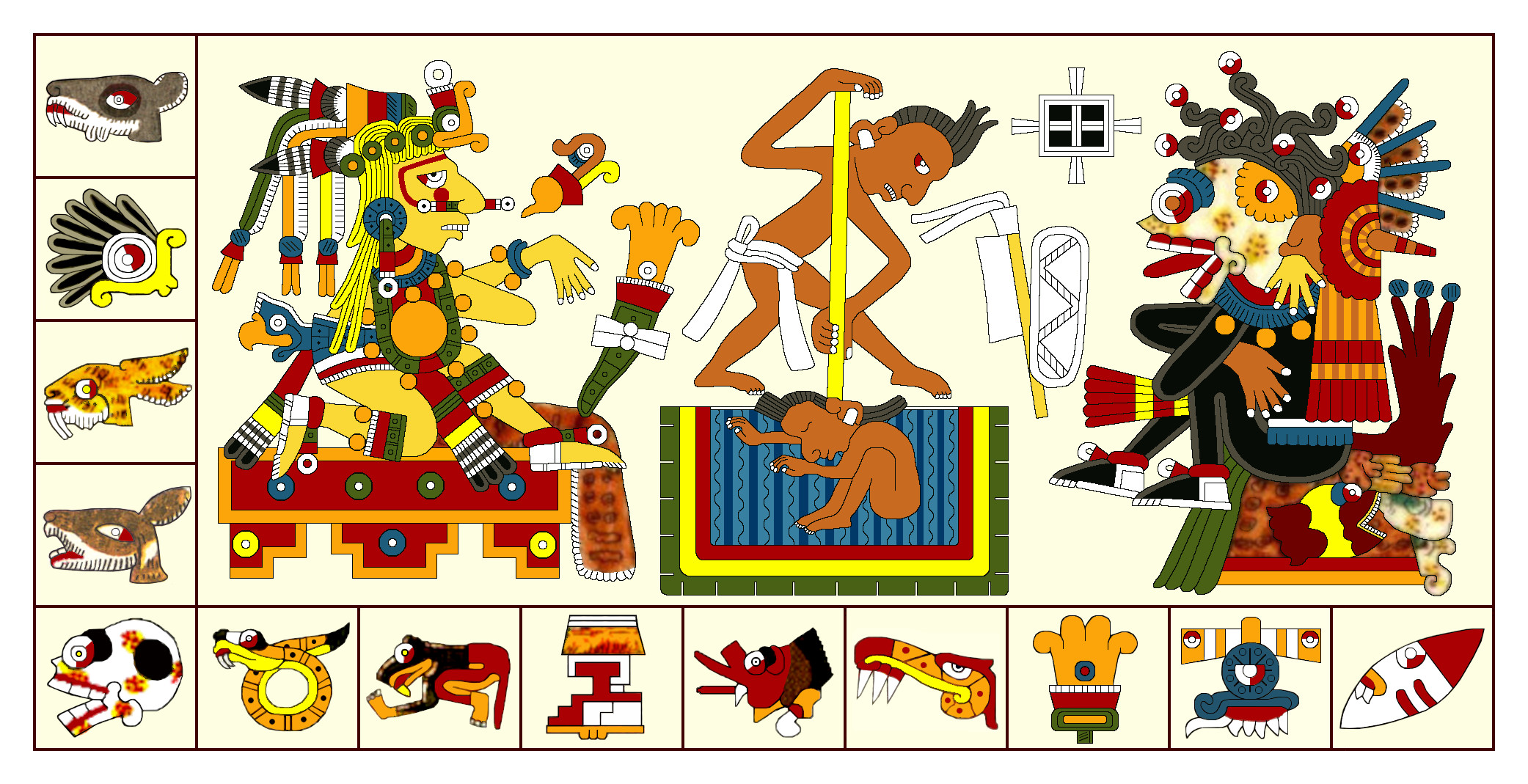
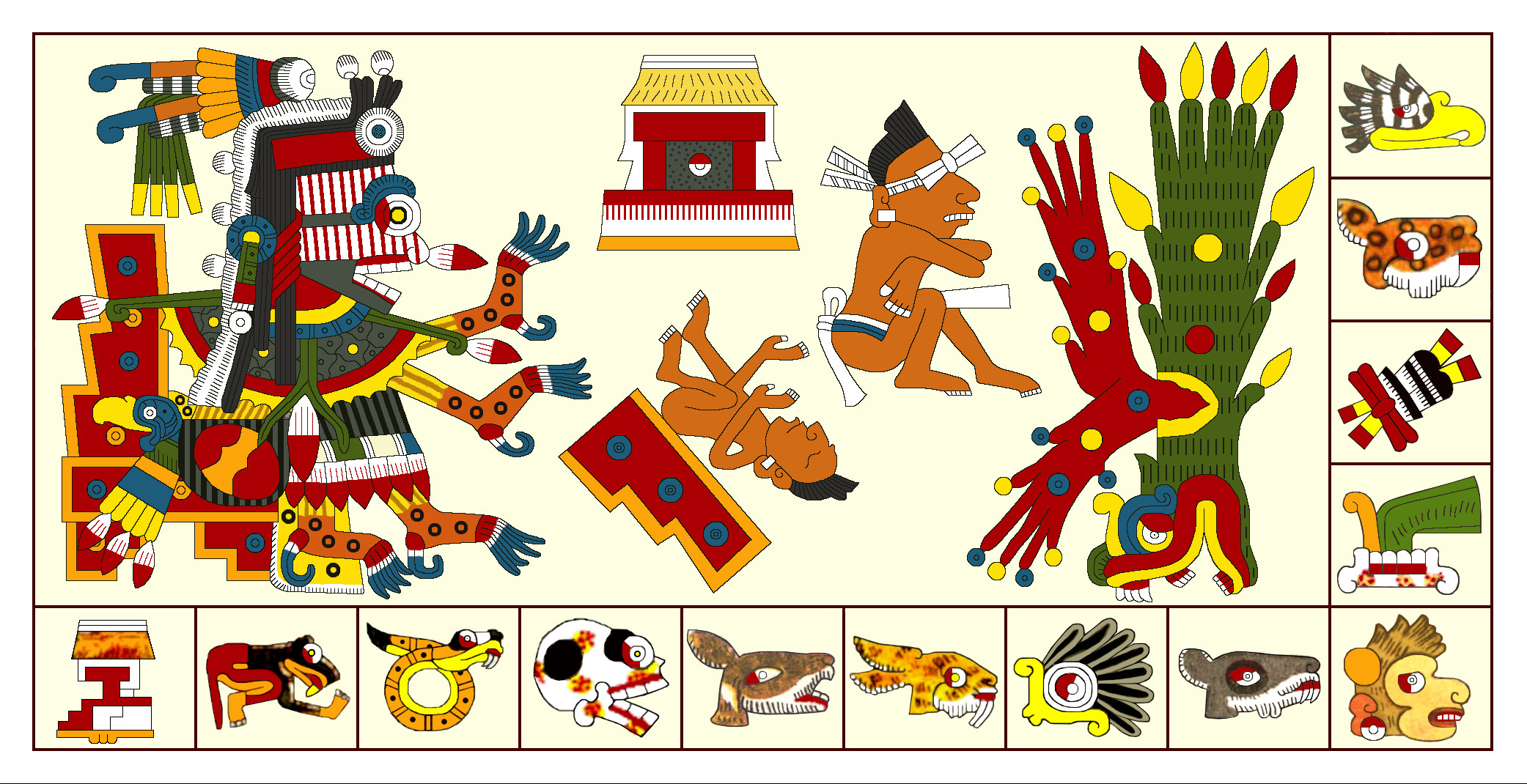
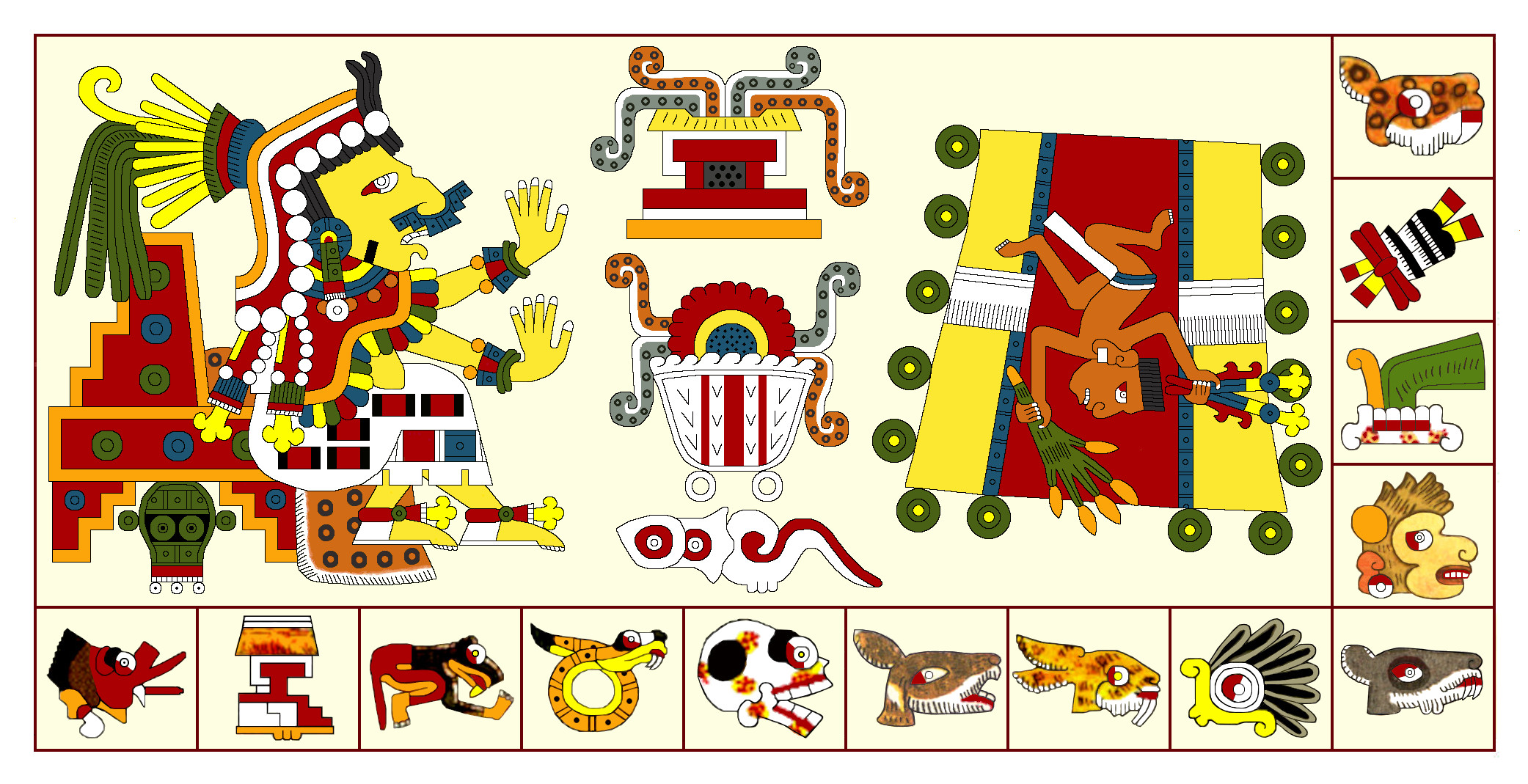
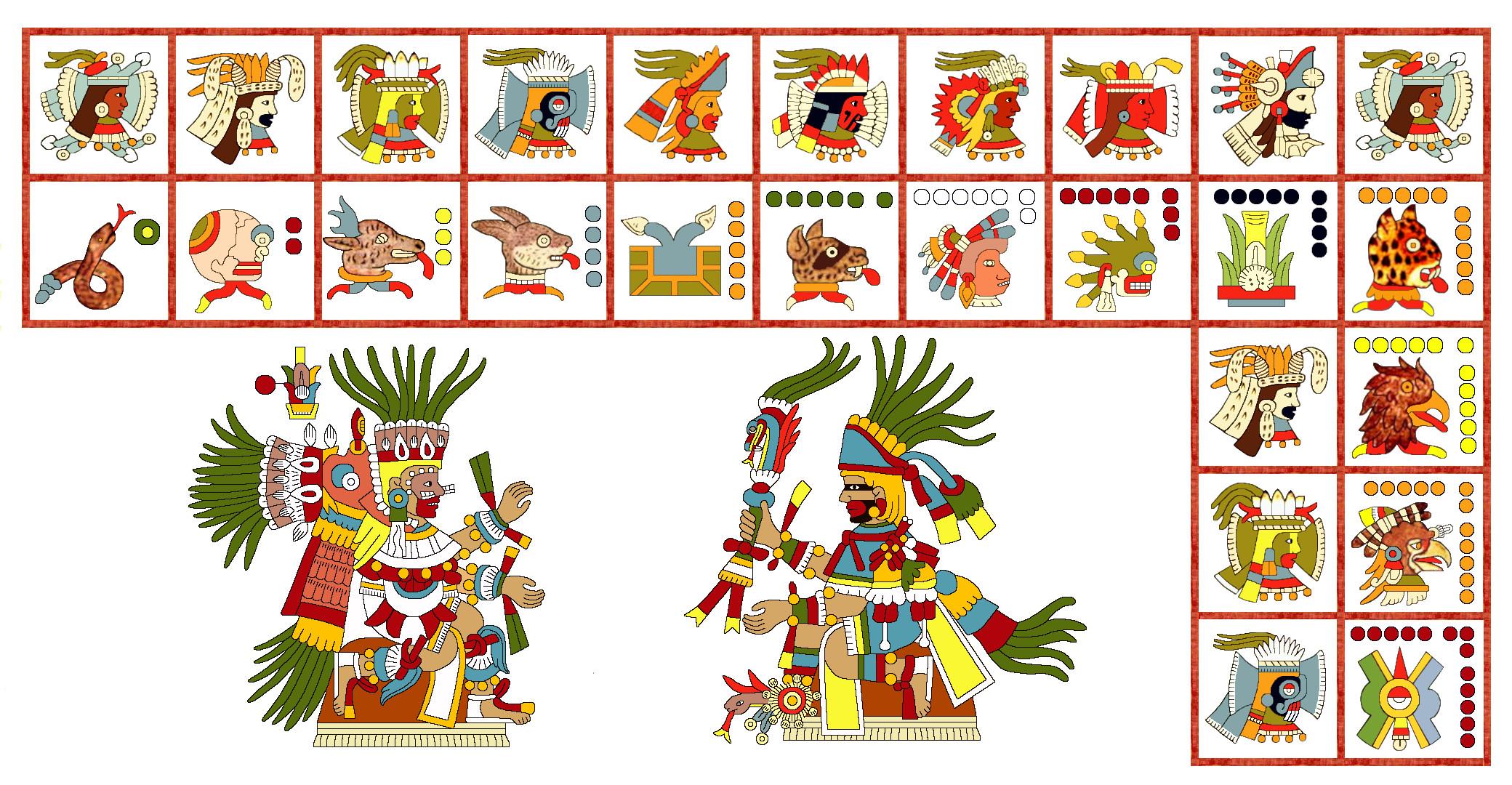
TONALAMATL BORGIA (My re-creation from Codex Borgia)
The Codex Borgia, a ritual and divinatory manuscript, was probably written before the Spanish conquest in Puebla. It was made of animal skins in 39 screen-fold sheets 27 x 27 cm (11 x 11 in.), for a total length of nearly 11 m. (35 ft.), providing 76 pages with covers of leather. Mostly laid out for reading from right to left, several pages are oriented to be read from top to bottom. The codex is named after the Italian Cardinal Stefano Borgia, who owned it before it was acquired by the Vatican Library. Its tonalamatl section is laid out with two panels per page.










###
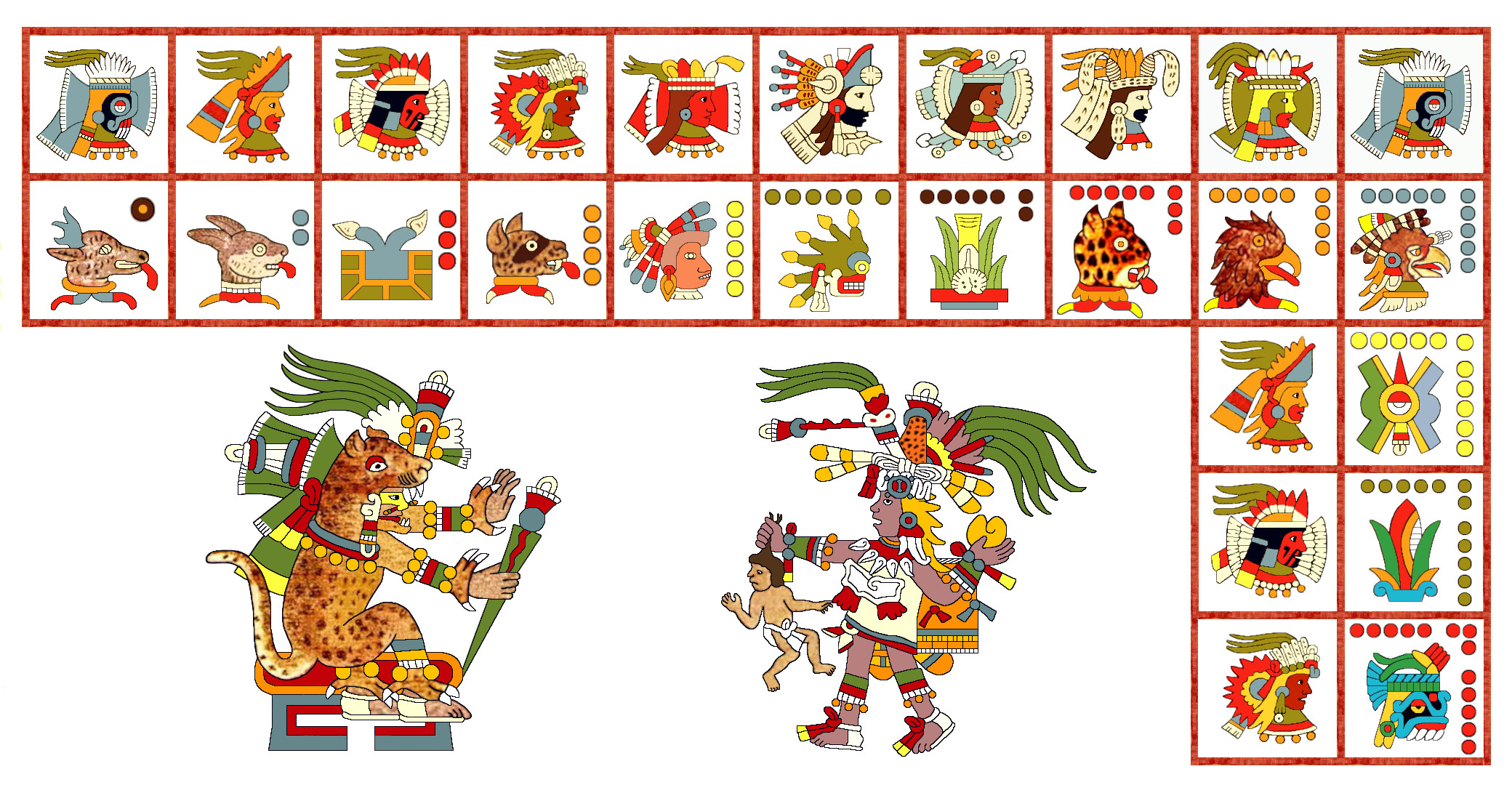
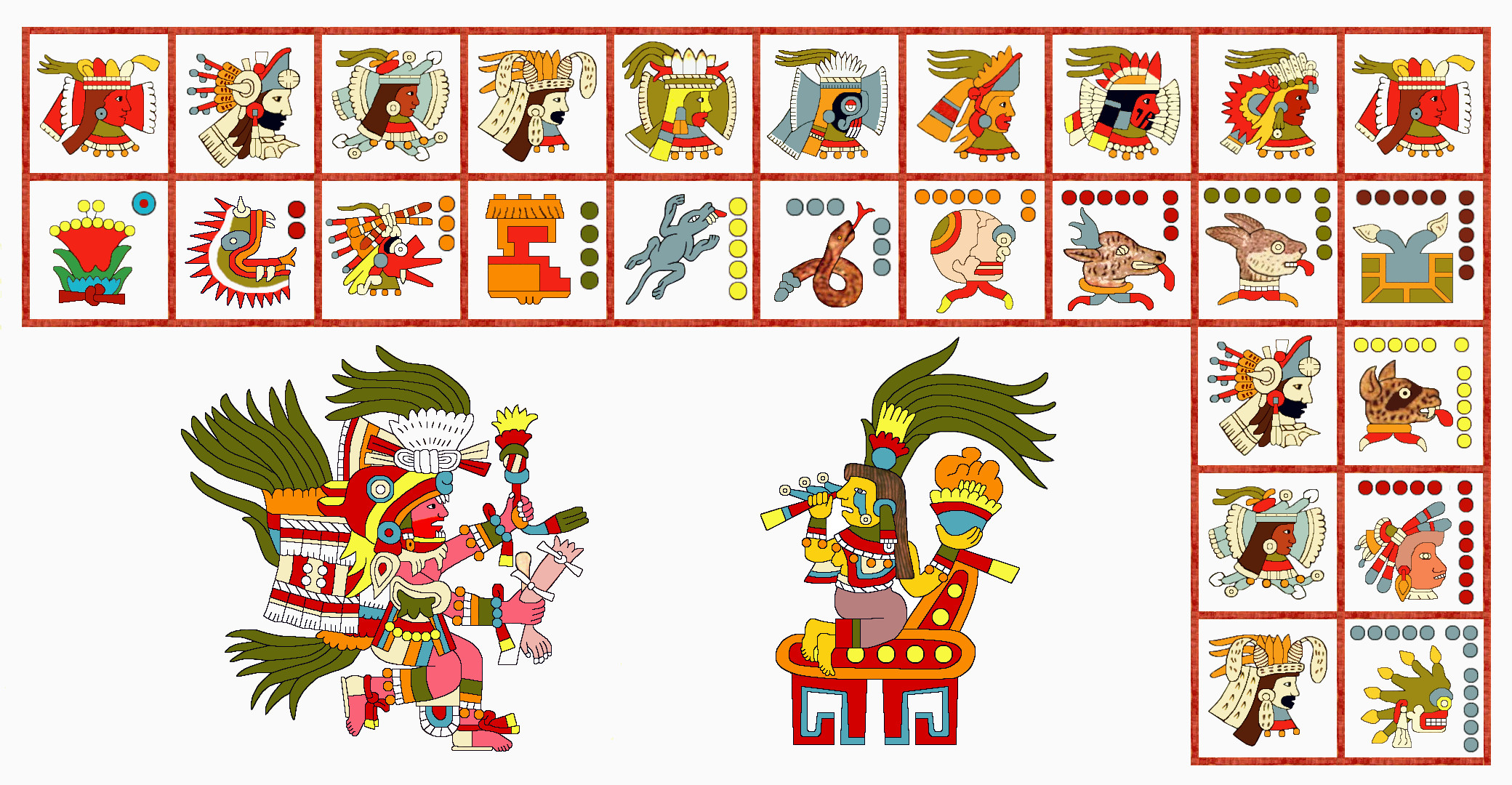
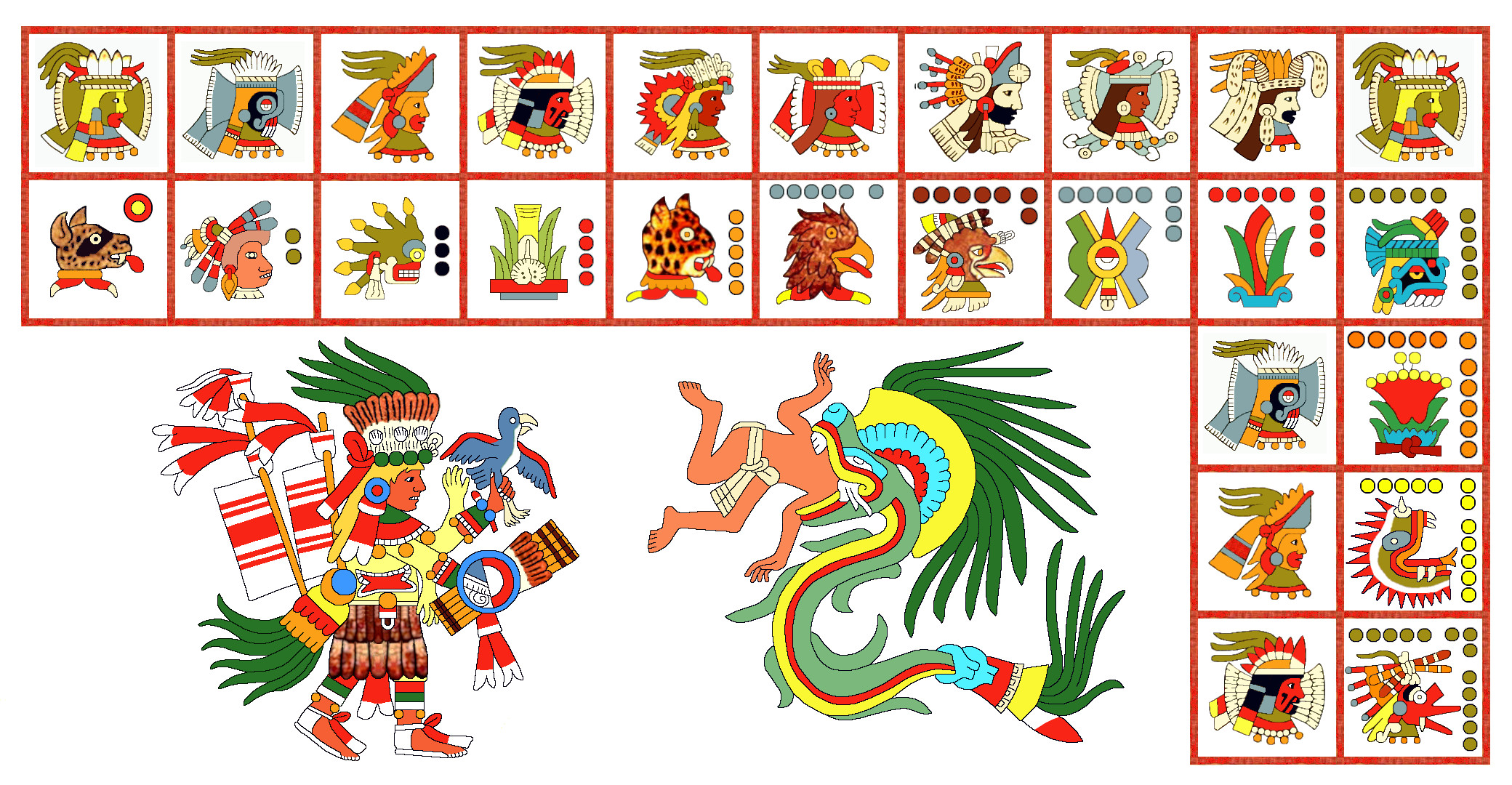
TONALAMATL YOHUAL (My compilation and re-creation from Codex Telleriano-Remensis and Codex Rios)
The Codex Telleriano-Remensis, painted on European paper in the sixteenth century, is named for Charles-Maurice Le Tellier, archbishop of Reims, owner of the manuscript in the late 17th century. Held at the Bibliothèque Nationale de France in Paris, the codex is in three sections. The first describes the 18-month agricultural (solar) calendar; the second covers the ceremonial calendar (its tonalamatl); and the third is a history in two parts differing stylistically. Meanwhile, Codex Rios, which is largely a later copy of the T/R with commentary in Italian, is held in the Vatican Library and catalogued as Codex Vaticanus 3738 A. This codex has 96 pages in several sections: cosmological and mythological traditions; the ceremonial calendar (tonalamatl) and tables for 1558-1619; the 18 agricultural months; ethnographic on customs, population types, and miscellaneous drawings; and pictorial annals for 1195-1549.
The tonalamatl sections of both codices are laid out in half-panels on facing pages, and I’ve chosen to combine them in a single rectangular format and to entitle my composite re-creation Tonalamatl Yohual (Night) in honor of the Lords of the Night who accompany the day-signs (tonalli).











###
 Richard Balthazar